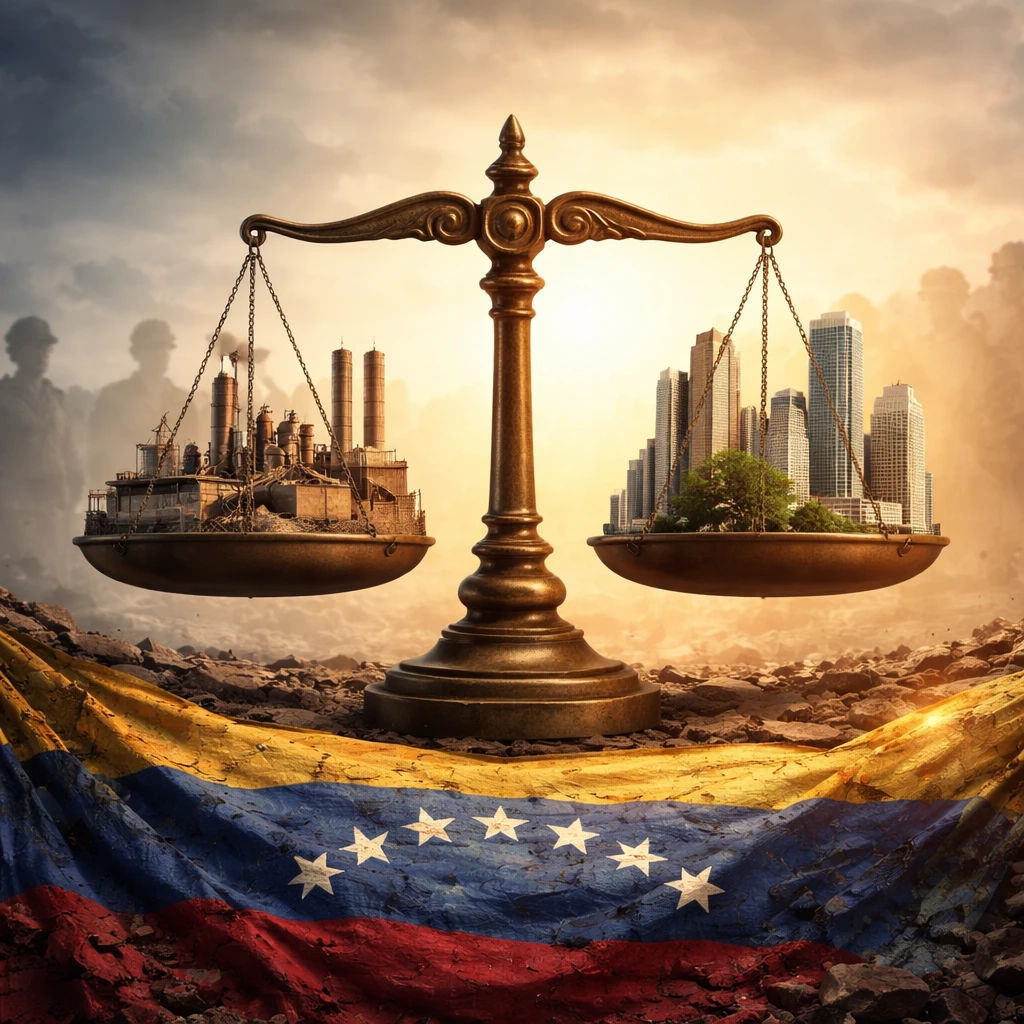
Amid escalating geopolitical tensions, the United States executed a military operation in Venezuela that resulted in the capture and deportation of President Nicolás Maduro and his wife. This event has redirected international scrutiny towards a significant economic blueprint proposed by Venezuelan opposition leader María Corina Machado, who has long advocated for sweeping reforms to address the nation's severe economic collapse.
In October 2025, at the Fortune Global Forum held virtually in Riyadh, Machado, a Nobel Peace Prize laureate, unveiled a detailed plan aiming to privatize over 500 state-owned enterprises. Valued at an estimated $1.7 trillion, her strategy emphasizes the dismantling of the socialist economic framework that she holds responsible for Venezuela's protracted decline.
Machado characterized Venezuela as once being among the wealthiest nations, transformed into one of the poorest due to persistent corruption, authoritarian repression, and the failure of state-run industries. She underscored the economic devastation, noting that the Venezuelan economy had contracted by more than 80 percent over the preceding years. Furthermore, the societal impact has been profound, with a significant portion of the population compelled to emigrate to survive.
Central to Machado's plan is the privatization initiative, which she argues would harness existing infrastructure to accelerate economic recovery. She detailed commitments to transparency and governance reforms, proposing fiscal incentives designed to attract foreign direct investment. According to Machado, the nation's abundant oil and gas reserves, coupled with the potential reintegration of its diaspora community, present the single largest economic opportunity on the horizon.
Despite these initiatives, Machado remains clandestine, continuing her opposition campaign against Maduro's entrenched regime. She has labeled Maduro a "narco-terrorist stater," accusing him of extensive corruption, including gold smuggling and systemic human rights abuses, which have contributed to Venezuela’s destabilized state.
The U.S. military intervention culminated in the extraction of Maduro and his spouse from Venezuelan territory after what President Donald Trump described as a "large-scale strike." This action sparked vehement condemnation from Caracas, with Defense Minister Vladimir Padrino López denouncing it as the gravest military aggression in Venezuela's history and prompting the declaration of a nationwide state of emergency.
Commentators such as former U.S. envoy Richard Haass suggest that the impetus behind Maduro's removal may be more strategically aligned with access to Venezuela's vast oil reserves than solely the pursuit of justice or democratic reform. Haass pointed out that President Trump repeatedly emphasized the country's petroleum assets in a press conference from Mar-a-Lago, further highlighting plans for American companies to invest billions in rehabilitating Venezuela's degraded oil infrastructure.
Following Maduro's apprehension, widespread unrest has erupted across Venezuela, with supporters of the former president engaging in protests that have escalated into violent confrontations. Reports indicate that residents have opted to remain indoors amid the chaos. Additionally, Caracas and other regions have experienced airstrikes that disrupted essential public services. Supermarkets able to operate have reported extensive queues, reflecting concerns about the potential recurrence of shortages.
The volatile situation underscores the complexity of Venezuela's immediate future, balancing the potential for significant economic transformation through Machado's privatization proposal against the uncertainties arising from political instability and social unrest.