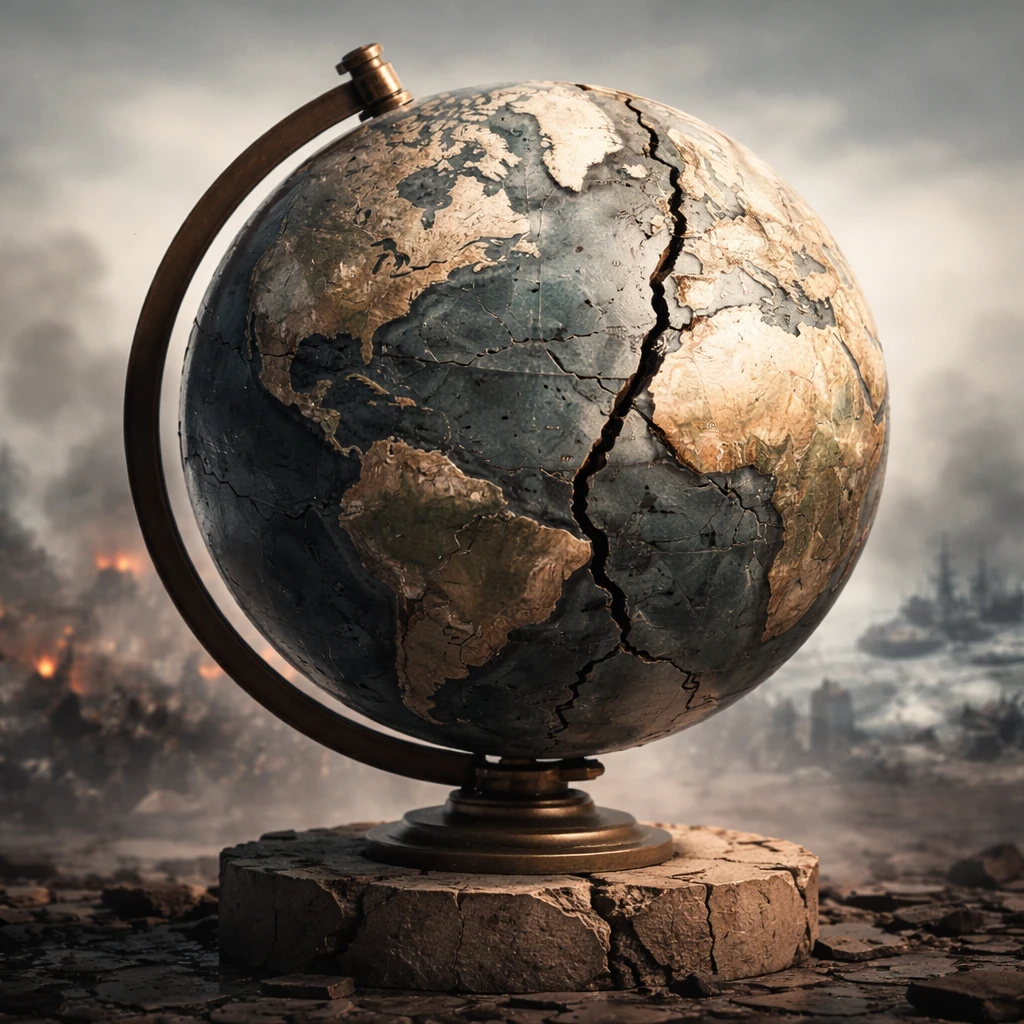

Ray Dalio Highlights Imminent Fracture in Post-WWII Global System Amid Rising Political Tensions
January 27, 2026
Business News

Ray Dalio Highlights Imminent Fracture in Post-WWII Global System Amid Rising Political Tensions

Bridgewater Associates founder identifies key stages signaling breakdown of international order as conflicts intensify

Summary

Ray Dalio, billionaire hedge fund manager and founder of Bridgewater Associates, has cautioned that the international system established after World War II is nearing a critical fracture point. He interprets recent political disturbances, including clashes in Minneapolis and geopolitical tensions in Greenland, as manifestations of a recurring historical cycle signaling the erosion of longstanding monetary, political, and global structures. Dalio situates the current moment in what he terms 'Stage 5'—a pre-breakdown phase—portending progression to 'Stage 6,' defined by the collapse of existing orders. He further highlights rising debt burdens and growing socio-economic disparities as contributing to financial and political instability, echoing concerns shared by other finance and policy experts regarding national debt and government fiscal conduct.

Key Points

Billionaire Ray Dalio warns that the post-World War II international order is nearing a breakdown, represented as 'Stage 5' in his historical cycle framework.
Recent conflicts in Minneapolis and Greenland exemplify broader systemic unraveling in political and monetary institutions worldwide.
The 'Big Cycle' theory frames current global dynamics as part of recurring stages leading to upheaval and reconstruction of old global orders.
Rising government debt and widening social disparities contribute to increasing financial strain and political polarization, heightening instability.

Ray Dalio, the renowned founder of Bridgewater Associates, has drawn attention to what he describes as an impending collapse of the post-World War II global order. His recent statements underscore a pattern of systemic breakdown reflected in contemporary political and social upheavals, suggesting these are not isolated incidents but elements of a cyclical historical process.

During a recent communication on the social platform X, Dalio expressed that the general public appears taken aback by the unfolding events in diverse locations such as Minneapolis and Greenland. He attributed this surprise to a widespread misunderstanding of the profound systemic changes underfoot—principally, the unraveling of established monetary regimes and political frameworks both domestically and internationally.

Drawing on themes explored in his 2017 book, "Principles For Dealing With The Changing World Order," Dalio discussed the "Big Cycle"—a model delineating a series of phases that civilizations repeatedly undergo. He placed the current global status within "Stage 5," which he characterizes as a prelude to systemic breakdown, wherein existing institutions and power arrangements increasingly strain to maintain cohesion. Transitioning forward onto "Stage 6" signals a period in which these old orders disintegrate.

This conceptual framework is supported by observable phenomena: deteriorating financial markets, the exacerbation of wealth gaps, the widening of ideological divides, and escalating conflicts. Dalio emphasized that these features are evident not only in the United States but across the globe, indicating a synchronized movement towards profound structural change.

Central to his analysis is the issue of ballooning debt levels. Dalio has reiterated his concern that when debt accumulation surpasses income growth rates, governments are presented with stark choices. They must either resort to monetary expansion—effectively printing more money—or confront severe debt crises. The former undermines monetary stability, while the latter can precipitate acute economic and political turmoil.

His perspective aligns with other notable voices in finance and policy. For instance, hedge fund manager Ken Griffin has identified excessive governmental expenditure as a primary hazard to market equilibrium and global steadiness. Additionally, economist Richard Haass has highlighted the substantial $38 trillion national debt of the United States as a critical challenge that threatens not only economic prospects but potentially the country's position in national security.

Taken together, these insights underscore a volatile landscape where fiscal practices, socioeconomic divides, and geopolitical tensions converge, amplifying the risk that the global system may undergo a significant transformation or collapse.

Dalio's message encourages a measured yet vigilant understanding of these developments, stressing that the current troubles are neither sporadic nor unpredictable but part of a discernible cycle with precedent in history. Such recognition may provide policymakers, investors, and citizens with a more informed basis upon which to respond to the complex challenges ahead.

Risks
  • Acceleration of debt beyond income growth could force governments into inflationary monetary policies or trigger severe fiscal crises.
  • Growing political polarization and social fragmentation may erode domestic and international cooperation needed for stability.
  • Increasing conflicts and economic pressures risk precipitating the collapse of existing political and monetary frameworks.
  • Excessive government spending and unsustainable national debt levels may undermine market confidence and long-term economic security.
Disclosure
Education only / not financial advice
Search Articles
Category
Business News

Business News

Ticker Sentiment
BRK - neutral
Related Articles
Commerce Secretary Lutnick Clarifies Epstein Island Lunch Amid Scrutiny Over Relationship

Commerce Secretary Howard Lutnick acknowledged having a family lunch with convicted sex offender Jef...

Why Retirement Savings Remain Stagnant and How to Address Common Pitfalls

Many individuals find themselves concerned about the insufficient growth of their retirement account...

Cryptocurrency Market Holds Steady Amid Anticipation of US-Iran Developments

The cryptocurrency market demonstrates a cautious stance as Bitcoin approaches the $69,000 mark. Oth...

Partisan Divide Deepens as White House Excludes Democratic Governors from NGA Meeting

The longstanding bipartisan forum of the National Governors Association (NGA) is facing disruption a...

Alphabet Initiates $20 Billion Bond Offering as Shares Experience Downturn

Alphabet Inc., the parent company of Google, has announced plans to issue $20 billion in bonds acros...

Dow Advances More Than 200 Points as Coca-Cola Reports Varied Q4 Performance

U.S. equity markets experienced a mixed session with the Dow Jones Industrial Average rising over 20...