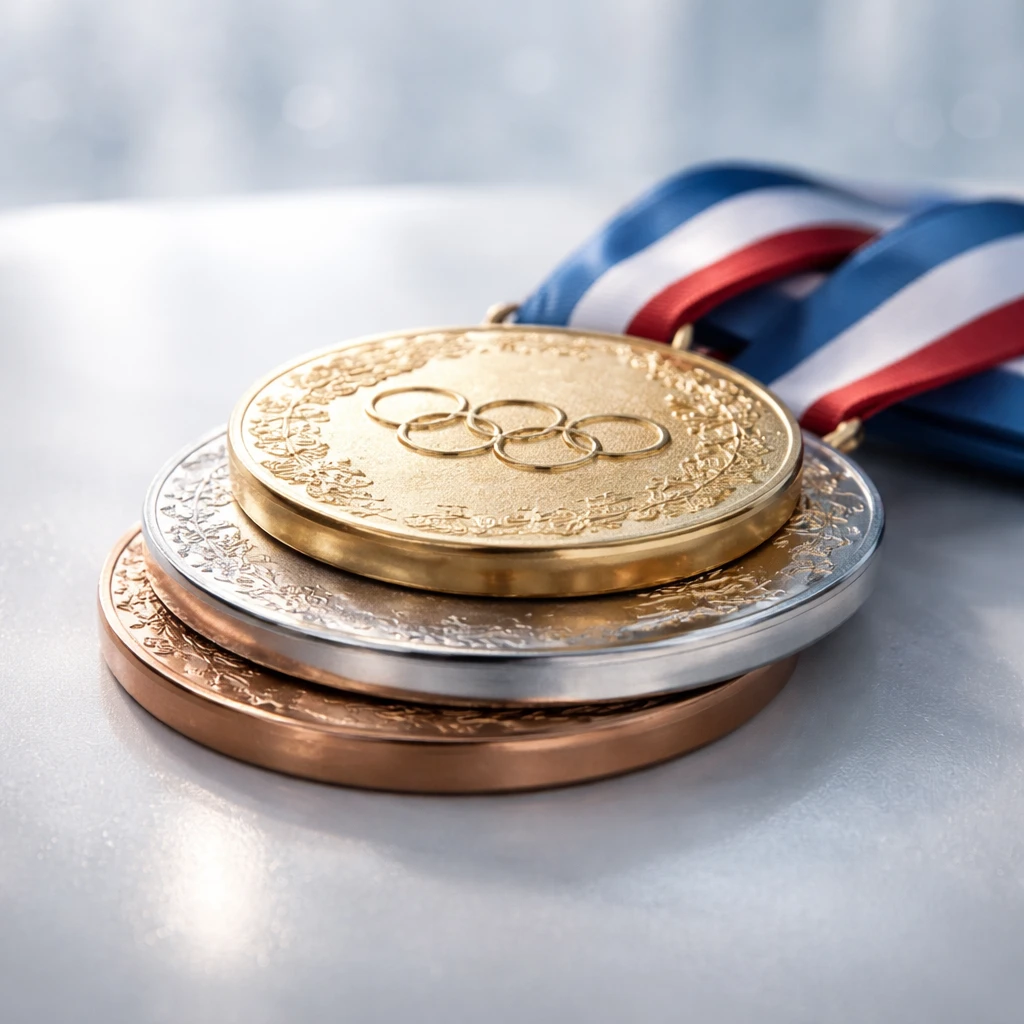

As the 2026 Winter Olympic Games in Milan and Cortina approach, attention turns to the tangible and symbolic value of the medals to be awarded to distinguished athletes. Across a diverse range of disciplines including skiing, ice hockey, figure skating, and curling, more than 700 medals comprising gold, silver, and bronze will be bestowed to the top finishers. While the emotional and symbolic worth of these medals is immeasurable for competitors, their financial valuation is witnessing an unprecedented rise, owing to significant appreciation in precious metal prices over recent years.
Data from FactSet indicates that since the Paris Summer Olympics held in July 2024, spot prices for gold and silver have escalated by approximately 107% and 200%, respectively. These dramatic increases translate into a contemporary estimated value for the gold medals of around $2,300 based solely on their metal content, more than twice their assessed worth during the Paris Games. Correspondingly, silver medals have seen their value triple, now approaching $1,400 when measured by current silver prices.
Several market forces underline this surge. Silver's spike has been partially driven by heightened demand from retail investors. Concurrently, gold's ascent reflects increased accumulation by central banks and investor migration toward gold as a traditional safe haven amid ongoing global political uncertainties. These factors collectively contribute to the rising intrinsic valuation of Olympic medals, distinguishing these awards in a new financial light.
The composition of the medals themselves contributes to understanding their value. Crafted by the Italian State Mint and Polygraphic Institute utilizing recycled metals, the gold medals are not composed entirely of gold. In fact, only six grams of the total 506 grams (approximately 16 troy ounces) consist of pure gold, with the remainder made from silver. Bronze medals are primarily comprised of copper, weighing about 420 grams (roughly 15 ounces), and are comparatively modestly valued at approximately $5.60 each based on the material content.
Historically, Olympic gold medals have not been manufactured from pure gold since the 1912 Summer Games in Stockholm, Sweden. These medals then weighed about 26 grams (0.8 troy ounces) and would have had a monetary value under $20 at the time, based on gold prices. Accounting for inflation using the US Consumer Price Index, this amount equates to roughly $530 in today's currency.
Despite their material composition, Olympic medals often transcend their raw metal value when viewed as collector's items. According to Dominic Chorney, head of ancient coins at the London-based auction house Baldwin’s, the market can assign significantly higher prices based on provenance and historic value. For example, in 2015, Baldwin’s auctioned a 1912 Stockholm Olympics gold medal for £19,000 ($26,000). The previous year, a 1920 Antwerp Olympic bronze participant medal fetched £640 ($875) despite having negligible intrinsic material value. Such examples illustrate how association with the Olympics imbues these items with substantial collector interest beyond their metallic worth.
Nevertheless, the majority of Olympic medals are unlikely to enter the market, as most athletes hold them in high regard and opt not to sell. "Relatively few Olympians sell their medals, because they cherish them," Chorney noted. This sentiment likely limits the availability of these unique artifacts in collector spaces despite their growing financial valuation based on metal content.
Looking forward, metal price volatility adds an element of uncertainty regarding future valuations. Gold and silver prices have experienced pronounced fluctuations recently but are anticipated to maintain an upward trend amidst persistent geopolitical instability and increases in governmental debt levels. Ole Hansen, head of commodity strategy at Saxo Bank, emphasized that demand for precious metals is expected to continue robustly. He projected that the medals at the subsequent Summer Olympics scheduled for 2028 may well surpass the current valuations observed at the 2026 Winter Games.