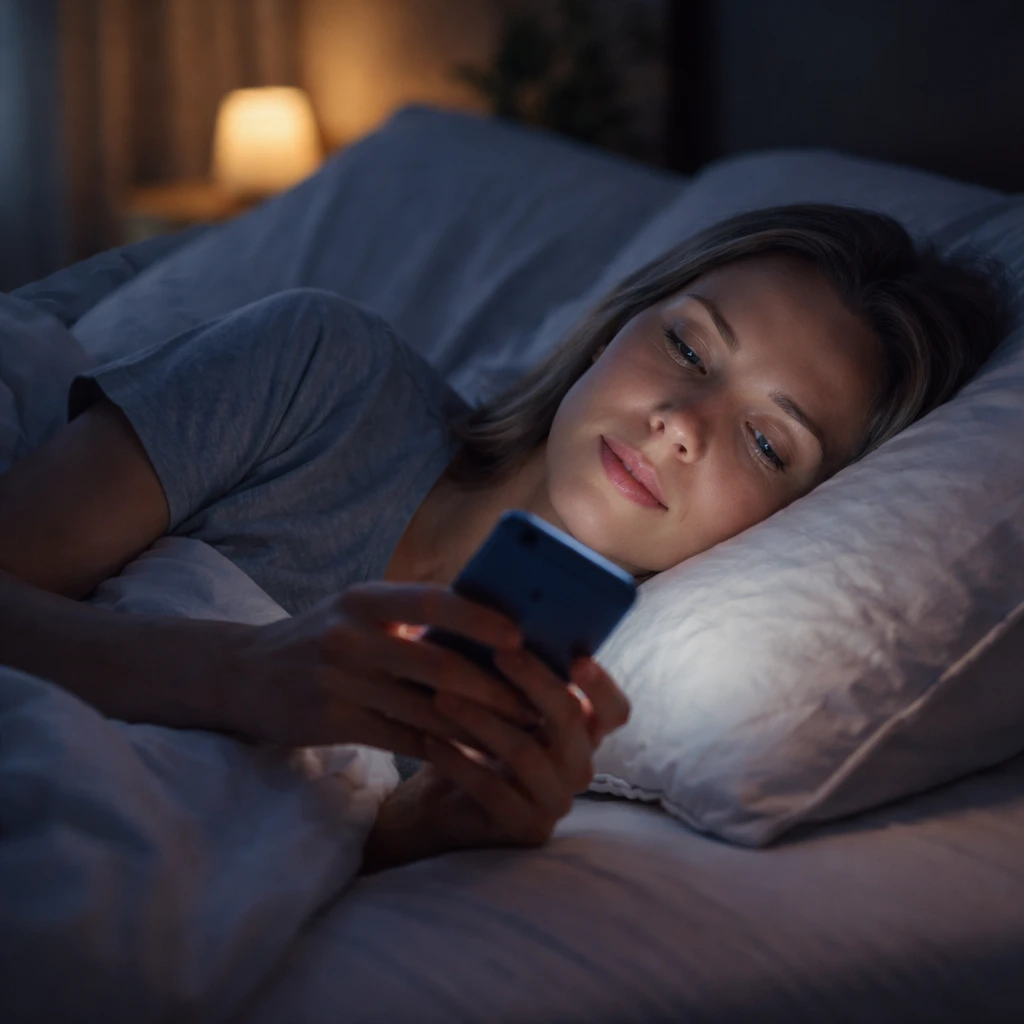

For decades, health professionals and scientists have advised people to avoid phone usage before bed, citing its detrimental effects on sleep quality. The prevailing explanation pointed to the blue light emitted by phone screens and other LED devices, which is said to suppress melatonin production, a hormone pivotal for sleep regulation. However, a new study conducted jointly by Toronto Metropolitan University (TMU) and Université Laval presents a more nuanced perspective on this common nighttime behavior.
Researchers collected self-reported data from over 1,000 adults residing in Canada regarding their screen usage habits near bedtime and their overall sleep health. The analysis revealed that, surprisingly, overall sleep quality was comparable between individuals who used screens nightly and those who abstained from such usage altogether. Intriguingly, the segment experiencing the poorest sleep quality were those who engaged with their phones only a few times per week.
This outcome diverges from earlier research that had unequivocally linked blue light exposure from screens to disrupted sleep patterns. Many of those previous studies focused on the effects of blue light in preventing the release of melatonin, thereby impeding the body's ability to wind down for rest. However, TMU researchers highlighted that these earlier experiments often failed to consider variables such as the age of participants, the timing of exposure, and intensity levels of screen use.
Professor Colleen Carney, a specialist in sleep and mood disorders at TMU and co-author of the study, remarked that a number of controlled studies had artificially enhanced blue light exposure in ways that do not mirror typical human experience. “In order to observe those melatonin suppression results, previous studies generally used young adults, often close to puberty, who are naturally more sensitive to light. Additionally, these individuals were kept in dim lighting environments throughout the day and overnight in labs, conditions that do not represent regular living,” Carney explained.
She further suggested that the broader public and some scientific communities have sometimes overgeneralized these findings without adequately weighing studies that demonstrate little to no effect of blue light on sleep. The study emphasized more than just the presence of light: the nature of phone activity also plays a critical role. Activities that are mentally engaging or emotionally disturbing can make it challenging to disengage from the device and may adversely affect sleep readiness.
The research, published in the October edition of the journal Sleep Health, showed that over 80% of participants reported using screens at bedtime within the previous month, with nearly half engaging in this habit nightly. These statistics underscore the pervasiveness of nighttime screen exposure in modern society.
The TMU study aligns with a number of recent inquiries that question the exclusivity of blue light’s role in sleep disruption. Historically, prevailing knowledge asserted that blue light exposure was a primary factor in diminishing melatonin levels and was therefore detrimental to sleep quality. For instance, a 2011 study in the Journal of Applied Physiology linked blue light exposure to melatonin suppression.
More contemporary research, such as a 2023 study in Brain Communications examining adolescent boys and young adult males, supported the idea that blue light can dampen melatonin release. However, that research also showed that avoiding screen use at least an hour before sleeping could reduce negative consequences. Furthermore, a 2025 study published in Life recommended red light as a preferable nighttime alternative due to its less disruptive impact on circadian rhythms.
Despite these insights, the causality between screen use and poor sleep remains elusive. A 2016 study in PLOS ONE, referenced in prior TIME coverage, found a robust association between bedtime phone use and diminished sleep quality but did not establish causation. One study author, Dr. Gregory Marcus, noted the possibility that individuals struggling to fall asleep might resort to their smartphones simply as a means to occupy time.
In 2024, a National Sleep Foundation panel comprising 16 experts in sleep and pediatrics concluded that while screen use adversely affects sleep health in children and adolescents—primarily due to content rather than blue light exposure—there was no consensus regarding adults and blue light’s effects prior to sleep.
Adding to the complexity, a recent 2025 American Cancer Society study involving over 122,000 participants linked daily screen use with later bedtimes and a reduction of about 50 minutes of sleep per week, though the mechanisms behind this association remain unclarified.
Dr. Alex Dimitriu, a psychiatrist and sleep medicine specialist based in Menlo Park, California, described the TMU study as “fascinating” because it contrasts with a substantial body of research supporting the idea that screen use reduces sleep quality. He cited the 2025 American Cancer Society study as corroborating evidence. Dimitriu acknowledged the TMU study's admission that causality could not be definitively established, suggesting that good sleepers might variably use phones, while poor sleepers might be uncertain in their behaviors.
Despite the TMU findings, Dimitriu maintains a professional stance that screen usage negatively affects sleep, emphasizing the engaging and stimulating nature of screen content versus traditional reading material. He shared, “I can remain awake for hours scrolling through news articles, blogs, and social media posts, whereas reading a book consistently sends me to sleep within 10 minutes. My patients express similar experiences.”
Literature reviews also depict a divided understanding of blue light’s effect on sleep. A 2022 Frontiers in Psychology review examined 24 studies on young adults’ sleep post-exposure to blue light. Results demonstrated varied outcomes: 20% reported reduced sleep quality, 33% indicated decreased sleep duration, while 50% observed diminished tiredness, suggesting increased daytime alertness and cognitive function.
The authors of this review concluded that the influence of blue light remains a “murky field” needing further investigation, though they acknowledge its potential to impair sleep, thereby possibly affecting athletes’ physical and mental performance and recovery.
Researchers from TMU pointed out that younger age groups, notably children and adolescents, may exhibit heightened sensitivity to melatonin suppression due to pubertal changes increasing light sensitivity. This effect may not be as pronounced in adults, who experience age-related ocular changes reducing susceptibility to light-induced sleep disruption.
In summary, while caution regarding excessive evening blue light exposure remains warranted for teenagers, current evidence suggests that adult sensitivity is lower and that other factors beyond blue light intensity—such as the content and emotional engagement associated with phone use—play a vital role in determining sleep quality.