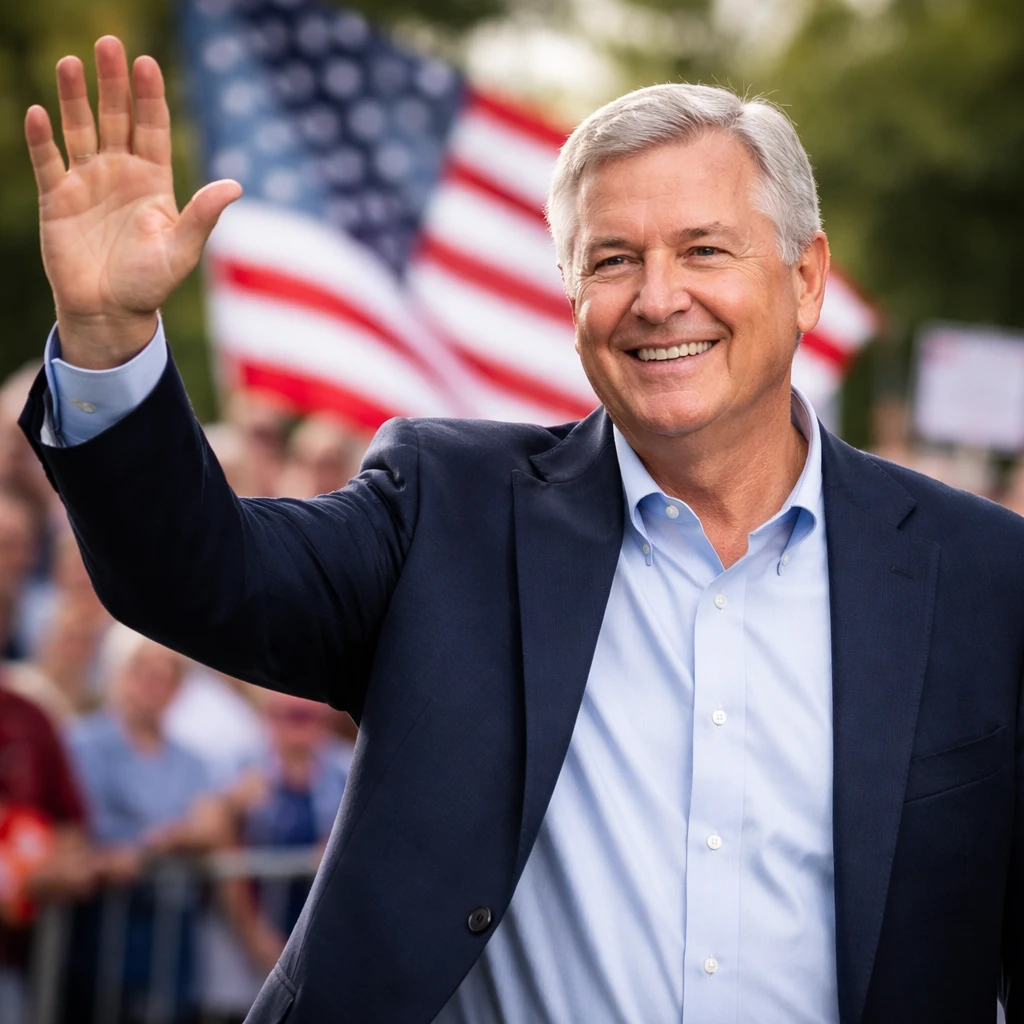

Rick Jackson, a 71-year-old owner of a healthcare enterprise, declared his candidacy for the Republican nomination in the upcoming Georgia governor's race. His announcement disrupts a field that had appeared stable in recent months as candidates positioned themselves to succeed the term-limited Governor Brian Kemp.
Jackson faces competition from key Republican figures including Lt. Governor Burt Jones, who holds the endorsement of former President Donald Trump, Secretary of State Brad Raffensperger, and Attorney General Chris Carr. Jackson criticized these contenders as “career politicians” who are focused on personal gain while keeping the electorate uninformed. He positioned himself as a grassroots conservative, asserting his capability to effectively fight for Georgia’s interests.
Financially, Jackson declared a commitment to invest $50 million of his own resources into the campaign. His entry into the race coincides with a shadowy organization named “Georgians for Integrity” that has expended over $13 million on various media platforms since November. These advertisements target Jones, who is widely regarded as the GOP frontrunner, alleging misuse of his office for financial benefit. Jones has dismissed these promotional materials as “fabricated trash.”
On Tuesday, Jackson's spokesperson Lance Trover denied that Jackson was funding these attack campaigns.
The Republican primary includes four contenders, raising the probability of a runoff election on June 16 if no candidate achieves a majority in the May 19 primary. The Democratic side features seven candidates competing to reclaim the governor’s office for their party after a 24-year Republican tenure.
Jackson emphasizes an intensely conservative message combined with a narrative of personal advancement from challenging beginnings. In campaign materials, he highlights his progression from foster care to establishing Jackson Healthcare, a major provider of healthcare staffing nationwide. His policy positions include strict enforcement of criminal deportations, elimination of what he terms “woke ideology” in schools, and opposition to diversity, equity, and inclusion programs.
In terms of fiscal policy, Jackson has committed to halving the state income tax and freezing property taxes, themes directly related to ongoing tax debates at the state legislature. He also affirmed he would exit the race if these objectives are unattainable.
Both Jackson and his competitors Jones and Raffensperger bring personal wealth into the campaign. Jackson’s healthcare company supplies doctors, nurses, and other professionals to medical providers and also offers permanent placement and consulting services. In 2021, Jackson also acquired US Antibiotics, a Tennessee-based manufacturer producing key antibiotics domestically. The privately owned Jackson Healthcare reports annual revenues exceeding $3 billion.
Jackson announced plans for an initial $40 million advertising investment, releasing a new advertisement that portrays Raffensperger as a betrayer of Trump and the conservative base, specifically criticizing his stance on the 2020 Georgia election results.
Jackson identifies himself as a billionaire and has made a $1 million donation to Trump, crediting Trump for motivating his gubernatorial bid. He has a history of significant political donations within Georgia's Republican circles, supporting figures such as Carr, Raffensperger, and former Lt. Governor Geoff Duncan, the latter of whom is now challenging the governorship as a Democrat after disassociating from Trump post-2020 election controversies.
Governor Kemp has publicly acknowledged Jackson Healthcare's role in supporting Georgia hospitals during the COVID-19 pandemic. Additionally, Jackson takes credit for supporting legislation providing free college tuition and living expenses for students who were previously in foster care or adopted through Georgia’s child welfare system.
Former House Speaker Newt Gingrich endorsed Jackson, describing him as a business-savvy candidate with compassion who would govern Georgia effectively. Jackson’s prior political contributions also include donations to politicians like former Florida Governor Jeb Bush, who has expressed positions counter to Trump’s.
Jones’ campaign dismissed the prospect of Jackson posing a significant threat to Jones’s support base, citing the increasing competition in the “never-Trump” faction.
Carr’s campaign reaffirmed confidence in his conservative leadership and ability to unify the electorate, reiterating his unchanged stance despite new challengers. Raffensperger’s campaign declined to comment on the impact of Jackson’s entrance, and Jones’ campaign did not respond to requests for comment.