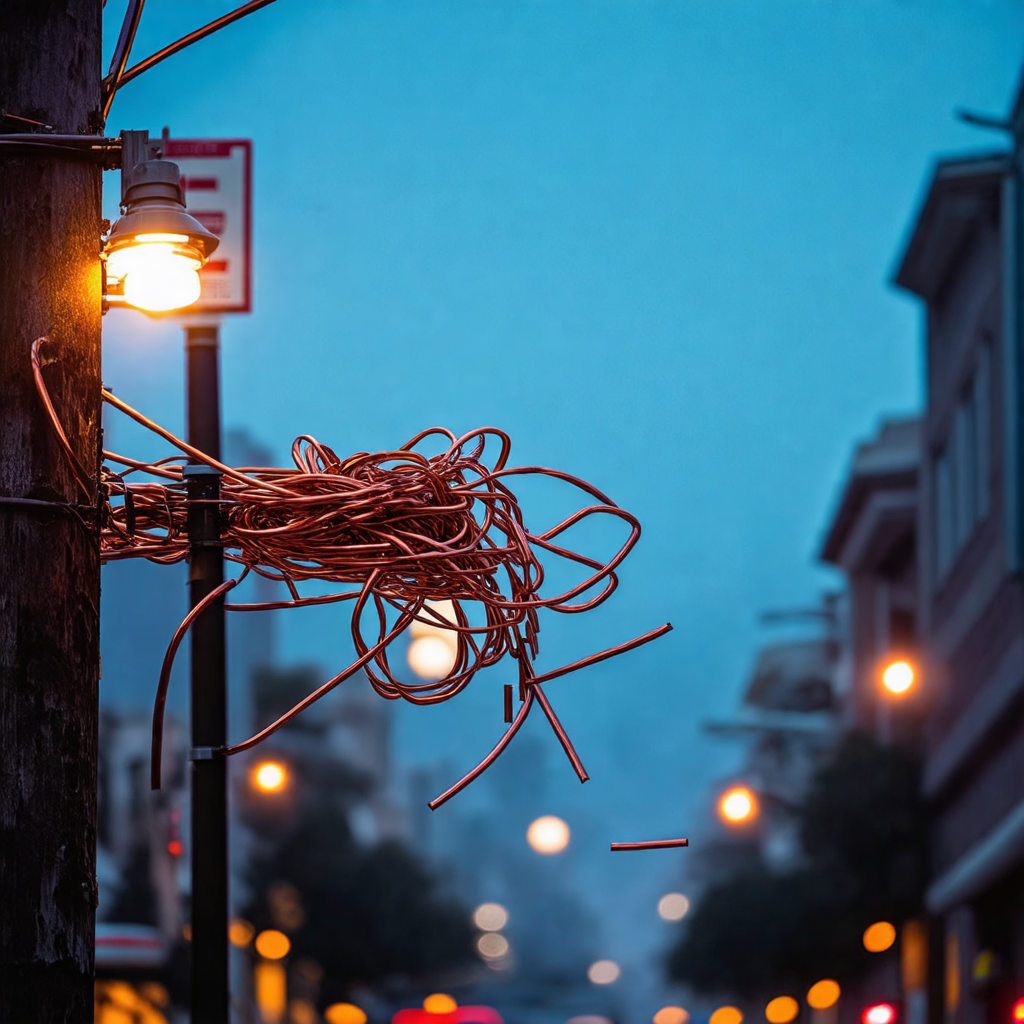

In Los Angeles, the soaring value of copper has ignited a wave of wire thefts that jeopardize the city’s critical infrastructure. From telephone lines suspended on utility poles to subterranean cables beneath busy city streets, copper wiring has powered American electrical and communications networks for over a century. However, criminals are increasingly brazen, scaling vehicle roofs to sever telephone lines and prying open manholes during daylight hours to strip copper wiring. These thefts have far-reaching consequences, including darkened streets and bridges, disruptions in emergency communications, and rising utility costs as repair expenses are transferred to consumers.
A detective with the Los Angeles Sheriff’s Department, speaking on condition of anonymity due to undercover operations, pointed to the skyrocketing price of copper as a primary driver. According to data from JPMorgan, copper prices surged to record levels this year amid a boom in data center construction and anticipation of new tariffs under the Trump administration. Domestic copper prices in the U.S. have jumped over 30% in 2025, intensifying the incentive for theft.
Los Angeles, still recovering from devastating wildfires that destroyed more than 16,000 homes and structures earlier this year, has emerged as a national hotspot for copper wire theft. The city, gearing up to host the 2026 World Cup and 2028 Olympics, finds itself struggling to maintain consistent electrical service in neighborhoods across its expanse. Local governments and utility providers spend millions annually repairing damage caused by copper thieves.
Between June 2024 and June 2025, more than 15,000 attacks on domestic communication networks nationwide were reported, with copper wire theft identified as a major contributor. The NCTA, representing the TV and internet industries, notes that over 9.5 million customers were affected by these incidents, with California and Texas accounting for more than half.
"Copper thefts are not isolated incidents that occur weekly or monthly," the undercover LASD detective explained. "These thefts happen daily." One notable example is Los Angeles's iconic Sixth Street Bridge, which debuted in 2022 with dynamic LED lighting spanning its 3,500-foot length, illuminated for pedestrians and motorists. By 2025, the bridge had been plunged into darkness due to the theft of more than 38,000 feet—approximately seven miles—of copper wiring, resulting in nearly $2.5 million in damage, according to local assemblymember Mark González.
Areas around Los Angeles also report persistent daily incidents, particularly construction zones rebuilding after the recent wildfires. The detective remarked, "Construction sites are frequent targets because the bare copper is hard to trace once stolen. Telecom companies try to identify wires using colored coatings, but city infrastructure wiring often lacks such markers, complicating efforts to recover stolen material." He characterized the current situation as "kind of the Wild West," with law enforcement and city officials overwhelmed by the scale and frequency.
The Sixth Street Bridge’s plight is emblematic of a broader issue affecting Los Angeles street lighting. The city's Bureau of Street Lighting indicates a tenfold increase in outages caused by theft and vandalism between 2017 and 2022. Historic streetlights across the city frequently suffer from exposed and cut wiring, reflecting this concerning trend.
A spokesperson for Los Angeles Mayor Karen Bass conveyed to CNN that copper wire theft not only causes inconvenience but also threatens public safety. "When streets go dark, telephone lines are severed, and traffic signals fail due to this criminal activity, residents become vulnerable, and neighborhoods are exposed to heightened risks of secondary crimes," the spokesperson stated. The city is responding by accelerating installation of solar-powered streetlights that eliminate the need for copper wiring, aimed at reducing theft opportunities.
Despite thieves typically earning only several hundred dollars per theft, the cost to the city for repairs runs into thousands of dollars per incident. The LASD detective emphasized the scale of destruction wrought, observing, "If it weren't evident that this was motivated by financial gain, the widespread damage might be mistaken for domestic terrorism." Legislative efforts are underway to combat the issue. In October 2025, Governor Gavin Newsom signed a new law that increases penalties for copper wire theft and imposes stricter regulations on junk dealers and recyclers who purchase stolen metal, aligning California with a dozen other states that have enacted similar measures this year.
AT&T, a major telecommunications provider serving Los Angeles, is also deeply affected. In January 2025, thieves gained access to an AT&T facility near the city’s historic Olympic venue by opening a manhole cover and tunneling underground. Hundreds of pounds of copper were stolen, disrupting phone service for thousands. Attempts to secure these areas with 2,000-pound steel plates failed when thieves returned and breached the facility again, prompting the company to fill manholes with concrete as a more permanent barrier.
AT&T is simultaneously working to transition customers from its aging copper network to faster, more efficient fiber-optic lines. However, this process is gradual, dependent on customer adoption of new plans. Until full migration is achieved, copper infrastructure must remain operational and vulnerable. Jeff Luong, AT&T’s vice president of engineering, explained that thieves often indiscriminately cut cables due to a lack of understanding distinguishing copper from fiber, worsening service outages.
AT&T reported a sharp increase in copper theft incidents in California: from 71 in 2021 to 2,200 in 2024. The company has instituted rewards of up to $20,000 for information leading to arrests in such cases. Andrea Moore, director of construction and engineering at AT&T Los Angeles, recounted visits to local recycle yards in search of stolen wire. She noted that while some dealers cooperate, others overlook illegal purchases. The company identifies some recyclers as "bad actors" through evidence such as discarded cable coatings near their facilities.
California's forthcoming legislation aims to close these loopholes by holding recyclers more accountable. Despite these measures, AT&T continues a costly and challenging battle. Susan Santana, AT&T California state president, revealed that copper theft cost the company more than $60 million in 2024 alone. She emphasized that the financial toll extends beyond business losses, impacting public safety and essential services such as emergency response calls and hospital operations reliant on telecommunications.