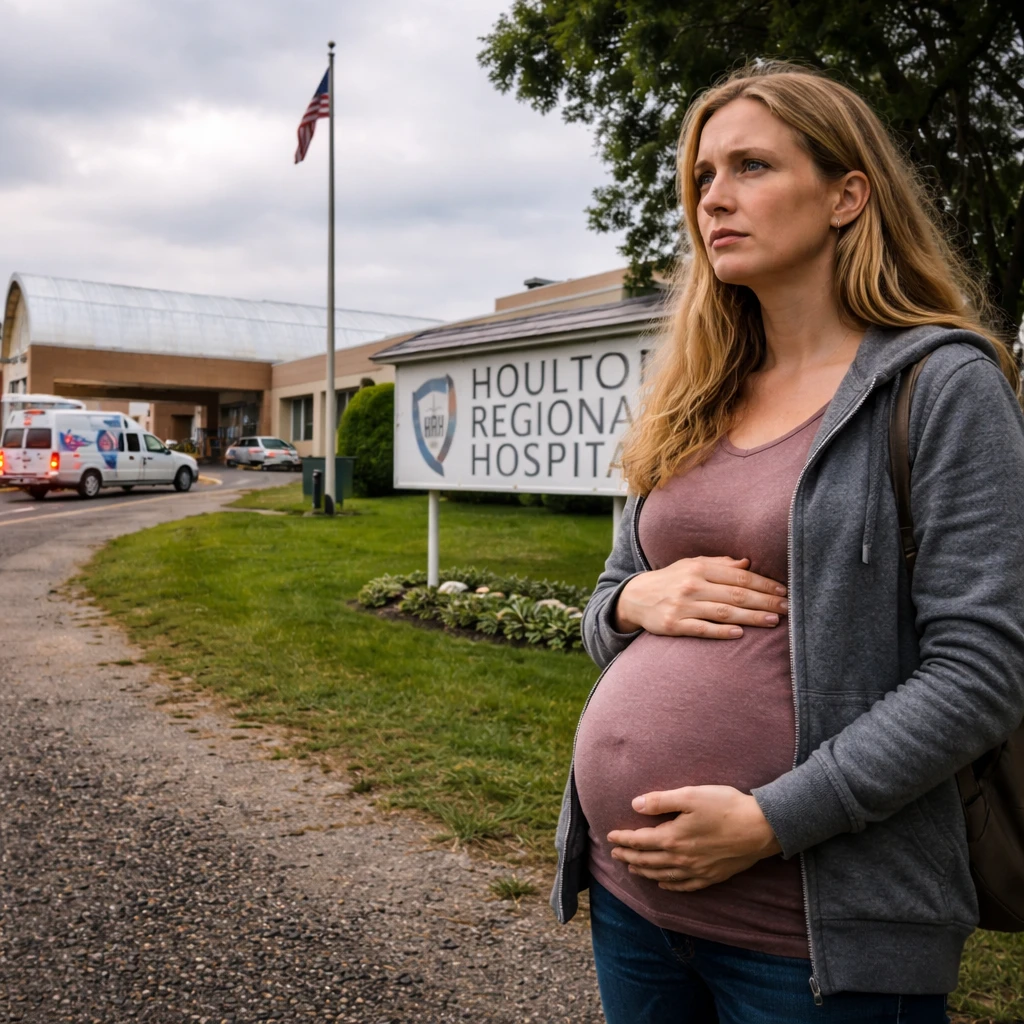

In the pre-dawn hours of June 1, 2025, Katie Gowell began labor in her Patten, Maine home, a town nestled near Mount Katahdin. With her family doctor, Dr. Rose Fuchs, ready to assist, the birth took a perilous turn when Gowell’s water broke and she experienced a prolapsed umbilical cord, which jeopardizes oxygen flow to the baby. Dr. Fuchs swiftly responded, manually supporting the umbilical cord’s position to maintain blood flow while ventilating an emergency call.
The unusual circumstances continued as Fuchs remained physically positioned between Gowell’s legs on the stretcher while navigating the cramped, twisting hallways of the home. Emergency responders faced difficulty maneuvering them into the ambulance, where typical restraint systems were inadequate, requiring a paramedic to hold onto Fuchs to prevent her from falling during a turbulent ride. Maintaining stillness was critical to preserving the baby's life during transport.
The destination hospital posed further complications. The nearest hospital with maternity services, Houlton Regional, ceased deliveries the month before, resulting in confusion and initial refusal to admit the patient from emergency personnel, who suggested transferring Gowell to a facility in Bangor instead. With worsening weather and a storm limiting air transport options, Fuchs advocated fiercely for arrival at Houlton.
On May 2, 2025, Houlton Regional Hospital’s maternity unit was permanently closed as the latest among 11 rural Maine hospitals to shutter birthing services over the previous decade. This left roughly half of Maine’s 34 hospitals without obstetric capabilities, with the nearest maternity units now located about 90 minutes away in Presque Isle or Bangor.
The hospital cited sustained declines in birth rates, staff shortages, and financial strain as core reasons behind the closure. Such changes place a significant burden on families requiring maternity care, especially in rural environments where inclement weather and long travel distances complicate access. Extended hospitalization distant from home can isolate mothers from familial support and create logistical challenges around childcare and work obligations, increasing risks of adverse maternal outcomes.
Healthcare personnel and community members expressed profound distress following the announcement. Nurses at Houlton Regional reported learning of the shutdown mere hours in advance, describing the communication as abrupt and lacking engagement from hospital leadership. Efforts to conduct dialogue with board members were declined, prompting a public forum where patients and providers shared impactful testimonies emphasizing how the closure impacted birth experiences and outcomes.
Among the transferred patients was Katherine Scott, six months pregnant at the time, who had to switch prenatal care to facilities over an hour and a half away, disrupting her connection to long-trusted providers and compelling her to opt for an induced birth. This surge in patients led to a dramatic increase in deliveries at neighboring hospitals, notably nearly doubling monthly births at Presque Isle’s Northern Light A.R. Gould Hospital after Houlton’s unit shuttered.
Operational meetings between hospital officials, emergency medical services, and regional providers in April detailed plans to disperse labor and delivery equipment to the Houlton emergency room and train staff for emergency births. However, concerns remained over EMS training adequacy, transfer costs, and accessibility challenges faced by distinct populations such as the Amish community, which relies extensively on horse-drawn transportation and often faces barriers in reaching distant obstetric facilities during critical events.
The Amish midwife, Alta Kauffmann, highlighted the unreliability of informal transport arrangements previously viable for emergency cases, underscoring heightened vulnerability following closure. Meanwhile, former nurses voiced ongoing anxiety over preparedness for emergency maternal care in the absence of dedicated local obstetrics units, fearing systemic failure during critical moments.
Dr. Fuchs, operating out of a modest rural practice with limited staff and capped patient volume, has experienced firsthand the ripple effects. She recounted assisting two emergency births post-closure: one resulting in a full delivery at her clinic due to logistical challenges reaching hospitals, and the other involving Gowell's prolapsed cord emergency. In the latter case, Houlton Regional mobilized an on-call obstetric surgery team, including a specialist flown in from Augusta, enabling a successful Cesarean despite Fuchs serving as an unconventional support platform during the operation due to urgency and absence of standard surgical sterility.
Gowell’s daughter, Brooklyn Rose, named in tribute to Dr. Fuchs, was delivered safely, yet both infant and mother required transfer to Bangor for further care as Houlton was unable to provide post-delivery monitoring or placement. This decision was questioned due to resource implications and lack of available space. The ordeal left Gowell apprehensive about future pregnancies and the ongoing state of obstetrical services in rural Maine.
Since the closure, increased demand for home births and elective inductions has been observed, alongside a growing number of complex cases managed by Fuchs that would previously have been referred to specialist OB-GYNs at Houlton. Such shifts have strained available resources and heightened the stress on regional healthcare providers, forcing adaptations that challenge established care models.
Meanwhile, promotional materials from Houlton Regional advertise expansions in specialty services such as cardiology, behavioral health, orthopedics, and advanced imaging, signaling institutional growth in certain areas but notably lacking obstetric care among new offerings. This contrast has elicited questions from community providers about the exclusion of maternity services amidst ongoing local needs.
The closure of Houlton Regional’s maternity unit exemplifies the broader rural maternal health crisis unfolding across Maine and similar regions. As hospitals grapple with declining volumes, workforce challenges, and financial constraints, communities face increased risk and disruption in essential health services. The situation underscores the critical need for coordinated solutions to preserve access and safety for rural mothers and infants.