
Michael O’Leary, the outspoken chief executive officer of Ryanair, the leading budget airline in Europe, recently addressed the public disagreements he has had with Elon Musk, the high-profile technology billionaire behind SpaceX. Speaking at a news conference held in Dublin, O’Leary revealed that the ongoing feud has in fact been advantageous to his airline, driving a surge in customer bookings.
The airline’s recent promotional campaign, humorously titled the “Big Idiot Seat Sale,” has coincided with the public spat, and O’Leary credits this combination with heightened ticket sales. “We love these PR spats that drive bookings on Ryanair,” he stated during the conference, further noting that a complimentary ticket would be offered to Musk in support of the lighthearted rivalry.
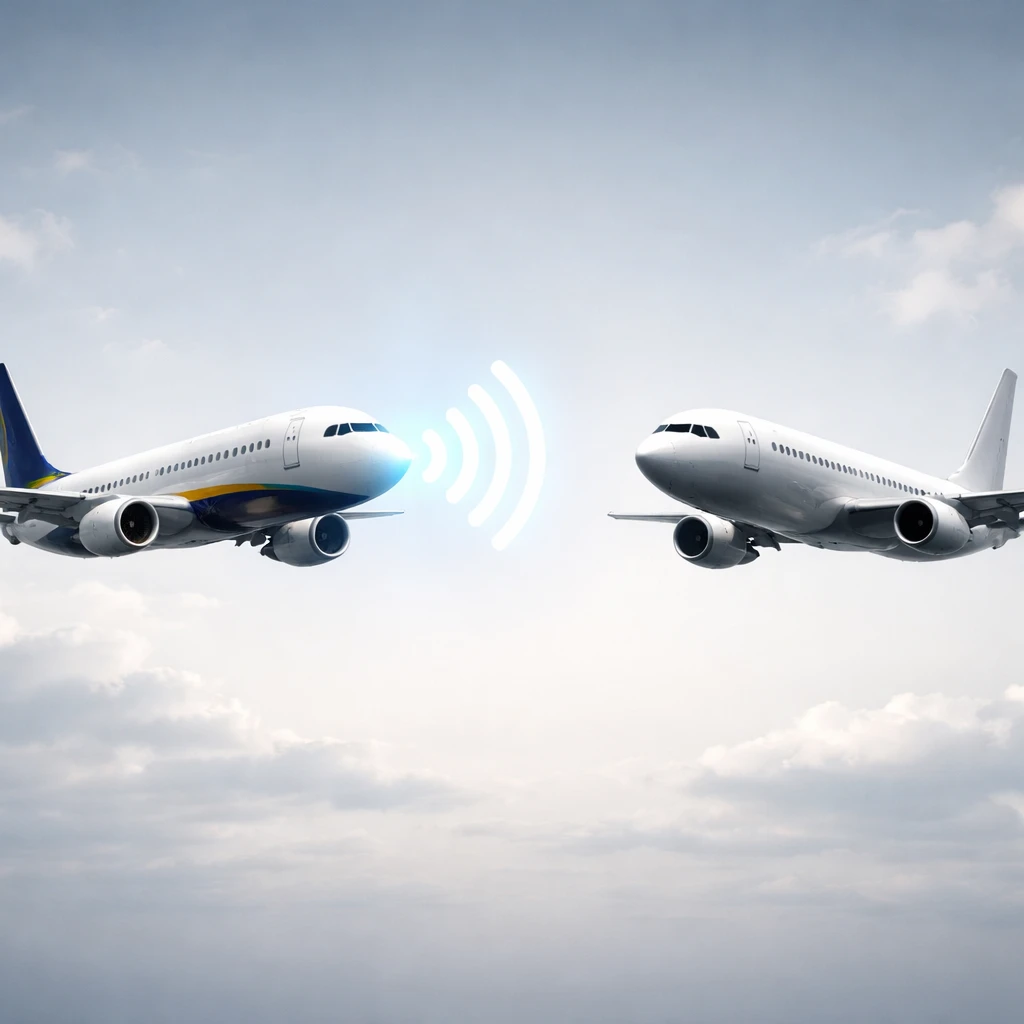
The dispute ignited earlier in January when O’Leary announced that Ryanair would not equip its aircraft with Starlink, the satellite internet service developed by Musk’s aerospace company SpaceX. The airline’s CEO cited concerns about additional aerodynamic drag from the installation of the dual antennae required on each plane’s fuselage, and the subsequent elevated fuel costs this would incur. O’Leary contends that these factors make the technology economically unviable for Ryanair’s fleet of 643 planes.
On the same day he made these remarks, Musk responded via a post on his social media platform X, dismissing O’Leary’s concerns as “misinformed,” and suggesting the fuel consumption differences would be negligible or below measurable thresholds. However, Musk also resorted to personal insults, labeling O’Leary with terms such as “utter idiot” and “retarded twat.”
O’Leary, known for his sharp tongue and media savvy, retaliated during a live interview on Irish radio station Newstalk, where he dismissed Musk’s opinions on flight mechanics as baseless, affirming, “What Elon Musk knows about flights and drag would be zero.” Despite Musk’s wealth and reputation, O’Leary was unperturbed, characterizing him as an “idiot” who lacked practical knowledge specific to aviation.
When questioned about whether Musk’s derogatory remarks had provoked any personal offense, O’Leary conveyed a matter-of-fact attitude. He compared the insults to those routinely exchanged with his teenage children at home, saying, “I don’t need to go outside to be insulted.” He accepted the interactions as part of the broader public discourse surrounding the disagreement.
Diving deeper into Ryanair’s rationale for rejecting the Starlink network, O’Leary acknowledged that the system itself is technically sound and widely regarded. Nevertheless, he emphasized that the installation and operational costs would be substantial—estimated to be between $200 to $250 million annually. This figure encompasses both the initial hardware expenses and the increased fuel expenditure linked to the aerodynamic impact from the added antenna structures on each aircraft.
According to O’Leary, Ryanair’s low-cost business model precludes recovering these additional expenses by charging passengers for internet access. Contrary to Starlink’s claims that approximately 90% of airline passengers are willing to pay for connectivity, Ryanair’s internal data indicates that fewer than 10% of their travelers would opt to purchase such a service.
The continuing exchanges between the two figures have escalated beyond technical debates, with Musk even broaching the prospect of acquiring Ryanair. Musk suggested humorously on social media the idea of buying the airline and appointing a management team with an actual “Ryan” at the helm. He queried the potential cost of such a takeover as part of the playful confrontation.
In response to this notion, O’Leary noted a regulatory caveat that prevents non-European Union citizens from holding majority ownership stakes in EU-based airlines. However, he expressed openness to Musk making an equity investment, labeling it as “a very good investment,” and alluding to potentially superior returns compared to Musk’s endeavors with the X platform. O’Leary extended gratitude for the “additional publicity” generated by the feud, reinforcing his strategic use of media attention to bolster Ryanair’s visibility in a competitive market.
SpaceX, headquartered in the United States and primarily known for rocket manufacturing and space transportation services, had not provided a direct comment at the time of this report. Similarly, Ryanair had not issued further statements beyond those made by O’Leary.