
Sean Duffy Critiques Gavin Newsom on California High-Speed Rail Progress and Costs
February 5, 2026
Business News

Sean Duffy Critiques Gavin Newsom on California High-Speed Rail Progress and Costs

Lawmaker challenges the viability and expense of California’s high-speed rail initiative amid recent developments

Summary

Transport Secretary Sean Duffy has publicly expressed sharp criticism towards California Governor Gavin Newsom's high-speed rail project. Questioning the project's progress and highlighting its escalating costs, Duffy describes it as a 'train to nowhere' with a prohibitive $135 billion estimated expenditure. Meanwhile, Newsom has updated the public on construction readiness and job creation associated with the project.

Key Points

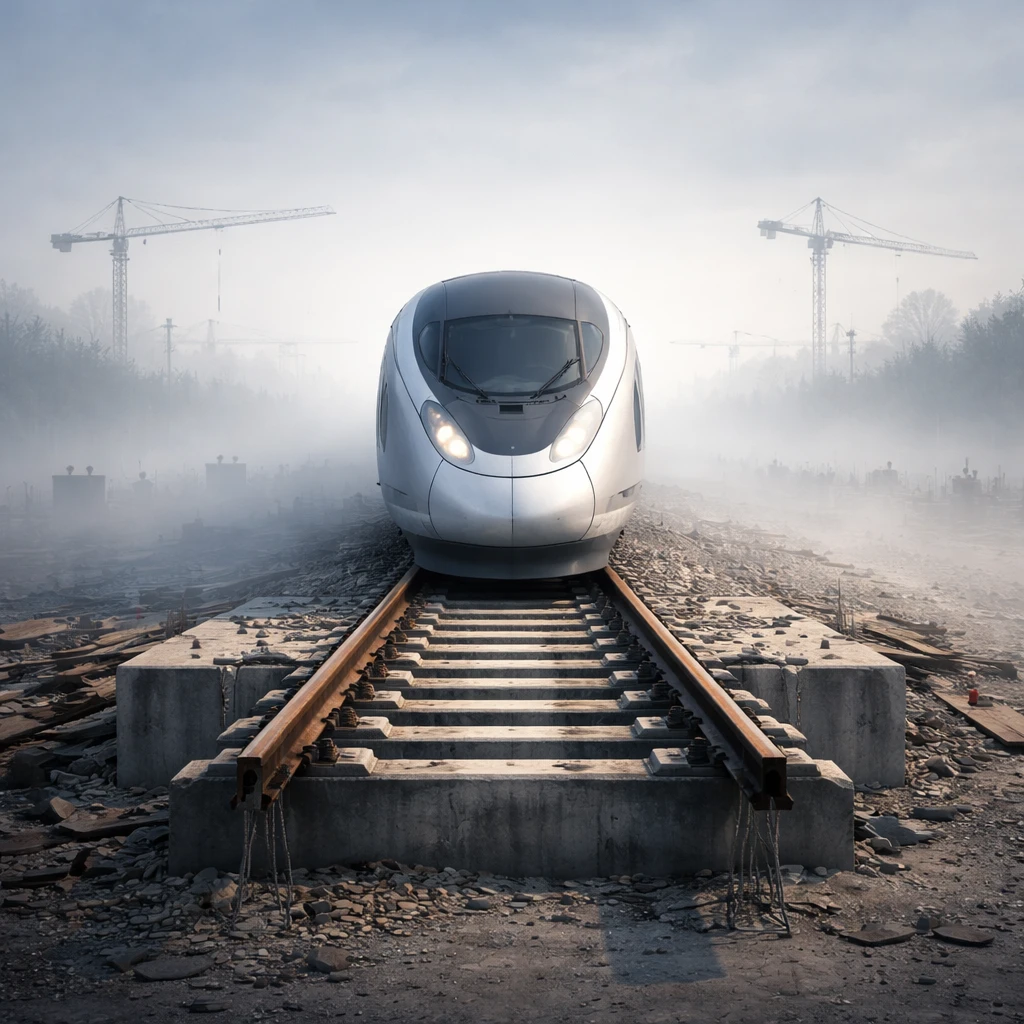
Transport Secretary Sean Duffy has publicly criticized California Governor Gavin Newsom’s high-speed rail project, calling it a 'train to nowhere' due to lack of installed high-speed track.
Duffy highlighted the project's estimated cost of $135 billion, with $16 billion funded by federal taxpayers, emphasizing the high expenditure involved.
Governor Newsom reported that over 463 miles of the planned 494-mile first phase are ready for construction and noted the creation of more than 16,400 jobs through the project.
Legal and political disputes have surrounded the project, including the Trump administration’s cancellation of $4 billion in funding and subsequent lawsuits that were dismissed.

Sean Duffy, the United States Transport Secretary, recently voiced severe disapproval concerning the ongoing high-speed rail project in California championed by Governor Gavin Newsom. His critical remarks came through a social media statement on the platform X, where he openly questioned the project's progress and its substantial financial demands.

In his communication, Duffy derided the project as a 'train to nowhere,' pointing out that despite the considerable time and money invested, no high-speed rail tracks have yet been installed. He strongly emphasized that the recent updates from Governor Newsom about the project were underwhelming and failed to justify the expenditure involved.

Addressing the project's financial dimensions, Duffy labeled the cost as a 'monstrous $135 billion price tag,' highlighting the magnitude of investment required. Within this budget, he noted that federal taxpayers have already contributed approximately $16 billion. Although he expressed a sardonic wish of good luck to Governor Newsom moving forward, Duffy emphasized that federal taxpayers were not ultimately liable for the full expenses, crediting his and former President Donald Trump's efforts in ensuring federal financial exposure was limited.

Governor Gavin Newsom, on his part, recently issued updates on progress with the high-speed rail venture. According to his statements, more than 463 miles out of the 494 miles planned for the initial phase of the project have reached a status ready for construction. He also underscored the project's role in employment generation, reporting over 16,400 jobs created as part of this initiative.

The high-speed rail program has long been contentious, with significant scrutiny directed towards its management, cost overruns, and timeline extensions. The confrontation between Governor Newsom's office and the previous Trump administration is notable, especially concerning federal funding issues. The Trump administration had canceled $4 billion previously allocated to this project, which prompted legal action from California; however, the courts dismissed the lawsuit. Additionally, former President Trump deemed the project as 'disastrously overpriced,' further fueling the debate surrounding its financial prudence and strategic value.

In a different development related to the rail industry, Union Pacific Corporation and Westinghouse Air Brake Technologies signed a $1.2 billion agreement focused on modernizing AC4400 locomotives. The modernization effort aims to enhance locomotive reliability and improve fuel efficiency, highlighting ongoing investments in rail infrastructure and technology outside the high-speed rail project.

This modernization deal demonstrates a concurrent commitment within the freight and locomotive sectors to upgrade equipment performance, contrasting with the challenges faced by California’s high-speed rail initiative.

Overall, these events reflect the complex dynamics in rail infrastructure projects in the United States, balancing innovation, fiscal management, and political oversight.

Risks
  • No high-speed rail tracks have yet been installed despite significant spending, raising concerns about project progress and execution.
  • The extremely high estimated costs ($135 billion) pose financial risks, including budget overruns and taxpayer burden.
  • Political conflicts and funding uncertainties continue to threaten the continuity and support for the project.
  • Legal challenges have arisen due to funding disputes, indicating potential delays or complications in project financing.
Disclosure
Education only / not financial advice
Search Articles
Category
Business News

Business News

Ticker Sentiment
UNP - neutral WAB - neutral
Related Articles
Social Security to Revamp Appointment Scheduling and Claims Processing from March 7, 2026

Starting March 7, 2026, the Social Security Administration (SSA) will implement significant operatio...

Tejon Ranch: Deep-Value Land Option Under the Surface

Tejon Ranch (TRC) is a diversified landowner turning non-current land assets into mixed-use real est...

Commerce Secretary Lutnick Clarifies Epstein Island Lunch Amid Scrutiny Over Relationship

Commerce Secretary Howard Lutnick acknowledged having a family lunch with convicted sex offender Jef...

Paramount Enhances Hostile Proposition to Thwart Netflix-Warner Bros. Discovery Merger

Paramount Pictures has escalated its aggressive pursuit to acquire Warner Bros. Discovery by introdu...

Maximizing Your 401(k): Understanding the Power of Employer Matching

Overestimating investment returns can jeopardize retirement savings. While it's prudent to plan cons...

Why Retirement Savings Remain Stagnant and How to Address Common Pitfalls

Many individuals find themselves concerned about the insufficient growth of their retirement account...