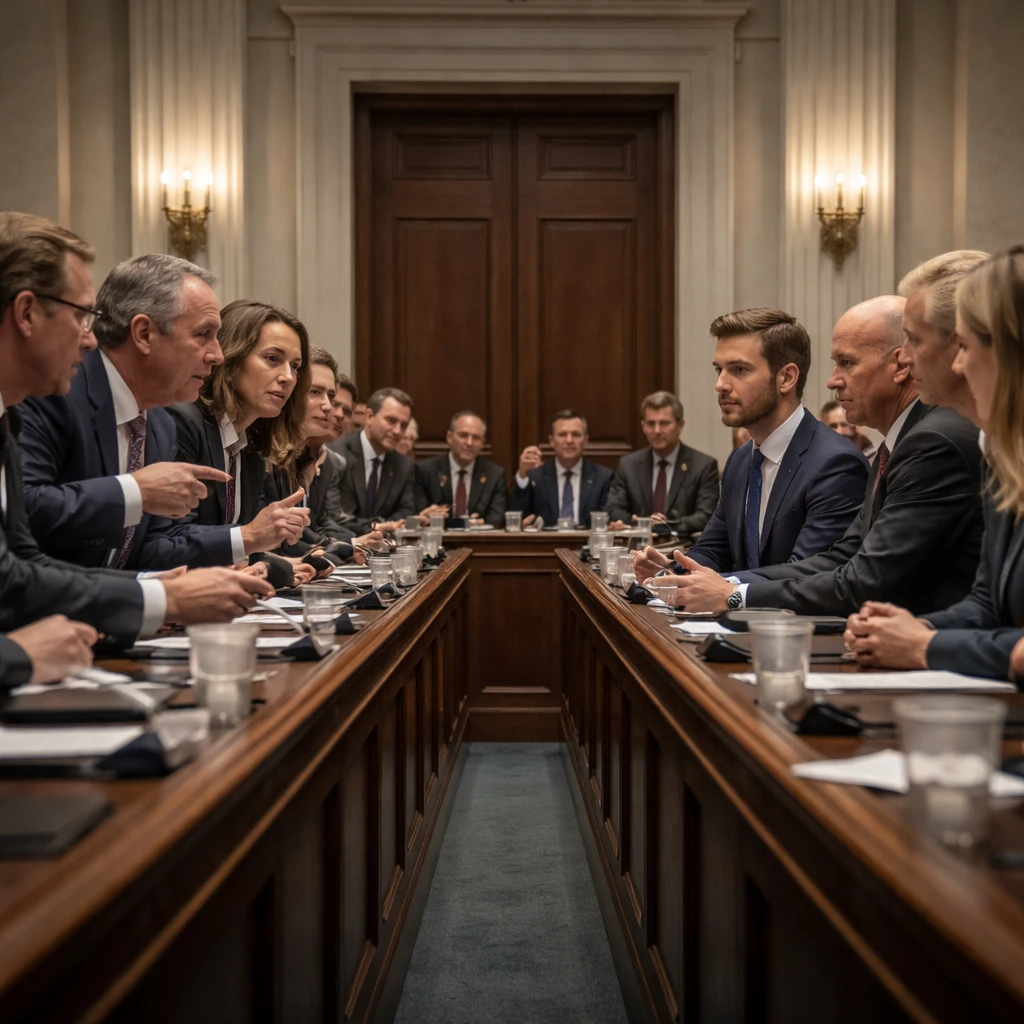

On a Tuesday Senate hearing focused on the antitrust evaluation of Netflix's pending $83 billion acquisition of Warner Bros. Discovery's streaming and studio operations, Netflix co-CEO Ted Sarandos faced a distinctly contentious atmosphere. While a number of senators raised traditional antitrust-related questions involving competition, labor implications, and consumer pricing, several conservative members steered the discussion toward sharp criticisms of Netflix's content ethos, accusing the company of deliberately promoting 'woke' culture and "transgender ideology" through its programming.
The hearing unfolded amid ongoing political culture wars, reflecting themes echoed by conservative influencers aligned with the MAGA movement. These voices had previously urged the Trump administration to prevent the merger on grounds extending beyond standard regulatory concerns, suggesting the deal could exacerbate perceived cultural biases in media. Notably, CNN - an entity owned by Warner Bros. Discovery - was clarified as not being part of the proposed transaction.
One of the most vocal critics in the Senate, Senator Eric Schmitt, took issue with what he characterized as Netflix's consistent manufacture of "the wokest content in the history of the world." Schmitt contended that Netflix habitually promotes diversity, equity, and inclusion (DEI) objectives and indulges in children's programming that he considers overly sexualized. He asserted, "The overwhelming majority of your stuff is overwhelmingly woke, and it's not reflective of what the American people want to see." Schmitt questioned why approval should be granted for Netflix to become "the largest behemoth on the planet related to content" given this context.
Responding to these assertions, Sarandos firmly denied that Netflix operates with a political agenda. He emphasized the platform's hosting of a broad programming spectrum that caters to a range of perspectives "left, right and center," inviting senators and viewers alike to browse Netflix's offerings to verify these claims.
Senator Josh Hawley also entered the narrative by interrogating Netflix's presentation of content aimed at children. He alleged that "so much" of Netflix's children-specific programming advances transgender ideology. Following Sarandos' rebuttal labeling this claim as "inaccurate" and highlighting the platform's diverse storytelling aimed at various audience tastes, Hawley countered by stating that "almost half" of Netflix's children's content involves "this highly controversial, highly sexualized material." Hawley did not submit a source to substantiate this proportion, but his critique closely paralleled a recent anti-Netflix report issued by a conservative outlet with origins at the Heritage Foundation. This report, disseminated among allied senators prior to the hearing, accused Netflix of engaging in "social engineering through entertainment" and reiterated a number of familiar right-wing critiques.
The opposition narrative gained further momentum from conservative commentators intertwined with Trump's political sphere. They portrayed the merger as creating a monopolistic entity that would aggressively propagate what they term "trans ideology, race guilt, and anti-family messaging," directly influencing viewers' domestic environments. One such voice, MAGA podcaster Benny Johnson, described the merged company as a platform pushing these cultural messages into American homes.
Despite Sarandos' attempts to clarify the platform's content diversity, the cultural critiques persisted. Senator Ted Cruz amplified the discourse by labeling Netflix a "left-wing company," referencing the sample multi-year production deal Netflix secured with former President Barack Obama and Michelle Obama. Cruz cautioned that the merger risks establishing "a propaganda outlet pushing one particular political view with much greater market power." Netflix representatives have occasionally remarked that the company benefits from appealing to politically diverse audiences to maintain subscriber retention across varying ideological groups.
The hearing thus became less a straightforward antitrust evaluation and more a platform through which cultural and political battlegrounds over Netflix's content strategy were visibly contested. These developments suggest that regulatory decisions on this high-profile deal may be influenced not only by traditional market competition factors but increasingly by partisan perceptions of corporate influence over cultural narratives.