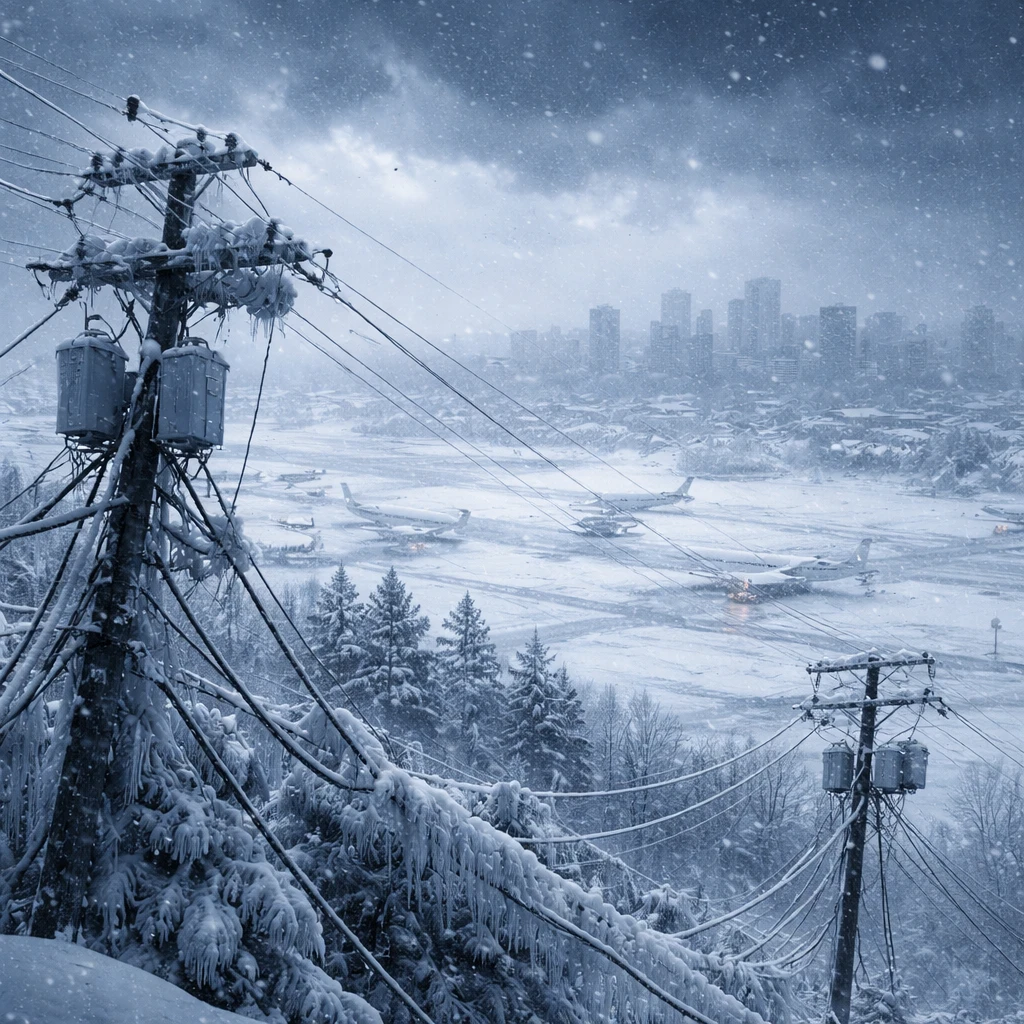

The eastern region of the United States, encompassing a broad corridor from Texas through the Mid-South, is currently enduring one of the most severe winter weather events of recent times, characterized by heavy snowfall, ice accumulation, and dangerously cold temperatures. This storm has led to widespread power outages affecting almost one million homes and enterprises and caused an unparalleled spike in flight cancellations, severely impacting transportation and energy infrastructure alike.
Emerging on Sunday, the storm system brought with it a combination of intense snowfall and significant ice buildup. This has adversely affected power distribution networks, primarily across Tennessee, Mississippi, and Louisiana, where icy conditions have led to the collapse of numerous power lines. As a result, approximately 933,000 customers remain without electricity, underscoring the extensive reach of this weather event.
In addition to power system interruptions, air travel has been profoundly disrupted. Airlines suspended more than 10,000 flights on Sunday alone, marking the highest single-day volume of cancellations since the onset of the COVID-19 pandemic. This figure represents more than double the cancellations recorded just the previous day, illustrating the storm's rapid escalation in impact. Major airports in the New York metropolitan area experienced particularly severe disruptions, with cancellations exceeding 80 percent of scheduled departures at Newark Liberty International Airport, LaGuardia Airport, and John F. Kennedy International Airport.
Confronted with the escalating crisis, federal and state authorities have enacted emergency procedures to maintain grid stability and prevent broader blackouts. The US Energy Department has instructed Texas’s grid operator to activate backup capabilities within data centers during periods marked by intense operational stress. Furthermore, an emergency directive allows the PJM Interconnection, the country’s largest regional transmission organization, to utilize resources beyond normally mandated environmental or legal emission limits. This exceptional allowance aims to bolster electricity generation and reliability amid the heightened demands imposed by the storm.
The surge in electricity consumption, driven by heating needs during the unprecedented cold snap, has led to a sharp increase in wholesale power prices. In states such as Virginia, Maryland, and Washington, prices have doubled, reflecting strained supply conditions. Meteorological forecasts signal that temperatures will remain at dangerously low levels in the coming days, perpetuating the stress on energy systems and inflicting further disruptions across affected regions.
Beyond immediate operational challenges, this weather event emphasizes the vulnerability of critical infrastructure to extreme meteorological phenomena. The combination of prolonged outages and transportation gridlocks exerts significant economic pressure on communities, businesses, and service providers. Elevated energy costs compound financial burdens for residential and commercial consumers, highlighting the necessity of resilient networks capable of withstanding such climatic shocks.
This situation serves as a stark reminder of the importance of advancing infrastructure robustness and emergency preparedness frameworks to mitigate the adverse effects of increasingly severe weather incidents. Continuity of services and timely restoration efforts remain essential priorities as the affected areas navigate the ongoing storm and its aftermath.