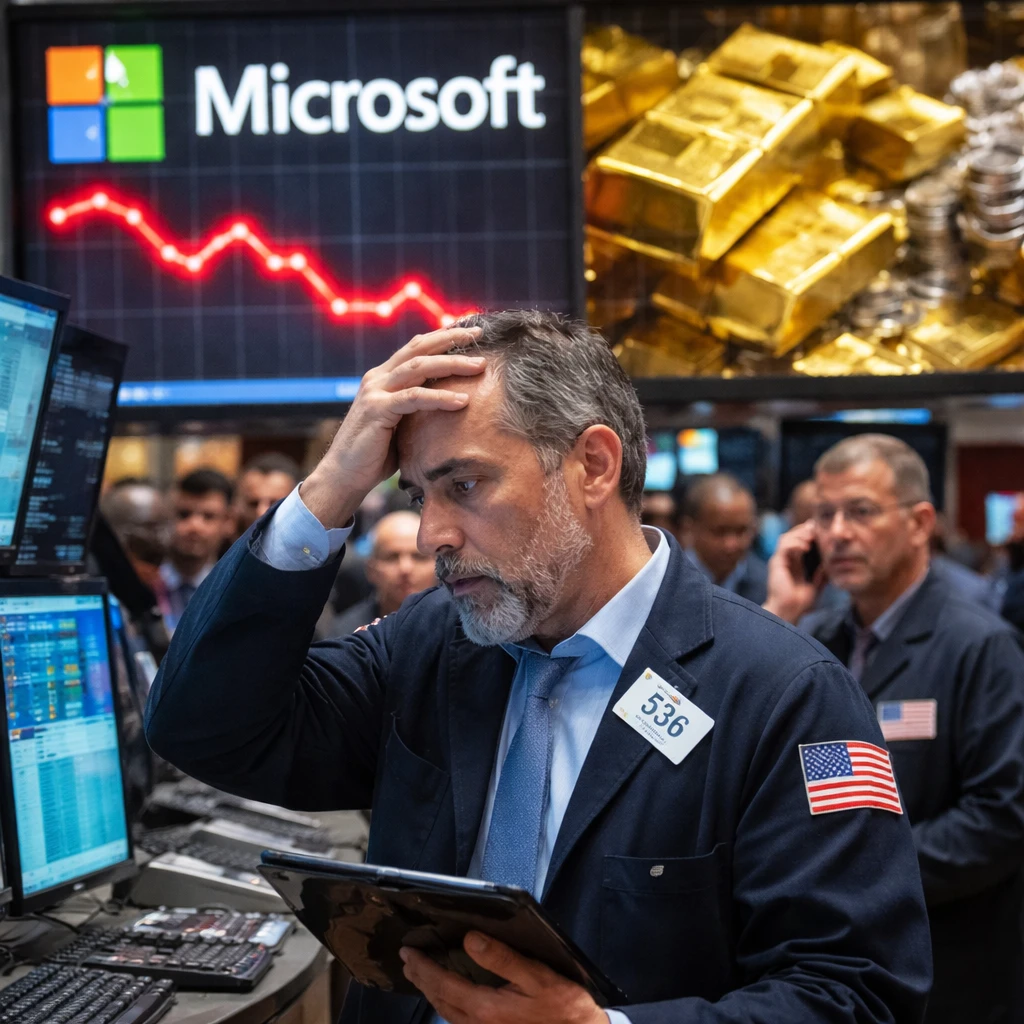

The New York stock market retreated from recent peaks on Thursday, largely due to a sharp decline in Microsoft shares, which fell 12% despite posting quarterly profits and revenues exceeding analysts' forecasts. The S&P 500 index declined by 1% after briefly nearing its highest-ever levels earlier in the day. Similarly, the Dow Jones Industrial Average dropped 113 points, or 0.2%, and the Nasdaq composite experienced a 1.9% decrease as of midday Eastern Time.
Microsoft’s substantial drop acted as the primary drag on the market, accounting for over two-thirds of the S&P 500’s overall fall. Investors appeared to concentrate on the company’s growing expenditures on investments and the outlook for the growth pace of its Azure cloud platform. Concerns also surfaced regarding the time frame needed for its investments in artificial intelligence technologies to translate into significant profitability. This caused the share price to fall precipitously, marking the worst single-day percentage decrease for Microsoft since the market downturn related to the COVID-19 pandemic in 2020.
Tesla shares also contributed to market pressure, declining 2.3%. Although the electric vehicle maker reported higher quarterly profits than anticipated, its results showed a notable decrease compared to the same period a year earlier. CEO Elon Musk has been attempting to shift investor focus from decreased vehicle sales toward future prospects involving robotaxis and robotic technologies.
Broadly, companies across the market continue to face intense scrutiny to deliver at least steady profit growth following a period of record stock price gains. Over the long term, stock valuations tend to align with the trajectory of corporate earnings, and sustained profit increases are necessary to quell concerns about inflated stock prices.
ServiceNow was among the losers as well, with its stock declining 11.8% despite quarterly profits surpassing expectations. While analysts commended its financial performance, the shares continued a downward trend initiating earlier in the summer months.
Nonetheless, the majority of stocks in the S&P 500 posted gains that day. Meta Platforms, the parent company of Facebook, Instagram, and WhatsApp, advanced 8.6% after beating profit estimates. The company also indicated it plans to maintain substantial investments in artificial intelligence. IBM climbed approximately 6% after exceeding analysts’ revenue and profit expectations. Southwest Airlines experienced a remarkable 15.4% increase in its stock price despite quarterly profits falling short of forecasts. The airline’s optimistic earnings projections for 2026 highlighted strong momentum, attributed to changes such as implementing baggage fees and assigned seating.
The metals markets also displayed significant fluctuations, particularly in precious metals. Gold prices surged to nearly $5,600 per ounce earlier in the day before plunging swiftly below $5,200, settling around $5,286.90 — a 1% decrease from the previous session's close. Gold had recently reached an all-time milestone by surpassing $5,000 per ounce only days prior and had approximately doubled in value over the last year. Silver, following a similar trend, underwent a comparable sharp reversal after its own rapid gains.
The rapid appreciation in precious metals can be attributed to investors seeking safe-haven assets amid a complex risk landscape. Concerns include perceptions of overvalued U.S. equities, geopolitical instability, ongoing threats of tariffs, and substantial sovereign debt burdens worldwide. However, this safe-haven appeal encounters limitations when asset prices become excessively elevated, prompting critique that precious metals had overheated and were due for correction. Digital assets like bitcoin, often referred to as "digital gold," also declined sharply, dropping nearly 5% to approach $85,000.
Parallel to these movements, the U.S. dollar has depreciated over the past year due to many of the same risks driving metals prices higher. Nonetheless, the dollar remained relatively steady against major currencies such as the British pound and euro during the trading session. In fixed income markets, the yield on the 10-year Treasury note dipped slightly to 4.24% from 4.26% late Wednesday.
Recent Federal Reserve policy actions have influenced these dynamics. The Fed announced a pause in cutting its primary interest rate after implementing three consecutive cuts late last year aimed at supporting employment. Persistent inflation above the central bank’s 2% target underpins the cautious stance toward further rate reductions. Lower rates typically exacerbate inflation and can weaken the dollar, which might benefit U.S. exporters. Former President Donald Trump has criticized the Fed’s chair for allegedly delaying interest rate cuts.
Markets overseas reflected a positive tone, with stock indices across Europe and Asia mostly climbing. South Korea’s Kospi rose 1%, reaching new highs, bolstered in part by strong performance from chipmaker SK Hynix.