L&F Co., a South Korean enterprise manufacturing high-nickel cathode materials essential for electric vehicle (EV) batteries, reached an unexpected financial high in early 2023 due to a projected supply agreement with Tesla and its affiliates. In February 2023, the company entered into a contract with Tesla extending through 2025, valued initially at $2.9 billion. This significant deal was anticipated to expand L&F's customer portfolio and secure a direct footing with one of the most influential automakers globally.
The announcement ignited investor enthusiasm, propelling L&F's share price upward, and catapulting its chairman and CEO, Hur Jae-hong, and his family into the Bloomberg Billionaires Index, with their combined holdings peaking at a paper valuation exceeding $800 million. This milestone was particularly notable as it emerged from a manufacturing supply contract rather than traditional sources such as real estate or cryptocurrency investments.
However, by late December 2023, a critical adjustment emerged. A regulatory filing in South Korea disclosed that the previously projected contract value with Tesla was effectively reduced to $7,386. The revision cited a "change in supply quantity" but lacked further detail or clarification. Industry analysts and market observers widely interpreted this reduction as a response to Tesla’s production challenges.
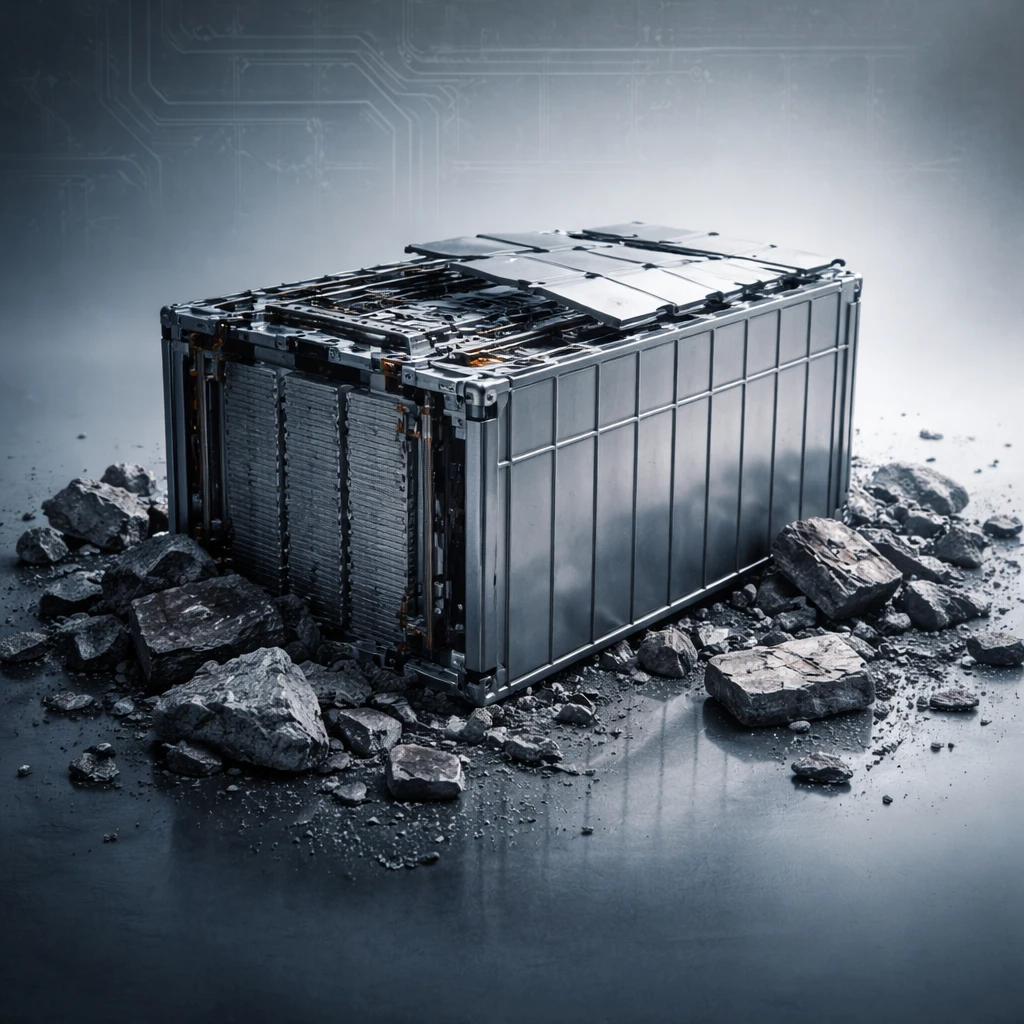
Tesla has struggled to mass-produce its proprietary 4680 battery cells, a technologically advanced format intended to enhance EV performance and production efficiency. These cells were planned predominantly for use in Tesla’s Cybertruck, a vehicle whose market debut faced multiple delays and slower than expected consumer adoption. The standstill in scaling 4680 cell production consequently diminished Tesla's battery order volumes.
A senior analyst from Samsung Securities explained to Reuters that the combination of weak demand and suboptimal manufacturing yields likely prompted Tesla to reduce its orders from L&F substantially, eroding the anticipated revenue streams that had once elevated L&F’s valuation.
The fallout affected L&F's market performance as well; the company’s shares retreated over 70% from their peak in 2023 on the Korean Exchange. Investor confidence waned due to the cooling enthusiasm surrounding the electric vehicle market and concerns regarding L&F’s heavy dependence on a limited set of major customers.
The anticipated Tesla deal initially represented a significant strategic opportunity to rebalance this dependence. The contract was poised to help L&F diversify its sales base, reducing its reliance on LG Energy Solution, its primary client, which contributes approximately 80% of its revenues.
With the reassessment of the Tesla contract value, the Hur family’s holdings in L&F have contracted considerably, from over $800 million to roughly $134 million, reflecting the erosion of what was once a monumental financial gain. The dramatic revision underscores the volatility and risks associated with supply agreements in emerging technology sectors.
Despite the lost contract value, L&F still maintains significant indirect involvement in Tesla's supply chain. Based on a research note cited by Bloomberg, analyst Changmin Lee from KB Securities noted that L&F continues to supply LG Energy Solution, which produces battery components for Tesla’s high-volume vehicles such as the Model Y. This indirect relationship is reported to be proceeding without disruptions, even amid the direct supply challenges reflected in the December filing.
Previously, the Tesla agreement was integral to L&F’s strategy to diversify its client base away from the dominance of LG. The goal, announced publicly in past reports, was to reduce LG’s share of L&F’s sales to about 50% by 2025. This plan incorporated not only Tesla but also a 2021 contract with Redwood Materials, a battery recycling company co-founded by a former Tesla engineer.
Given the collapse of the direct Tesla contract, this diversification objective appears to be at risk. The timeline and commitment to diminish reliance on LG Energy Solution now face considerable uncertainty, as the Tesla deal had been a cornerstone of L&F’s broader business growth and risk mitigation strategy.
Looking ahead, L&F may still have opportunities to enhance its production output and client roster. Bloomberg reported that the company is scheduled to commence full-scale production for Rivian Automotive in 2026 following a contract secured in early 2025. Additionally, L&F supplies mid-nickel cathode materials to SK On, a battery manufacturer supplying electric vehicles for Hyundai Motor Company. These contracts may offer growth avenues outside of the Tesla segment.
Nevertheless, the once-promising $2.9 billion Tesla supply contract now remains a minor entry valued at $7,386 in corporate filings, casting a long shadow over the company’s dramatic financial journey and profoundly contracting the Hur family's paper wealth.