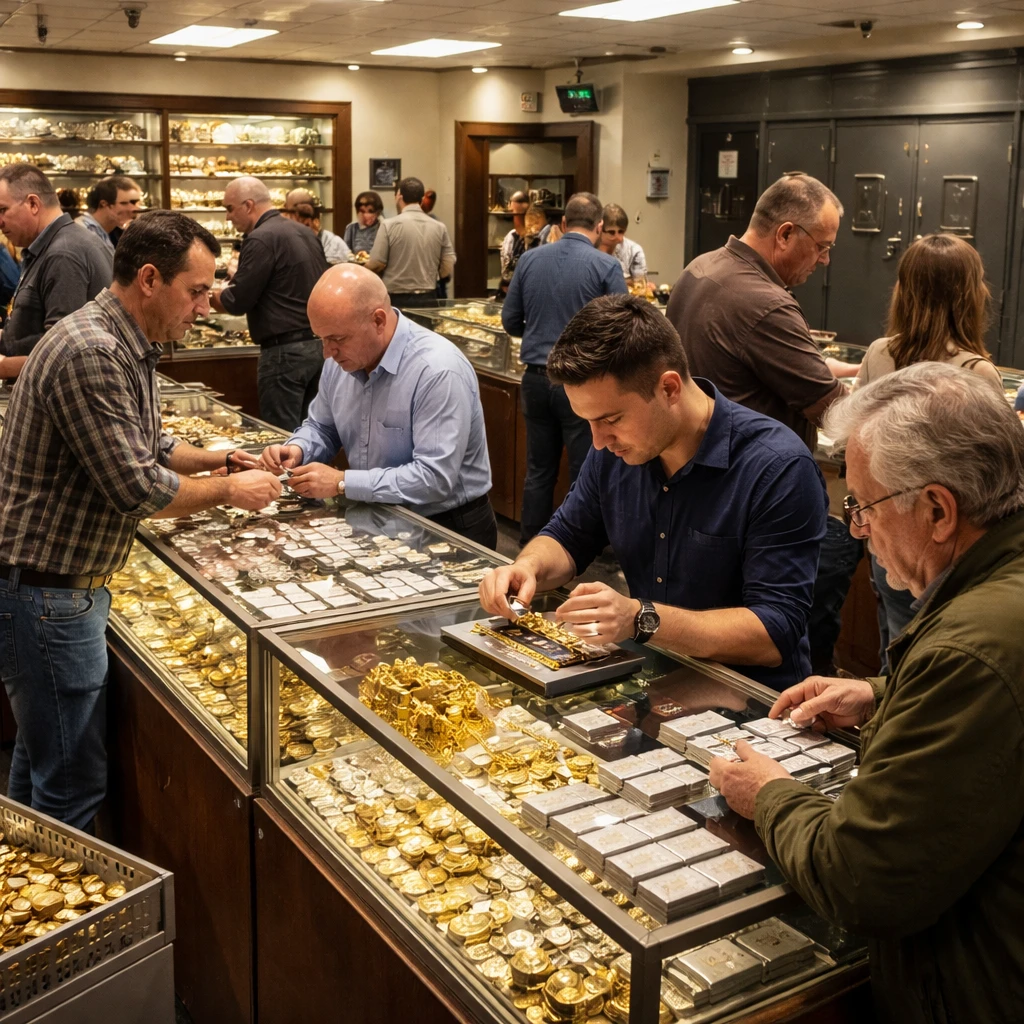

In the heart of San Francisco, Witter Coin owner Seth Chandler is witnessing a surge in customers that’s difficult to match in any typical retail environment. With lines extending beyond the door and a velvet rope cordoning off eager sellers, his coin shop is now regularly guarded by security personnel to manage the swell of visitors. Unlike nightclubs or dining establishments commonly associated with queues and bouncers, Witter Coin specializes in buying and selling precious metals, an enterprise experiencing a boom as Americans rush to liquidate gold and silver holdings.
Chandler, who has operated Witter Coin since 2016, described the current pace as unparalleled in his experience. "I've never seen anything like it," he remarked, noting that daily transactions have surged dramatically. His staff has doubled to handle the influx, reflecting the unprecedented demand paired with historic prices. For the first time ever, gold prices recently hit a landmark of $5,000 per ounce, effectively doubling compared to just a year ago. Meanwhile, silver has more than tripled during the same period, climbing above $100 per ounce, a level unseen in modern times.
This price phenomenon is prompting a spectacular wave of selling from everyday Americans, who are turning to pawnshops and coin dealers nationwide to monetize various forms of precious metals. These range from investment-grade bars and bullion to heirloom silverware and broken jewelry. According to Chandler, the number of visitors to his showroom has increased by four to five times compared to two years prior, with a notable doubling just in the past six months as metal prices continued to climb sharply.
Precious metals like gold and silver have long been regarded as "safe haven" assets. Investors often migrate their capital into these stores of value during periods of financial or geopolitical uncertainty. This dynamic has played out recently as political tensions and economic policy uncertainty, including President Donald Trump's proposals affecting global trade and territorial acquisitions, have contributed to rising prices.
Ole Hansen, head of commodity strategy at Saxo Bank, explained that gold and silver attract investment because there is a prevailing belief that these metals can preserve value even in the event of market corrections or inflation resurgence in the United States. This belief drives both demand and price appreciation.
From the perspective of coin shops and precious metal dealers, elevated prices create a two-fold benefit. Sellers are more motivated to convert their items into cash, while buyers anticipate potential further appreciation. Financial institutions such as Goldman Sachs and Bank of America project gold prices could extend to between $5,400 and $6,000 an ounce by year-end, adding to the bullish sentiment among buyers and sellers alike.
At Witter Coin, transactions have occasionally involved up to $1 million worth of precious metals, signaling the scale of the current activity. However, an interesting operational shift has occurred amid soaring prices. Items that might have been resold intact are now often dismantled and their raw metal content sold to refineries. This means rare and historically significant pieces are being sacrificed for their basic material value. Chandler recounted the bittersweet dismantling and melting of a meticulously handcrafted 18-karat gold pocket watch from the 1880s, a piece with considerable artisanal and historical merit but, given the current price environment, more valuable as raw gold.
Across the country in Arlington Heights, Illinois, Kelly Swisher, proprietor of Arlington Jewelry and Pawn, is similarly hands-on with this precious metal resurgence. The shop experiences robust weekly inflows of gold and silver products, with values climbing far beyond prior expectations. Swisher highlighted the remarkable trajectory of silver prices, noting a transaction where a silverware set recently fetched $6,000, compared to roughly $2,800 a year prior—a staggering increase reflecting silver’s spectacular turnaround, which saw a 141% price jump throughout 2025, marking its most substantial annual gain since 1979. Silver prices continue an impressive upward trend, already rising 60% in the current year.
Several factors underpin silver’s robust performance, including its reputation as a safe haven asset akin to gold, strong industrial demand, and persistent supply shortfalls. Dealers like Seth Gold, vice president of American Jewelry and Loan in Detroit, Michigan, attest to an exponential increase in silver being brought in for sale, noting a rise from a few customers per week to a dozen or more daily in recent weeks.
The booming demand isn't limited to pristine bars or investment coins. Consumers nationwide are scouring their homes for anything containing precious metals—from family heirlooms and sterling silver sets to scrap gold and broken jewelry. For many, the financial returns have been unexpectedly generous. As noted by Swisher, individuals commonly underestimate the value of their possessions, going from expecting a few hundred dollars for scrap gold to receiving offers in the $800 range. Such windfalls can be profoundly impactful amid the current challenging economic conditions, sometimes eliciting emotional responses from sellers overwhelmed by the sudden influx of cash.
This surge in gold and silver selling activity reflects a broader picture characterized by economic uncertainty and a search for liquidity among everyday Americans. While safely nestled assets like gold and silver continue to shine amid volatile markets, the consequences ripple across the network of dealers, refiners, and sellers in a market dynamically shaped by historic pricing shifts and shifting investor behavior.