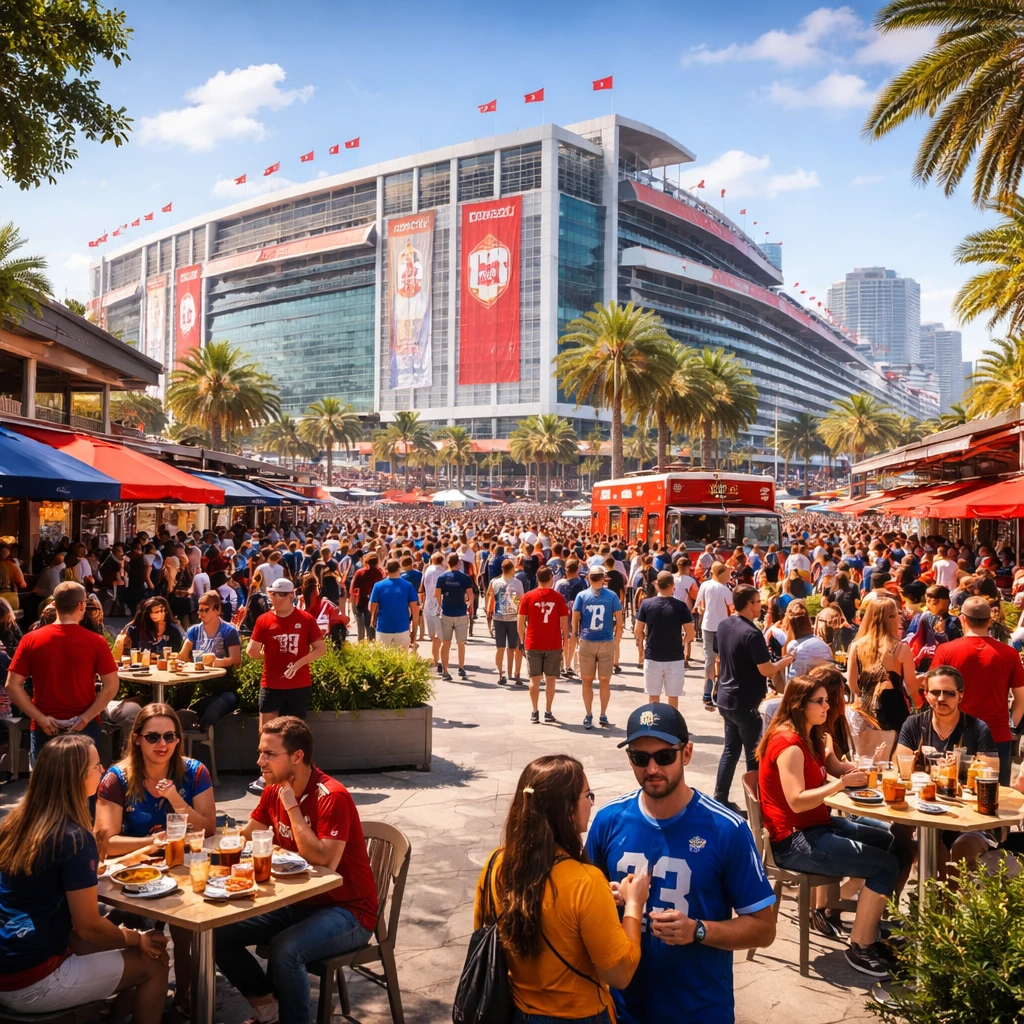

The National Football League continues to be a significant contributor to local economies, as demonstrated by a recent comprehensive analysis of spending patterns surrounding NFL events. With Super Bowl LX scheduled to take place at Levi's Stadium in Santa Clara, California, the spotlight is on how major NFL games influence economic activity in host cities and stadium neighborhoods.
According to an in-depth report from Bank of America Institute, credit card activity surges dramatically on NFL home game days, with spending within the zip codes containing stadiums increasing by an average of 77% compared to days when no games are held. This trend reflects not only the draw of the game itself but also the broader economic vitality brought about by fans gathering in and around these venues.
Consumer Engagement And Spending Trends
Data drawn from the Bureau of Economic Analysis highlights that, as of November 2025, consumer spending related to attending spectator sports rebounded strongly, exceeding 2019 levels by over 25%. These figures align closely with recoveries observed in other live entertainment sectors as pandemic restrictions eased and public confidence returned.
The Bank of America Institute's study, conducted by senior economist David Michael Tinsley, utilized daily internal credit card transaction data from 2017 through 2025. This extensive dataset allowed for tracking game day spending behaviors segmented by NFL divisions and locales.
- The largest relative increase in spending took place in the AFC South division, where stadiums hosting the Houston Texans and Jacksonville Jaguars saw the most pronounced average lift in consumer purchases.
- Areas affiliated with the NFC East, including cities such as Philadelphia and Dallas, experienced more moderate but still statistically significant spending increases on game days.
A notable driver of this economic uplift extends beyond ticket sales. Bars, restaurants, and similar establishments see surges in patronage as fans converge to watch games, particularly impacting local hospitality industries. This effect holds true even in colder climates where attendance at outdoor stadiums may be limited; teams like the Buffalo Bills and Green Bay Packers reported spending increases averaging around 68% on game days.
Spending categories showing the strongest growth include food, lodging, and parking services. These sectors exhibited spending surges nearly twice as large as other consumer categories, underscoring the broader economic ecosystem tied to NFL events.
Team-Specific Economic Influences
Among individual franchises, the Kansas City Chiefs distinguished themselves with the highest average spending increases during home games. This prominence is linked to the team's repeated appearances in Super Bowl contests throughout the 2020s, which have amplified local engagement and spending levels. The association of pop culture icons such as Taylor Swift with the Chiefs further adds to their economic pull.
Additional teams registering significant economic impacts in their stadium vicinities include the Miami Dolphins, Minnesota Vikings, and Dallas Cowboys. Each of these franchises saw game-day spending growth exceeding 100%, indicating strong local economic activity tied to their events.
The Super Bowl's Exponential Economic Effect
While regular NFL games produce notable spending increases, the Super Bowl intensifies this effect considerably. An analysis of five of the previous nine Super Bowls revealed an incremental median spending increase of approximately 7% above typical game-day levels. The 2024 Super Bowl, hosted in Las Vegas, exemplified this pattern, recording over a 40% surge in spending at bars and liquor stores throughout the event weekend, mainly fueled by visitors from out of town.
The upcoming Super Bowl at Levi's Stadium is anticipated to replicate these economic benefits. Historical data from typical San Francisco 49ers home games show roughly a 70% rise in credit card transactions in the local area. Furthermore, when the city hosted the Super Bowl in 2016, it attracted upwards of 1.1 million visitors. This influx translated into substantial increases in hotel occupancy rates and generated elevated sales tax revenue for the region.
Impact On Small Businesses And Local Economies
The ripple effects of NFL games extend beyond large-scale hospitality venues. The 2025 Bank of America Business Owner Report reveals that nearly 58% of small business proprietors adjusted their operational strategies around cultural events like NFL games. More than half of these businesses reported experiencing increased sales during such occasions, and approximately one-third observed higher foot traffic, indicating that the economic uplift permeates through various layers of local commerce.
David Michael Tinsley notes that even modest spending increments tied to significant events can have amplifying effects on local economic health. These findings showcase the NFL's role not only as a sports league but also as an economic catalyst for the communities that host its games.