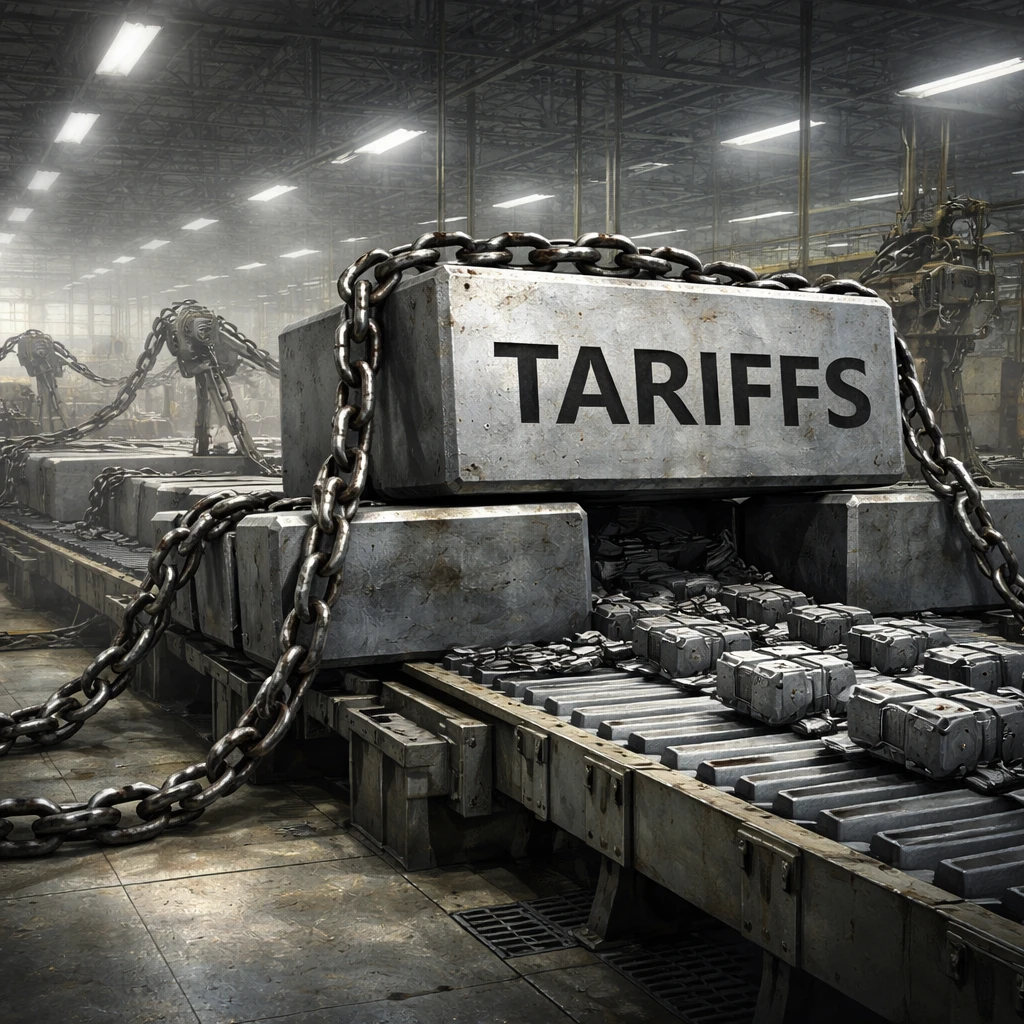

Tariffs Under Trump Identified as Key Driver of Manufacturing Job Contraction
January 12, 2026
Finance

Tariffs Under Trump Identified as Key Driver of Manufacturing Job Contraction

Economist Highlights Supreme Court Ruling as Potential Catalyst for Employment Recovery

Summary

Recent analysis underscores that the employment downturn in the U.S. manufacturing and trade-exposed sectors stems primarily from tariffs imposed during the Trump administration. Despite a slight improvement in overall employment metrics, key industries continue to experience significant job losses, linked directly to trade restrictions. Ancillary factors such as immigration policies and emerging technologies contribute to labor market dynamics, but tariffs remain the predominant influence.

Key Points

Tariffs imposed during the previous administration have caused direct job losses in manufacturing, transportation, distribution, and agriculture-related sectors.
December payrolls increased modestly by 50,000, with the unemployment rate slightly dropping to 4.4%, but annual job growth slowed significantly in 2025.
Manufacturing has experienced an ongoing decline since April, with 70,000 jobs lost, while trade-exposed sectors such as mining, logging, and warehousing also saw job reductions.
Consumer confidence improved modestly in early 2026, particularly among lower-income households, despite persistent concerns about tariffs and the labor market.

U.S. labor markets are currently exhibiting signs of strain, a phenomenon closely linked to the series of tariffs enacted under the former Trump administration, according to economist Mark Zandi. These tariffs have had a pronounced impact on sectors like manufacturing, transportation, distribution, and agriculture-related businesses, contributing to an erosion in employment levels. Zandi's assessment was brought to public attention through his commentary on social media platforms where he explicitly attributed sluggish job market conditions to these tariffs.

The recent labor statistics provide quantitative backing for these claims. In December, payrolls experienced an increase of only 50,000 positions, with the unemployment rate decreasing marginally to 4.4%. On an annual basis, 2025 saw the addition of 584,000 jobs, a stark contraction compared to the 2 million positions added in 2024, and marking the slowest pace of job growth outside recession periods since the early 2000s.

Industry-specific data reveals that sectors vulnerable to international trade pressures have faced pronounced difficulty. Manufacturing has been particularly affected, shedding approximately 70,000 jobs since April. Similarly, the mining, logging, and warehousing fields have also experienced notable declines in employment. In contrast, the health care and social services sectors have managed to maintain relatively stable hiring trends, representing areas of ongoing employment growth.

Zandi recognizes that while other elements such as stringent immigration regulations, recent policy changes, and the rise of artificial intelligence are influencing the labor market, the defining factor remains the deleterious effect of the global trade conflicts initiated by tariff measures.

Supporting analysis from Joe Weisenthal indicates a broad weakening of job creation within manufacturing, evidenced by only 38.2% of manufacturing sub-sectors reporting job increases, a decline from 47.2% in the previous year. This suggests widespread deceleration in manufacturing employment growth. Joel Griffith corroborates this perspective, citing eight consecutive months of job losses in manufacturing, with Trump's tariffs exerting significant downward pressure on employment.

Despite the employment challenges, consumer confidence has shown incremental improvement at the outset of 2026. The preliminary University of Michigan sentiment index for January rose to 54, its highest reading since the previous September. This optimism is largely driven by lower-income consumer segments and easing apprehensions regarding accelerating job losses. However, ongoing worries about elevated prices, persistent tariffs, and a softening job market continue to suppress overall sentiment, which remains diminished relative to the previous year.

Risks
  • Continued impact of tariffs on manufacturing and trade-exposed industries may perpetuate job losses.
  • Restrictive immigration policies could further constrain labor market growth.
  • Emerging technologies like artificial intelligence may introduce additional labor market disruptions.
  • Persistent consumer concerns about prices, tariffs, and labor softness might inhibit broader economic recovery.
Disclosure
Education only / not financial advice
Search Articles
Category
Finance

Financial News

Ticker Sentiment
NATA - neutral
Related Articles
Eddie Bauer Seeks Chapter 11 Protection Amid Rising Tariff and Inflation Challenges

Eddie Bauer LLC has filed for voluntary Chapter 11 bankruptcy protection in the District of New Jers...

Oracle Shares Strengthen Amid Renewed Confidence in AI Sector Recovery

Oracle Corporation's stock showed notable gains as the software industry experiences a rebound, fuel...

SoFi Shares Slip Slightly Despite Strong Q4 Earnings and Bullish Outlook

SoFi Technologies Inc’s stock saw a minor decline Tuesday afternoon following a period of heighten...

Fiserv Posts Strong Q4 2025 Earnings, Stock Climbs Amid Investor Optimism

Fiserv reported fourth quarter 2025 results that exceeded analyst expectations, with revenue of $5.3...

Intel Shares Experience Downward Pressure Amid Supply Constraints in Chinese Market

Intel Corp.'s stock slipped on Tuesday, diverging from modest gains in major market indices. The dec...

Ripple Joins Forces with UAE Digital Bank Zand for Stablecoin Integration Amid XRP Decline

Ripple has announced a partnership with UAE-based digital bank Zand to collaborate on stablecoin ini...