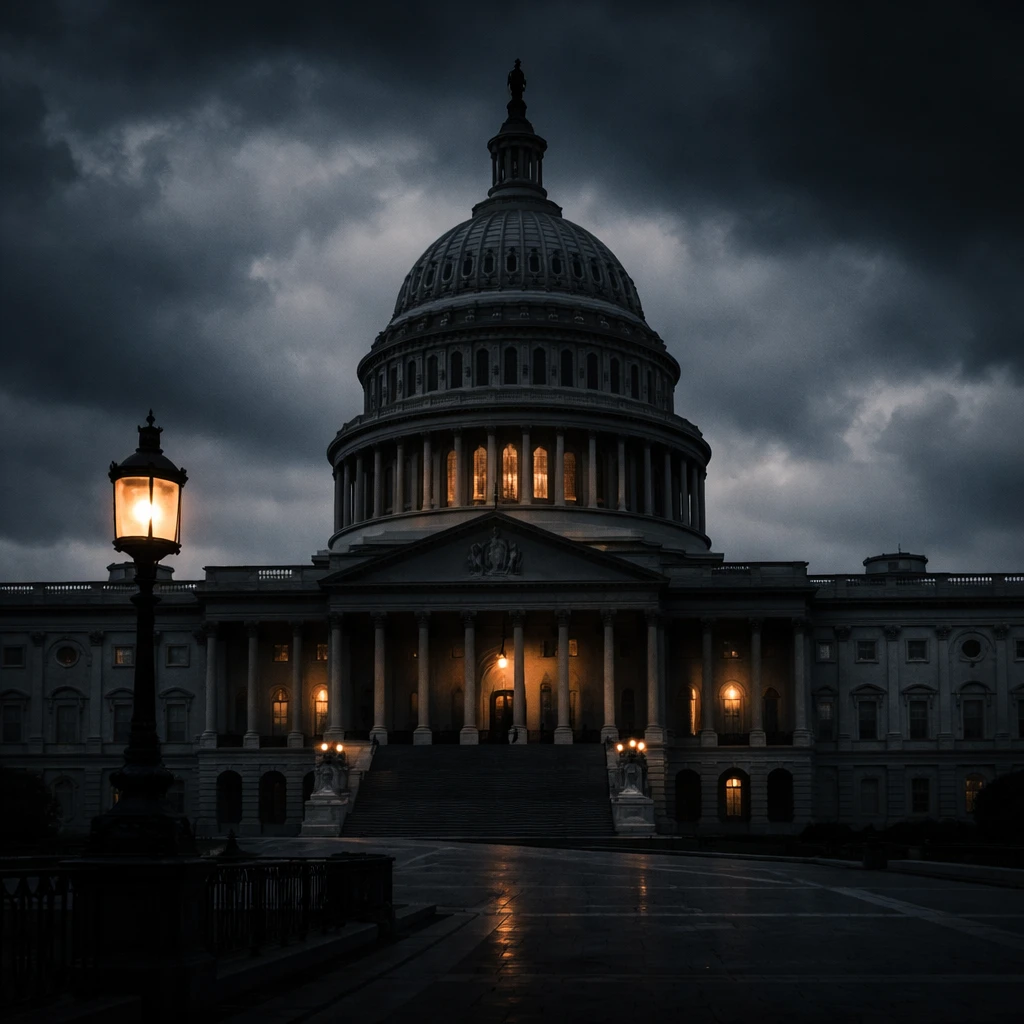

Senator Ted Cruz of Texas has forecasted what he considers an unavoidable government shutdown, specifically connected to a contentious fight over the allocation of funds to Immigration and Customs Enforcement (ICE). Speaking in a recent podcast and on social media, Cruz signaled that Republican lawmakers are prepared to enforce a shutdown unless the funding demands they advocate for ICE are met.
On Monday, via the platform X, Cruz declared his absolute conviction that "we're headed toward another government shutdown." The senator's comments were made in response to inquiries during an episode of the Verdict podcast, where he confirmed with certainty that a shutdown is imminent. When questioned if the potential shutdown would directly relate to immigration enforcement matters, Cruz emphatically responded affirmatively, underlining his belief that the government standstill would indeed center around ICE funding.
Looking back, Cruz characterized the previous government shutdown as chiefly motivated by political strategy rather than policy disagreement, focusing particularly on health care. He contended that Democrats engineered that event to create a narrative blaming Republicans for escalating health insurance premiums. According to Cruz, the Democratic leadership pushed the shutdown to galvanize their own party base by portraying themselves as fighters against rising health care costs. He asserted, "They also did it to teed up the issue of healthcare and the cost of health insurance premiums," highlighting the calculated nature of the prior standoff.
Turning to the current landscape, Cruz explained that the next government funding impasse will revolve around ICE financing. He relayed the Republican stance bluntly: "We will not fund ICE under any circumstances and we will shut the government down." In addition to outlining the GOP's position, Cruz also suggested that Democratic-supporting media outlets might safeguard their narrative, noting that the Democratic base was largely pleased with the prior shutdown and perceived minimal negative consequences from government closures.
Despite this impending shutdown prediction, Cruz mentioned that the prospective event would potentially be less extensive than the last one. He reasoned that several major departments — including Agriculture, Energy, and Veterans Affairs — have already received Congressional funding through appropriations measures. Nonetheless, Cruz cautioned that critical government agencies such as Defense, Labor, Education, Transportation, and Health and Human Services could face operational disruptions if a shutdown occurs.
Meanwhile, Democratic senators have issued warnings that conflicts over funding the Department of Homeland Security (DHS) might precipitate a shutdown. Senator Patty Murray of Washington urged the Senate to pass five appropriations bills this week, emphasizing key priorities such as cancer research and child care. At the same time, she encouraged ongoing negotiations concerning DHS funding and cautioned Republican lawmakers against instigating a government closure.
Beyond Senator Murray's appeals, other Democratic voices have criticized the current approach toward immigration enforcement. Senator Jeanne Shaheen of New Hampshire condemned the recent killing of Alex Pretti and decried the Department of Homeland Security's enforcement actions as "lawless and chaotic." Shaheen argued that such measures inadvertently harm non-criminal immigrant populations and sometimes wrongful detain U.S. citizens. In response, she stated her opposition to any DHS funding until meaningful reforms are implemented, further calling for an independent investigation into enforcement practices.
Senator John Fetterman from Pennsylvania advocated separating the DHS funding bill from the general spending package, citing concerns it could trigger a shutdown if left attached. Senate Minority Leader Chuck Schumer of New York also weighed in, labeling a recent Minneapolis incident as "appalling" and criticizing the DHS funding measure as insufficient to prevent abuses by ICE. He pledged to vote against the package and indicated that Democrats would block the overall appropriations bill if DHS funding remained included.
Additional Democratic senators have voiced their opposition as well. Arizona's Senator Mark Kelly announced he would vote against DHS funding, accusing masked agents of acting without accountability and inflicting harm. He encouraged constituents to reach out to their lawmakers in opposition. Similarly, California's Senator Adam Schiff declared his refusal to support increased funding for ICE or Customs and Border Protection, accusing those agencies of instigating chaos and causing fatal outcomes in cold blood.
This political tension unfolds following the United States government's recent experience with its longest shutdown in history, which spanned 43 days in November 2025. The current dispute over ICE and DHS funding signifies ongoing challenges in achieving bipartisan agreement on immigration enforcement and governmental appropriations.