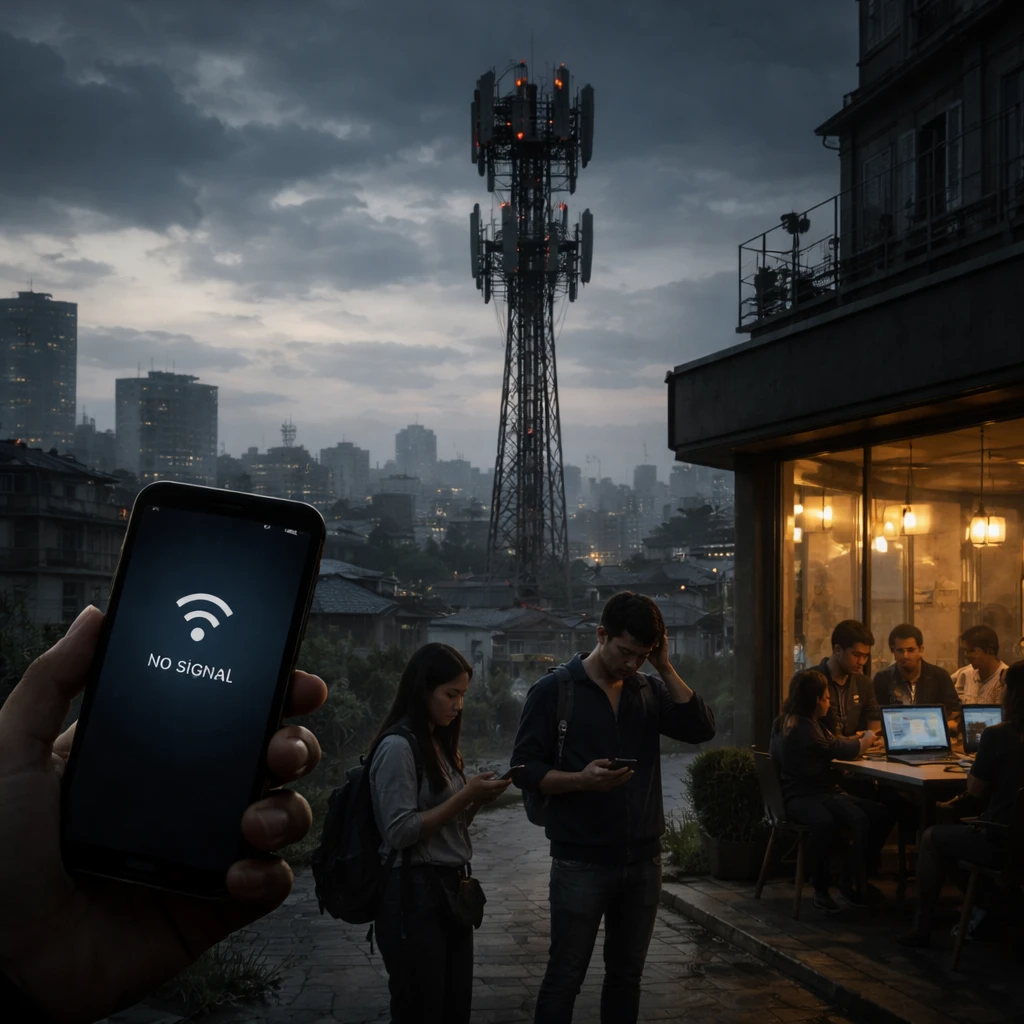

In New York City on Wednesday, Tess Coward, a 27-year-old public relations professional, awoke feeling ill but found herself unable to reach her healthcare provider due to a significant cellular service failure affecting Verizon customers nationwide. Unable to place calls, send texts, or access the internet, Coward was one of many individuals whose daily routines and crucial communication channels were abruptly severed by this outage.
The disruption spanned multiple hours, extending until just before 10:30 p.m. Eastern Time, immobilizing Verizon’s cellular network across the United States. While the telecommunications company has yet to disclose the specific technical causes behind this failure, it stated on Thursday morning that affected subscribers would receive a $20 credit as a form of restitution.
This incident marks another example underscoring the susceptibility of American infrastructure to internet and network outages, following notable events such as the Amazon Web Services disruption in October of the previous year and a protracted outage experienced by AT&T earlier in February 2024.
Personal Impact: Communication Breakdown During a Health Concern
Coward described the difficulty she experienced during this outage, especially as she was unable to contact her doctor or access the patient portal, which requires receiving verification codes via text. The failure of this authentication process prevented her from securing needed medical support promptly. When interviewed, she expressed concern not only about her physical state but also highlighted the emotional toll caused by the loss of connectivity, suggesting that many others likely experienced similar distress.
She lamented, "If I needed anything in that moment, I couldn’t get it. And I know that’s how a lot of people felt." The interruption illustrates how integral mobile networks have become in facilitating essential healthcare communication, rendering users vulnerable when service is unavailable.
Daily Challenges Without Cellular Connectivity
The fallout of the Verizon outage was widely felt. Numerous social media posts from subscribers revealed the widespread nature of the disruption. Many users reported their devices being stuck on Emergency SOS mode or entirely losing service, rendering navigation apps like Google Maps unusable and complicating basic tasks.
This predicament was particularly taxing for gig economy workers, including ride-share drivers and food delivery personnel who rely heavily on reliable cellular connections for their operations. The inability to access communication tools could have directly affected their earnings and service efficiency.
In response to the incident, New York City Emergency Management announced active monitoring of the situation and collaboration with utility companies and partners to evaluate any potential repercussions on city services and other critical operations.
Quantifying the scale of the impact, Downdetector, a platform that collects and analyzes outage reports, logged upwards of 178,000 user submissions within a 15-minute interval at the peak of the disruption. The total number of reports submitted over a 24-hour duration surpassed one million, underscoring the large portion of Verizon’s consumer base affected, though Verizon itself has not publicly stated the precise number.
Understanding the Persistence of Such Outages
The root cause of the Verizon outage remains officially undisclosed. However, expert insights from Susan Welsh de Grimaldo, a Gartner analyst specializing in communications technology, shed light on underlying factors that can precipitate such failures. She indicated that contemporary networks' reliance on complex software systems introduces vulnerabilities and intricate challenges in network stability.
According to de Grimaldo, while software updates are essential for network improvements and enhancing user experience, they necessitate frequent configuration modifications—often performed automatically. These continuous and sometimes rapid updates can increase the risk of operational disruptions.
Previous incidents, such as the AT&T service interruption referenced earlier this year and the Amazon Web Services outage caused by conflicting simultaneous automated updates, illustrate how minor issues in software management may ripple across network infrastructure to trigger widespread outages.
De Grimaldo elaborated, "A small mismatch or discrepancy can propagate through the system at various locations, causing significant problems." She further noted that many network disruptions are resolved quickly enough that users do not always perceive them.
Consumer Reactions and Future Considerations
Despite the inconvenience and anxiety wrought by the outage, Coward indicated that one such event would not compel her to change service providers immediately. Nevertheless, she recognized the profound dependency modern society has on continuous phone connectivity, remarking on the difficulty in imagining a scenario where such access is not consistently available.
The Verizon outage serves as a reminder of the critical role that digital cellular networks play in both everyday and essential contexts. It raises questions about the resilience of these communication systems and the necessity for ongoing improvements to prevent similar events from severely impacting users in the future.