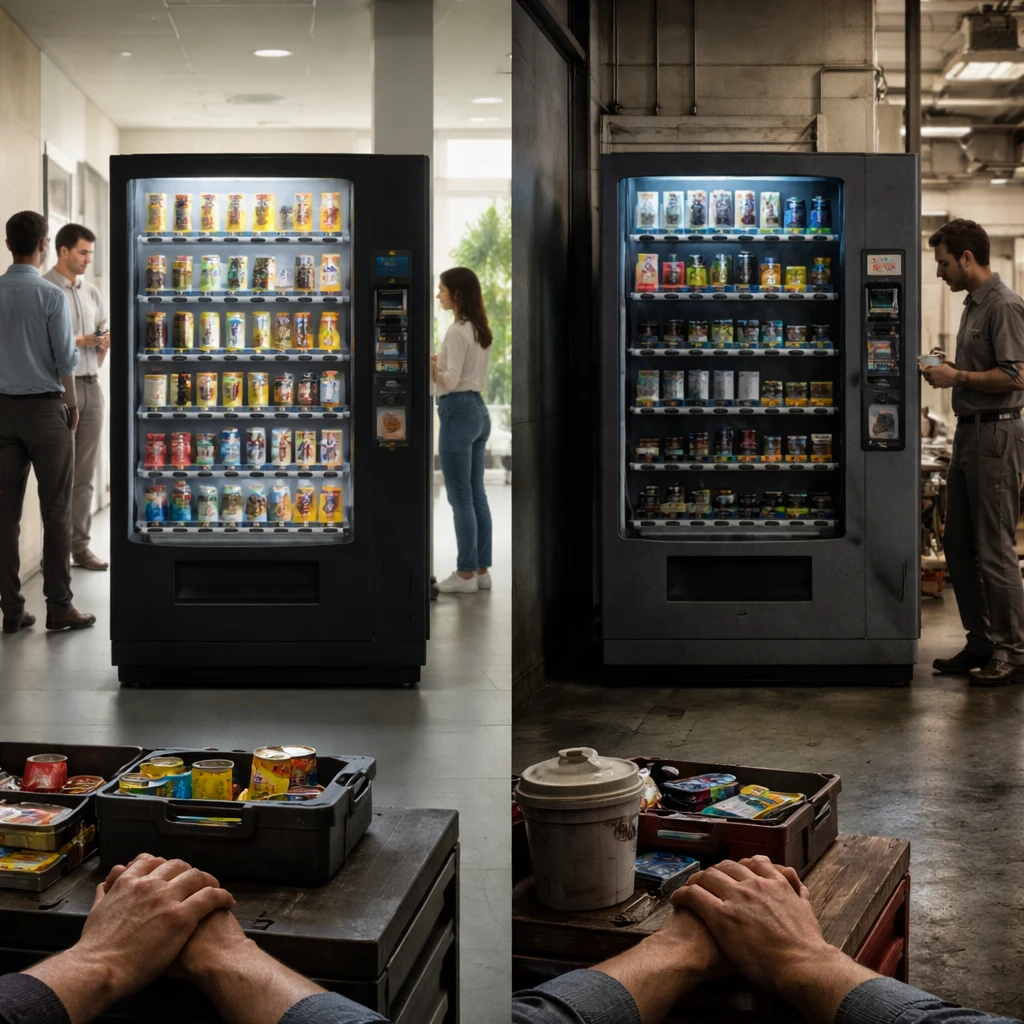
Approximately half a year ago, an individual eager to explore passive income avenues embarked on launching a vending machine enterprise. After surveying online discussions that portrayed vending machines as a lucrative and low-effort investment, they allocated $3,200 to purchase two refurbished units. An additional $400 was dedicated to acquiring snacks and beverages necessary for stocking these machines.
The individual strategically positioned one vending machine within an office building housing approximately 50 employees, while the other found a location at a local auto repair shop. Over the subsequent months, the office-based machine consistently generated monthly revenues ranging between $280 and $350. In contrast, the auto repair shop machine's monthly income was more variable, fluctuating between $120 and $180, and was characterized as "hit or miss" in terms of sales.
From these receipts, operational costs including fuel expenses for restocking trips, inventory replenishment, and occasional maintenance issues were deducted. These factors contributed to a net monthly profit estimated between $130 and $150. While not a transformative income stream, the entrepreneur noted this profit suffices to cover their automobile payments, framing the venture as a modest supplemental revenue source.
Despite anticipating a largely passive operation, the individual soon discovered persistent hands-on involvement was necessary. Biweekly visits to replenish stock were required, along with addressing unexpected problems like malfunctioning bill acceptors and security concerns stemming from attempted break-ins. These ongoing commitments contrast with common perceptions of vending machines as passive income generators.
Engagement on a relevant social media platform corroborated this experience; multiple users agreed that managing vending machines typically demands active management rather than passive oversight. A common viewpoint among contributors is that passive income through vending machines may only be achievable by operators possessing a substantial fleet - 30 or more machines - and delegating maintenance and stocking responsibilities to employees.
Several participants shared insights from their vending enterprises. One noted an auto body shop location as a top revenue generator, attributing success to a sizable on-site workforce exceeding 30 employees. Another user reported cumulative earnings of $30,000 in the prior year from six machines, further emphasizing that prime locations with high foot traffic such as warehouses and educational institutions underpin this success.
The prevailing consensus identified location as the paramount factor dictating vending machine profitability. Reflecting on their venture, the original poster remarked that relying solely on the auto repair shop site would probably result in break-even or losses, reinforcing the criticality of site selection.
Community members offered innovative suggestions to optimize placement and product offerings. Proposals included installing machines in venues like bars featuring niche products - for example, cosmetics, glow sticks, or small electronic chargers - and targeting residential complexes, hotels, or community centers associated with homeowners’ associations.
However, accessing such locations proved challenging; some vending operators recounted contacting numerous businesses without successfully securing placement. One user described a strategy involving unobtrusively moving a vending machine into a building while wearing a high-visibility vest, which surprisingly did not raise questions. Such tactics indicate the level of effort sometimes necessary to establish vending footprints in desirable locales.
Looking ahead, the entrepreneur is considering expansion but emphasizes cautious site selection to avoid new machines performing no better than existing mediocre positions. This cautious approach reflects a learned appreciation for the complexity and demands inherent in vending machine management.
For individuals seeking alternative wealth-building strategies with less operational involvement, investment routes such as index funds or private equity platforms might offer more attractive long-term returns. For instance, certain platforms provide opportunities to invest in high-growth sectors like artificial intelligence and technology with modest minimum investments and without the operational burdens experienced in vending machine businesses.
January 31, 2026
Business News
The Realities Behind a Vending Machine Side Business: A Six-Month Perspective
An entrepreneur's firsthand experience reveals operational challenges and the crucial role of location in vending machine profitability

Leila Farooq
Telecom & Media Analyst
Summary
A newcomer to the vending machine industry invested $3,200 in two refurbished machines and stocked them with $400 worth of inventory. After six months, they report modest profits but emphasize the business requires more hands-on effort than typically portrayed. Location proved critical to revenue, with an office building generating steady sales while an auto repair shop's earnings fluctuated. Community feedback highlights that managing multiple machines effectively necessitates considerable labor and strategic placement.
Key Points
An entrepreneur invested $3,200 in two refurbished vending machines and $400 on inventory, positioning them in an office building and an auto repair shop.
The office building location generated steady monthly sales of $280 to $350, whereas the auto repair shop experienced inconsistent earnings between $120 and $180.
After accounting for fuel, stock replenishment, and minor maintenance, monthly profit estimates range from $130 to $150, enough to cover the owner's car payment.
Hands-on work such as biweekly restocking and maintenance challenges dispel the myth of vending machines as fully passive income sources, especially with few machines and no hired assistance.
Risks
- Location proves critical; poor sites can lead to break-even results or losses, highlighting site selection as a significant risk factor.
- Unexpected maintenance issues like jammed bill acceptors or security incidents can increase operating expenses and effort.
- Securing high-traffic, profitable locations is difficult, with reports of operators contacting many businesses without success.
- Scaling the business to achieve passivity requires substantial capital and operational infrastructure, posing risks for small-scale operators.
Disclosure
Education only / not financial advice