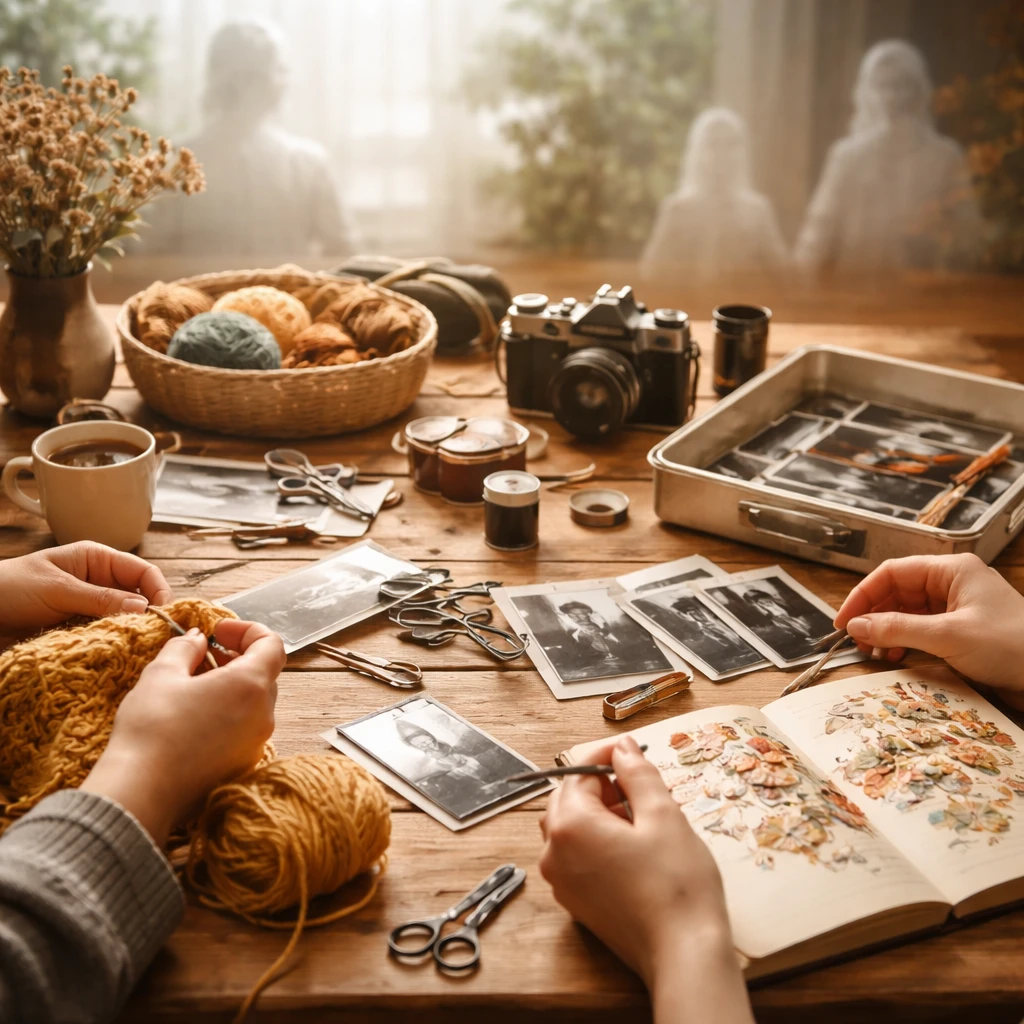

As artificial intelligence increasingly permeates everyday life through smart devices, digital assistants, and generative chatbots, a noticeable countercurrent is forming among certain groups seeking respite. This movement, often described as embracing "analog lifestyles," transcends sporadic digital detoxes, aiming instead for a deliberate return to physical, manual ways of tackling daily tasks and entertainment. It reflects a desire to disconnect from AI's growing role in automating thought and creativity.
Quantifying the extent of this analog resurgence presents challenges, but significant growth in offline hobbies is evident through consumer behavior. For instance, Michael’s, a prominent arts and crafts retailer with more than 1,300 outlets across North America, has reported marked increases in interest toward analog hobbies. The company recorded a 136% rise in searches for “analog hobbies” on its website during the last six months. Furthermore, sales of guided craft kits surged by 86% in 2025, with projections anticipating an additional 30% to 40% rise this year. Searches for yarn kits, recognized as a favorite pastime in traditional crafting circles, skyrocketed by 1,200% last year.
Stacey Shively, Michael’s Chief Merchandising Officer, conveyed to CNN that the company intends to allocate greater retail space to knitting and related supplies, underlining elevated consumer demand. She linked the uptick in crafting engagement partly to its role as a mental health refuge, helping individuals break free from the fatigue of constant doomscrolling—an impulse that intensified in the aftermath of the Covid-19 pandemic. Shively characterized this shift as a significant cultural development underway today.
Personal accounts further illuminate the analog movement's appeal. CNN Business reporter Ramishah Maruf undertook a 48-hour experiment to live disconnected from her array of devices—including multiple iPhones, a MacBook, desktop monitors, a Kindle, and an Alexa smart speaker—mimicking a 1990s lifestyle. This short-term immersion revealed both the simplicity and challenges inherent in detaching from the modern digital ecosystem.
Seeking guidance before embarking on her offline experiment, Maruf engaged with individuals who have embraced analog living over the longer term. One such individual is 25-year-old Shaughnessy Barker from Penticton, British Columbia. Barker epitomizes dedication to analog methods, going so far as to rely on a landline telephone for contact and using a "dumb phone" app while away from home. Her early internet exposure emerged through energetic online communities like "stan Twitter" devoted to the British pop group One Direction during her preteen years, yet she has grown critical of the internet's commercialization. She asserts that much of online content is now oriented toward profit rather than enjoyment.
Barker describes herself as deeply skeptical of AI, even dubbing herself an "AI hater to my core." Her affinity for analog media extends to collecting vinyl records, cassettes, DVDs, and VHS tapes. She organizes offline social gatherings such as tech-free craft and wine nights, habitually writes physical notes, and deliberately enforces time limits for computer use. Despite such commitments, Barker acknowledges the difficulty of fully disconnecting due to practical concerns; for example, running outreach for her vintage goods shop and a postal correspondence club requires online access. She humorously recognizes the paradox in creating TikTok videos to document her efforts to reduce phone usage.
The essence of choosing analog living lies in pushing back against relentless exposure to digital content, including repetitive and uncreative AI-generated material, often described as "AI slop." Avriel Epps, an AI researcher and assistant professor at the University of California Riverside, explains this fatigue as both a cognitive and sensory drain. Analog practices offer a refuge from these omnipresent digital streams.
Importantly, analog enthusiasts do not advocate a wholesale rejection of technology. Instead, many adopt partial adjustments, such as swapping ubiquitous streaming services like Spotify for physical music players like iPods, or replacing endless smartphone photography with deliberate film camera usage, which yields tangible prints. Small lifestyle shifts like relying on an analog alarm clock can also provide a sense of relief from always-on devices.
For Epps, going analog is less about eliminating internet access and more about regulating the flow of personal data online. She recently disengaged from the Google suite of applications and established screen-free periods, such as Sundays, to reclaim offline time.
During her experiment, Maruf found the initial offline morning pleasant, waking naturally without an alarm and engaging in activities like journaling and reading a physical copy of "Wuthering Heights." However, she also sensed performative aspects given her role as a journalist documenting the experience, compounded by the use of social media to connect with analog advocates. She deliberately selected manageable substitutions for digital functions, recognizing that some choices—like maintaining personal video calls with family—remained consistent.
An observation during a tech-free walk highlighted that a portion of people around her appeared to limit screen time, further underscoring the pervasiveness of digital saturation. At one point, she paid attention to tourists admiring the Empire State Building, whose grandeur was apparent on a clear day, underscoring the sensory benefits of unmediated experiences.
Maruf also attended a knitting circle at a Brooklyn library, witnessing a multigenerational group exchanging stitch techniques and color ideas without screens. Participants expressed that knitting facilitates mental unwind by providing a tactile distraction from phone usage, as noted by Tanya Nguyen, a regular attendee. For Maruf, the reduced digital demand freed time to make progress on reading, reconnecting with family through handwritten postcards, and gaining new crafting skills with plans to create her own scarf.
This surge in analog engagement among diverse demographics reveals a desire to balance modern work demands and digital culture with activities offering real-world accomplishment and mental rest. The widespread influence of social media trends likely plays a role in inspiring such lifestyle experiments, as seen among younger generations.