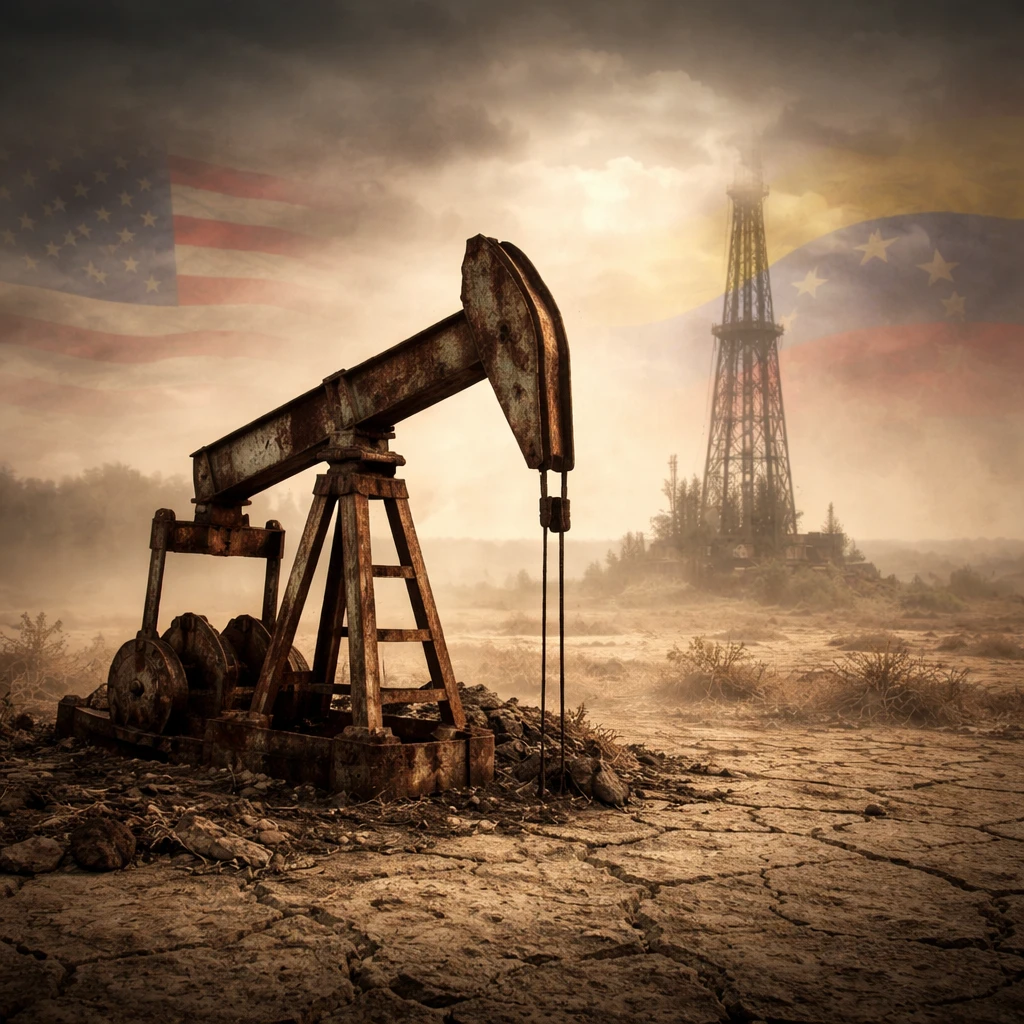

In the early hours of a December morning in 1922, Venezuela experienced a transformative moment that would alter its trajectory for generations. An intense rumbling heralded the eruption of oil from the Los Barrosos-2 well in the Maracaibo Basin, producing a towering gusher that spewed oil 200 feet into the sky, drenching residents of La Rosa. This event unveiled what would become the world's most productive oil well and marked the dawn of Venezuela's emergence as a predominant petroleum producer.
Though crude oil had been known in Venezuela for centuries, dating back to indigenous use noted by 15th-century Spanish explorers, the country's vast petroleum potential remained dubious until the early 20th century. The onset of World War I increased global fuel demand and generated concerns about shortages in Western nations. This situational urgency motivated foreign companies, including the Venezuelan Oil Concessions (VOC), the local branch of Royal Dutch Shell, to intensify exploration efforts.
Despite several years of modest progress, VOC's decision on July 31, 1922, to resume drilling at Los Barrosos-2, previously abandoned four years earlier, proved pivotal. By mid-December, the company reached oil-rich sands located approximately 1,450 feet underground. The well erupted on December 14 with an unstoppable surge of oil and gas, resulting in a significant ecological disaster but simultaneously propelling Venezuela into a century defined by extraordinary oil wealth alongside economic volatility and political unrest.
This discovery set in motion a profound restructuring of Venezuela's economy, shifting it from an agricultural focus to one predominantly centered on petroleum by 1929. The country rapidly attracted a multitude of international oil companies, exceeding one hundred entities at its peak, positioning Venezuela as the world's second-largest oil producer just behind the United States. During this era, the country's political authorities, initially under the autocratic regime of General Juan Vicente Gómez, welcomed foreign investment while grappling with limited returns for the Venezuelan populace.
Subsequent reforms attempted to rectify this imbalance. The 1943 Hydrocarbons Law mandated that foreign oil companies cede half their profits to the Venezuelan government. Despite these higher demands, corporations acquiesced, attracted by Venezuela's vast reserves—estimated at 303 billion barrels by the US Energy Information Administration (EIA), representing nearly a fifth of global oil reserves—and notably inexpensive, heavy, sour crude. This type of crude was geographically advantageous due to its proximity to the US market and valuable for producing multiple industrial derivatives such as asphalt, heating oil, and diesel, distinguishing it from lighter US sweet crude traditionally used for gasoline production.
Venezuela's strategic significance was further reinforced in the political realm as the country transitioned to democracy in 1953. Its political alignment made it a key US ally in South America, particularly as a bulwark against the rise of Communist Cuba. The nation's membership as a founding member of the Organization of Petroleum Exporting Countries (OPEC) in 1960 further solidified its influence. Concurrently, Venezuela established the state-run Venezuelan Petroleum Corporation and significantly increased its appropriation of profits from foreign companies to 65%, signaling growing national control over its resources.
In 1976, under President Carlos Andrés Pérez, Petróleos de Venezuela, S.A. (PDVSA) was created to oversee the nation's oil sector. This entity managed the partial nationalization of foreign oil interests, demanding a majority 60% equity stake in joint ventures. The US government, recognizing Venezuela's importance as an oil supplier, did not oppose this move substantially, especially since PDVSA remunerated US companies with approximately $1 billion for their equity shares.
Despite these arrangements, the country faced mounting difficulties in the 1980s as oil prices fell sharply. Fiscal stresses increased after Venezuela's acquisition of significant stakes in American refinery company Citgo. These challenges contributed to backlash against austerity measures implemented by President Pérez, ultimately paving the way for the socialist shift under Hugo Chávez's leadership in 1999.
Chávez's administration nationalized remaining foreign oil assets, including those held by ExxonMobil and ConocoPhillips, bringing PDVSA under direct governmental and military control. This politicization of PDVSA jeopardized operational efficiency, prompting an exodus of skilled personnel and causing the nation's petroleum infrastructure to deteriorate significantly. Following Chávez's death in 2013, Nicolás Maduro assumed power amid plummeting oil prices, hyperinflation, and mass emigration from Venezuela. The country also faced comprehensive international sanctions, notably from the United States since 2005, which intensified under the Trump administration in 2019 by prohibiting crude exports from PDVSA to the US market.
Attempts to reintegrate US companies have been cautious. The Biden administration, in a policy shift, authorized Chevron to resume limited operations in Venezuela in 2022, aiming to alleviate domestic fuel costs, a license that experienced subsequent revocations and reinstatements under Trump conditions limiting revenue flows to Maduro's government. The degradation of Venezuela's oil infrastructure and dwindling resources have culminated in a sharp downturn in output. Presently, the country produces approximately one million barrels daily, constituting a mere 0.8% of global supply — less than half its production at Maduro's accession and a third of the levels maintained before Chávez.
The recent capture of Maduro by US forces marks a critical juncture. President Trump explicitly cited the aim to transfer control of Venezuela's oil facilities to American companies, envisaging extensive rebuilding efforts. He characterized the preceding management of the oil sector as the "greatest theft in the history of America," emphasizing the critical need to restore infrastructure and productivity.
Nonetheless, experts caution that the process will be arduous. Analysts, including Helima Croft of RBC Capital Markets, highlight the extensive investments required, estimating costs potentially exceeding $10 billion annually. PDVSA itself acknowledges infrastructure neglect spanning five decades, with restoration to peak capacity projected to cost $58 billion. Moreover, the military's longstanding role in oil operations introduces further complexities, compounded by the fragile socio-political environment.
Securing and modernizing Venezuela's oil infrastructure might necessitate a prolonged US military presence to safeguard assets, according to acknowledgments from the Trump administration. Despite outreach to American oil companies, uncertain stability in Venezuela limits commitment willingness at this stage. Notably, coordination appears to be ongoing with Delcy Rodríguez, former Vice President and Energy Minister under Maduro, even as opposition factions indicate prospective privatization plans contingent on regime changes, underscoring the intricate political landscape.
If conditions align favorably, the United States could reinstate a critical and historic partnership in the oil sector, realigning production flows to US refineries structured around Venezuelan crude's characteristics. However, the path forward remains dotted with substantial operational, financial, and geopolitical hurdles, demanding nuanced and sustained engagement to realize Trump’s goals and the broader strategic interests tied to Venezuela’s vast petroleum endowments.