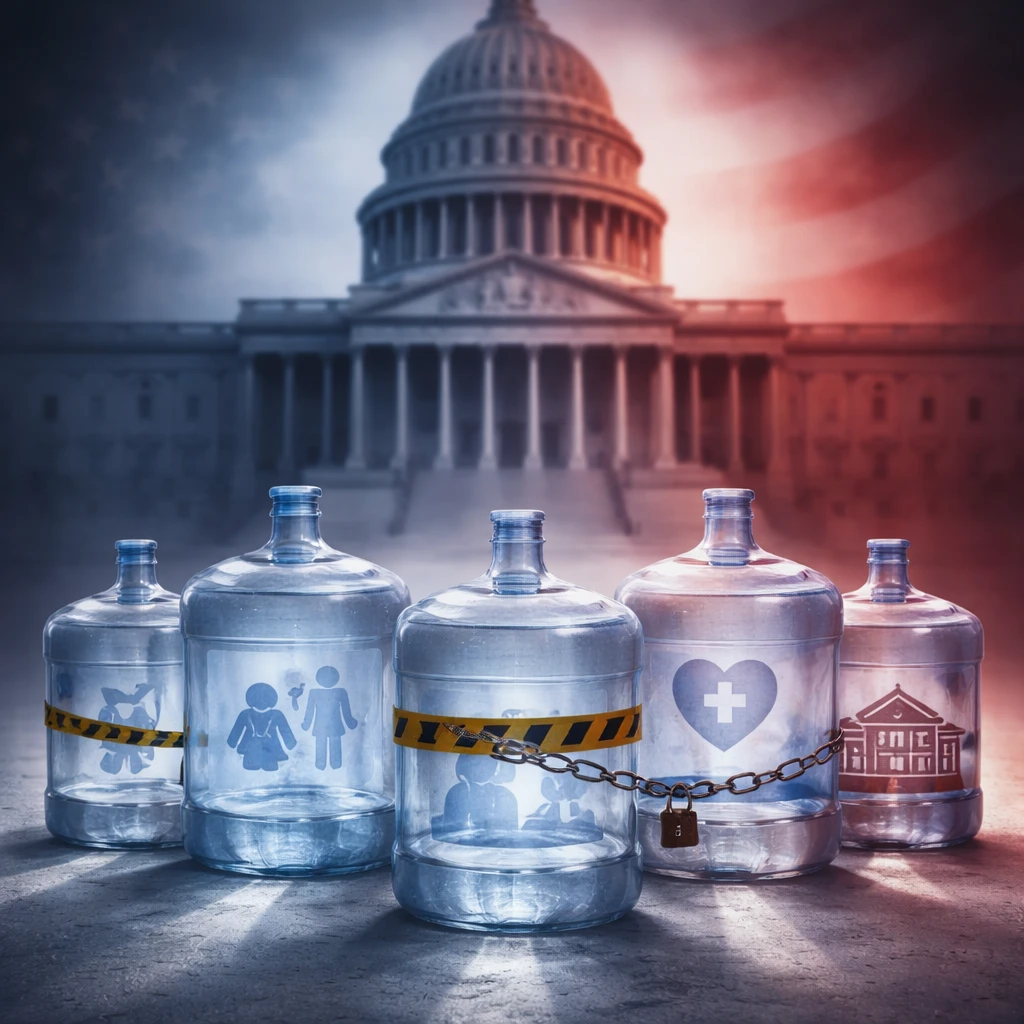

In a significant administrative action, the Department of Health and Human Services (HHS) under the Trump administration has imposed a suspension on federal funding exceeding $10 billion directed toward social service programs in California, Colorado, Illinois, Minnesota, and New York. These states, all governed by Democratic leadership, were formally notified of this funding freeze through letters issued on a Monday. The rationale behind this measure centers on apprehensions that financial assistance may have been improperly disbursed to individuals lacking U.S. citizenship.
The withheld funds span three principal federal initiatives. The Temporary Assistance for Needy Families (TANF) program faces a hold on approximately $7.35 billion, while the Child Care Development Fund (CCDF) contributes nearly $2.4 billion to the total sum withheld. In addition, funding amounting to roughly $869 million from the Social Services Block Grant program is also impacted. Collectively, these pauses in funding mark a substantial interruption in federal support designed to aid vulnerable populations in these states.
This decision draws upon findings from a 2019 inquiry conducted by the HHS Office of Inspector General (OIG). The report highlighted that New York City had inappropriately billed the federal government for child care subsidies, specifically overcharging by more than $24.7 million. This prior determination has underpinned the current enforcement action, reflecting continuing federal concerns about the integrity of fund distribution processes. The report's findings have seen renewed attention as the administration publicized them through President Donald Trump's post on his social media platform, Truth Social.
Beyond this announcement, the HHS has not issued immediate statements in response to media requests for comment, leaving the scope of subsequent actions unclear at this point.
This recent funding suspension is not without precedent under the Trump administration's tenure. Near the end of the previous year, the Small Business Administration (SBA) ceased all grant-related funding to the state of Minnesota amid an investigation into fraudulent activity involving $430 million in Paycheck Protection Program (PPP) loans. SBA Administrator Kelly Loeffler attributed the suspected fraud's magnitude in part to inadequate oversight mechanisms under Governor Tim Walz's governance.
Moreover, the administration has enforced prior freezes on Supplemental Nutrition Assistance Program (SNAP) benefits directed at several Democratic-run states that have opted not to provide data on the immigration status of benefit recipients. States such as California, New York, and Minnesota were among those affected by this policy, demonstrating a consistent pattern of leveraging funding controls linked to the verification of beneficiary eligibility.
Together, these actions reveal an administrative approach that connects federal funding disbursements with compliance concerning the identification and eligibility of aid recipients, particularly regarding citizenship status. The impact on social programs in the listed states is substantial given the sizes of involved funds and the critical support these programs offer to needy populations.
As this funding suspension unfolds, affected states will face challenges in managing the provision of essential social and child care services without the usual federal financial backstops. The ongoing communication between federal agencies and state officials will likely play a critical role in determining potential resolutions or extensions of the freeze.
Key Points:
- The Trump administration has frozen over $10 billion in federal aid across five Democratic-led states due to concerns over fraudulent benefit distribution to non-citizens.
- The funding suspension affects major federal programs: TANF with $7.35 billion, CCDF with nearly $2.4 billion, and the Social Services Block Grant with approximately $869 million.
- A 2019 federal investigation revealed New York City improperly claimed over $24.7 million in child care subsidies, informing the current funding freeze.
- This is consistent with prior administration actions freezing aid in other states amid fraud probes and eligibility verification disputes.
- Potential disruption of social service and child care provision in affected states due to sudden withdrawal of federal funding.
- Uncertainty remains regarding the resolution timeline and the criteria for lifting the funding suspension.
- The level and extent of fraudulent claims beyond the cited New York City case have not been fully detailed, leaving the broader impact ambiguous.
- Possible political and administrative contention between federal and state governments over eligibility verification procedures and aid distribution accountability.