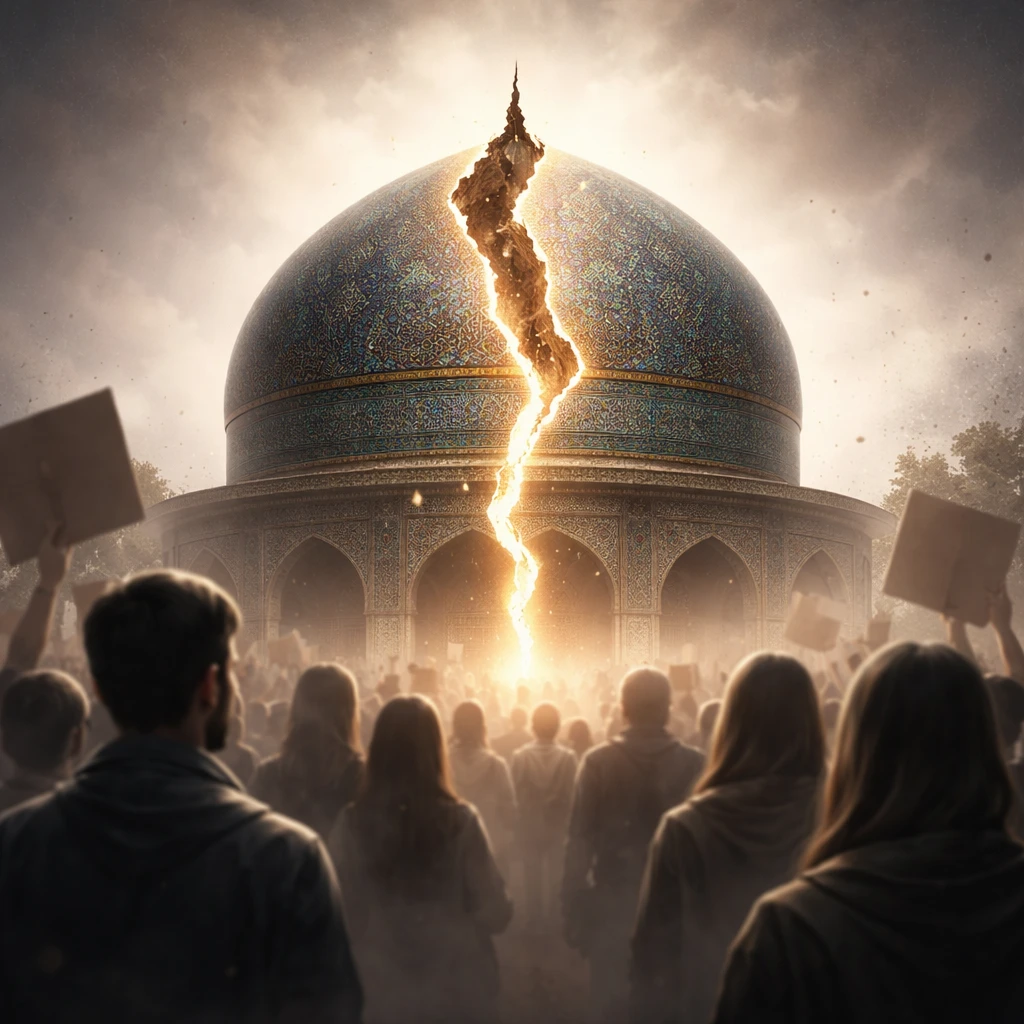

In a recent interview with Politico, former President Donald Trump called for a change in leadership in Iran, criticizing the long-standing governance of Supreme Leader Ayatollah Ali Khamenei, who has held power for 37 years. This declaration occurs as widespread protests in Iran have reportedly diminished in scale but have been met with severe state responses, resulting in thousands of deaths among demonstrators over the past few weeks.
Trump has previously warned of potential U.S. military involvement and has vocally supported the Iranian people's persistence in their demonstrations, encouraging them to seize control of governmental institutions. In his recent remarks, he emphasized the necessity for new leadership, stating plainly, "It's time to look for new leadership in Iran." Such comments arrive amid a highly volatile socio-political environment within the country.
Interestingly, Trump offered praise for Khamenei's recent decision to abstain from executing over 800 prisoners, an act perceived as a significant, albeit limited, concession by the Iranian regime. When questioned about the possibility of U.S. military action, Trump referred to this move as "the best decision he ever made," highlighting a complexity in his position that combines criticism with acknowledgment of certain prudent actions by Iran's leadership.
This exchange coincided with a series of stern communications by Khamenei, in which he attributed the unrest and associated fatalities to provocations allegedly instigated by President Trump. In response, Trump reproached Iran's ruling authorities, condemning their reliance on violence and repression as instruments to sustain their grip on power. He described Iran as "the worst place to live anywhere in the world because of poor leadership," underscoring his negative assessment of the country's political environment.
Complementing these statements were Khamenei's explicit accusations on social media platform X, declaring the U.S. President responsible for "casualties, damages, and slander inflicted upon the Iranian nation." This exchange of accusations underlines the heightened tensions between the two nations during this period of turmoil within Iran.
Implications of the Leadership Call
The call for a leadership change represents a notable shift in Trump's approach given his prior aggressive posturing, which included warnings of military intervention and encouragement of protest continuation within Iran. The current tone suggests a transition toward a more measured diplomatic posture, as Trump acknowledges certain restraint shown by the Iranian leadership regarding capital punishment, while still advocating for political change.
This nuanced stance may influence the course of future U.S.-Iran relations, as it signals a possible recalibration from direct confrontation toward strategic critique paired with recognition of limited reforms. The unfolding developments in Iran's internal politics and societal dynamics will likely draw continued international scrutiny, with global observers carefully monitoring both Tehran's responses and Washington's policies.
Given the complex interplay of domestic dissent and international diplomacy, the situation in Iran remains fluid, marked by significant uncertainties surrounding the trajectory of reform efforts, regime stability, and the implications of external pressures. The balancing act exhibited in these recent statements may denote an evolving strategy in addressing the multifaceted challenges posed by the current crisis.