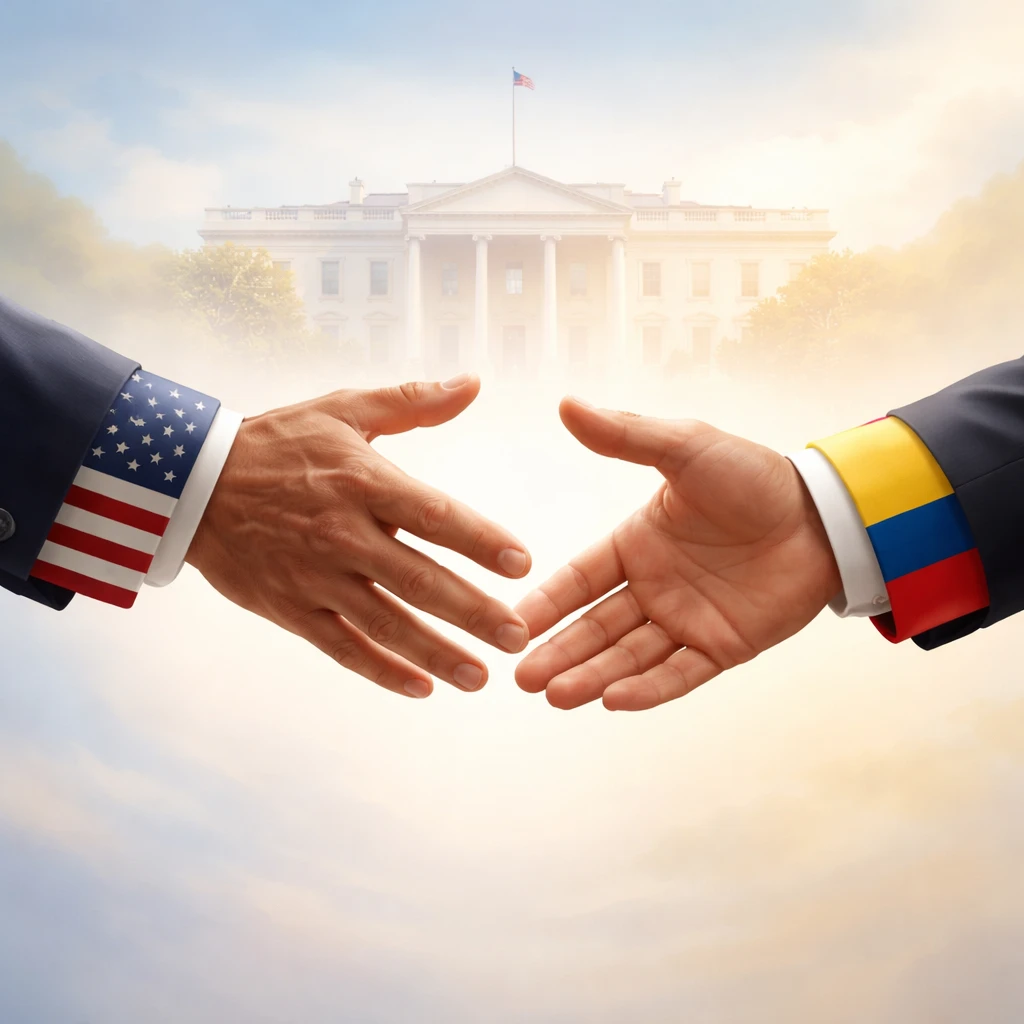

In a surprising development after months of escalating frictions, President Donald Trump engaged in a telephone conversation on Wednesday with Colombian President Gustavo Petro, signaling a turn toward more constructive relations. This outreach comes after a period marked by sharp rhetoric, including Trump's previous characterization of Colombia as a "sick man" and his endorsement of potential American military intervention in the country.
On the social media platform Truth Social, Trump expressed appreciation for the tone adopted by President Petro during their exchange, describing the discussion as "constructive." The former U.S. president indicated that the two leaders have intentions to meet at the White House in the near future to further address points of contention.
According to Trump, Petro initiated the call with the intention of explaining ongoing issues concerning drug trafficking and other disagreements that have challenged bilateral relations. The Colombian Embassy in Washington released a statement endorsing the positive tenor of the dialogue, reaffirming Bogotá's commitment to maintaining an open and constructive conversation with the United States.
President Petro took to the platform X to share his perspective on the call, noting that they discussed the differences stemming from Trump's view of how the United States engages with Latin America. Petro emphasized his belief in the potential for collaboration on energy projects through major U.S. investments in the region. However, he cautioned against perceiving Latin America merely as a source of oil, advocating instead for a partnership approach beyond commodity extraction.
In his post, Petro included imagery of a jaguar and a bald eagle embracing, a symbolic motif he has employed in the past to represent the relationship between Latin America and the United States. The jaguar represents the region, while the eagle symbolizes the U.S. Petro has previously warned that U.S. military interventions could "awaken the jaguar," alluding to resistance against foreign interference, particularly in light of troop deployments and military actions along Latin American coasts.
Tensions between Washington and Bogotá have escalated partly due to disputes over Colombia's coca cultivation and cocaine production levels. The U.N. reported that coca farming in Colombia reached a 20-year peak in 2023, with an estimated 53% increase from the previous year in potential cocaine output. The U.S. government has criticized Colombia for inadequate enforcement efforts.
In October, punitive measures were imposed by the U.S. Treasury against President Petro and certain members of his family. Treasury Secretary Scott Bessent accused Petro's administration of permitting drug cartels to flourish and neglecting to halt narcotics trafficking. Petro has rebutted these claims, citing record cocaine seizures under his government's oversight and attributing the drug trade's persistence to global demand.
Petro has been vocally critical of U.S. military operations near Latin America. This includes opposition to U.S. strikes against suspected drug vessels in maritime regions, which he condemns as infringements on regional sovereignty.
The friction was further intensified when U.S. forces captured former Venezuelan President Nicolás Maduro during a recent raid. Trump hailed this operation as a significant victory in the battle against narcotics trafficking. Petro, meanwhile, denounced the raid as an act of aggression, underscoring ongoing disagreements over sovereignty and interventionist policies within Latin America.
As tensions persist over drug enforcement policy, regional influence, and bilateral perceptions, the recent telephone call represents a tactical shift toward engagement between the U.S. and Colombian leadership. The forthcoming meeting at the White House is anticipated to provide a platform for further discussion aimed at addressing these complex issues.
While details remain limited regarding the scope and outcomes of this emerging dialogue, the exchange demonstrates a willingness by both presidents to explore avenues for cooperation despite substantive disagreements. The evolution of this relationship will likely depend on future diplomatic efforts and tangible results in combating drug trafficking alongside respecting regional autonomy.