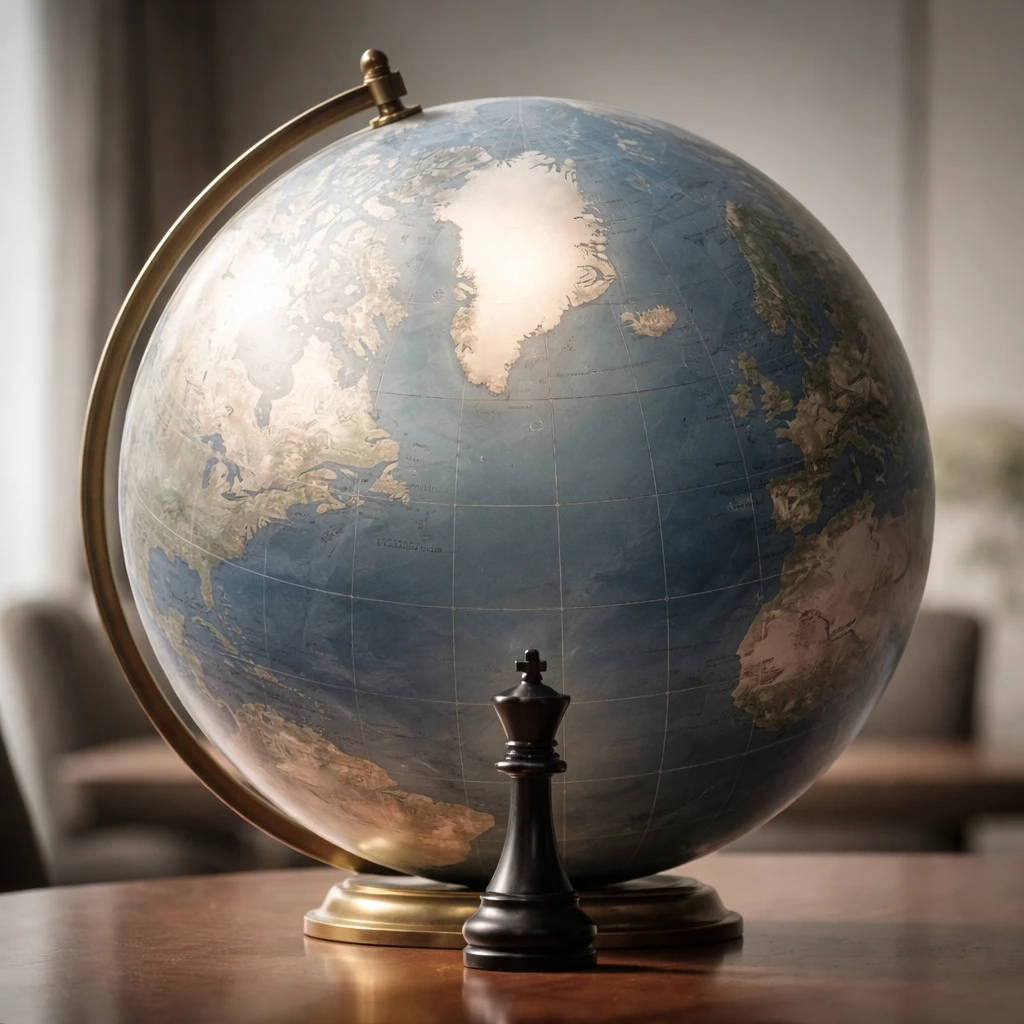

President Donald Trump has explicitly tied his vigorous campaign to assert American control over Greenland to his dissatisfaction with the Nobel Committee's decision not to award him the Nobel Peace Prize. This personal grievance surfaced in correspondence with Norwegian Prime Minister Jonas Gahr Store on Sunday, which was publicly released by the Norwegian government on Monday.
In the text message, Trump stated, "Considering your Country decided not to give me the Nobel Peace Prize for having stopped 8 Wars PLUS, I no longer feel an obligation to think purely of Peace, although it will always be predominant, but can now think about what is good and proper for the United States of America." This message underscores a shift in Trump's stance from focusing only on peace towards actively pursuing United States interests, even if tensions escalate.
Prime Minister Store had initially reached out to Trump, alongside Finnish President Alexander Stubb, with appeals for reducing tensions and de-escalating the dispute. Norwegian officials reported that Trump responded within 30 minutes. This rapid exchange occurred against a backdrop of mounting friction over Greenland, a territory that is semiautonomous under Danish sovereignty.
The dispute has intensified with Trump seeking to "wrest sovereignty" over Greenland, a significant Arctic strategic location. According to a Reuters account released late Monday, Trump declined to clarify in an NBC News interview whether he would employ military force to seize the island. However, he reaffirmed threats to impose tariffs on European nations that do not consent to a deal concerning Greenland.
This increasingly fraught situation has alarmed European Union officials, who are reportedly preparing retaliatory measures. Potential EU countermeasures include reinstating tariffs on up to 93 billion euros (approximately $108 billion) worth of American goods. Additionally, the EU is contemplating deploying a new Anti-Coercion Instrument that could limit U.S. participation in EU public procurement contracts and services, representing a novel form of trade defense.
Trump has announced plans to escalate tariffs on Denmark and seven other European countries starting February 1 if Greenland is not sold to the United States. This ultimatum further exacerbates tensions between the U.S. and its European allies, a situation that already places strain on NATO amidst the ongoing conflict in Ukraine.
Complementing these developments, Trump’s text reiterated longstanding grievances including his dissatisfaction with the Norwegian Nobel Committee’s selection for the 2025 Nobel Peace Prize recipient, Venezuelan opposition leader Maria Corina Machado, rather than himself. He criticized Denmark's capacity to protect Greenland from geopolitical competitors such as Russia and China and questioned Denmark's "right of ownership" over the island. He emphasized, "The World is not secure unless we have Complete and Total Control of Greenland," signaling his adoption of a security-first rationale.
The standoff threatens to deepen transatlantic fractures, especially within NATO, where Trump has previously warned that he may withhold defense commitments from allies failing to meet spending targets. While former Vice President Mike Pence and several Republican lawmakers have acknowledged Greenland's strategic value, they have cautioned that resorting to military measures or intensifying tariff warfare risks undermining the alliance's cohesion.
European leaders are scheduled to convene an emergency summit in Brussels this Thursday, where discussions will focus on coordinated responses and next steps regarding the Greenland dispute. Market analysts and observers warn that a renewed tariff conflict across the Atlantic could unsettle broader global economic growth prospects.