
Trump Shows Hesitation on ExxonMobil’s Role in Venezuelan Oil Market Post-Maduro Overthrow
January 11, 2026
News & Politics

Trump Shows Hesitation on ExxonMobil’s Role in Venezuelan Oil Market Post-Maduro Overthrow

President Signals Caution on Inviting ExxonMobil Amidst Uncertain Venezuelan Investment Conditions

Summary

Following the ousting of Venezuela’s Nicolás Maduro, President Donald Trump expressed reluctance to allow ExxonMobil’s reentry into the Venezuelan oil sector. This stance comes after ExxonMobil’s CEO conveyed skepticism about the viability of investment under current circumstances. Trump aims to assure U.S. oil companies that dealings will be directly with the U.S. government, but concerns remain over Venezuela’s investment climate and risks associated with state asset seizures and political instability.

Key Points

President Trump is hesitant to allow ExxonMobil back into Venezuela's oil sector after the Maduro regime was ousted.
ExxonMobil CEO Darren Woods expressed doubt about the viability of investing in Venezuela under current economic and political conditions, labeling the market uninvestable.
The Trump administration is focusing on U.S. control over Venezuelan oil revenues and infrastructure rebuilding, issuing an executive order to prevent misuse of oil earnings and seizing Venezuelan oil shipments.

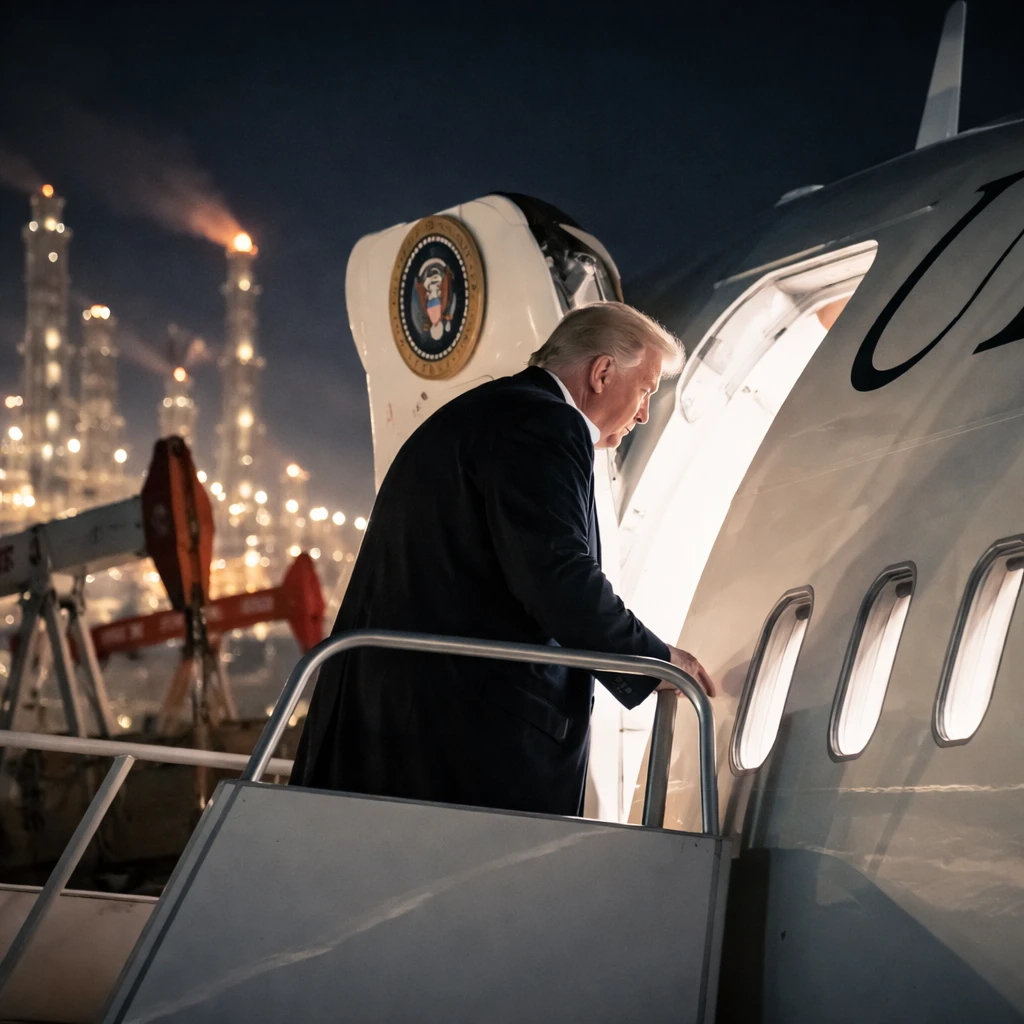
President Donald Trump, aboard Air Force One on Sunday, conveyed that he currently leans toward keeping ExxonMobil excluded from operations in Venezuela, following skeptical remarks by the company’s CEO regarding new oil investments post the toppling of former Venezuelan President Nicolás Maduro.

As he departed West Palm Beach, Florida, Trump addressed reporters, characterizing ExxonMobil’s reaction to potential Venezuelan engagements as overly cautious and indirectly critical. “I didn’t like Exxon’s response,” Trump said. “They’re playing too cute.”

The President’s comments followed a meeting held on Friday with leaders of oil firms, during which he sought to reassure them by noting that the companies would negotiate directly with the U.S. government rather than Venezuelan officials. This was part of broader efforts to encourage American energy businesses to participate in Venezuela’s oil sector as the country undergoes a significant political transition.

Nonetheless, some executives remain unconvinced by the proposition. Darren Woods, CEO of ExxonMobil — the largest American oil company — expressed doubts about the feasibility of investment given Venezuela’s current commercial environment. Woods described the nation as “uninvestable” under the existing frameworks and conditions.

On the same day as the meeting, President Trump signed an executive order designed to safeguard Venezuelan oil revenues from being appropriated through legal actions. The order, announced publicly on Saturday, highlighted concerns that if these funds were seized, it could jeopardize crucial U.S. initiatives aimed at fostering economic and political stability within Venezuela.

Venezuela’s track record includes episodes of state asset seizures, persistent U.S. sanctions, and decades marked by political turmoil, all factors contributing to the challenges faced by potential investors.

Efforts by the Trump administration to engage U.S. oil companies in Venezuela represent a strategic priority following Maduro’s removal, focusing on the reconstruction of the country’s oil infrastructure. The approach emphasizes economic control, as evidenced by recent actions such as the seizure of tankers transporting Venezuelan oil, the U.S. assumption of management over sales of tens of millions of barrels of sanctioned Venezuelan crude, and plans to maintain oversight of such sales globally on an ongoing basis.

According to the White House, these measures are part of broader economic mechanisms intended to substitute for direct Venezuelan state control amid the country’s uncertain political landscape.

Risks
  • Venezuela's history of state asset seizures presents a significant investment risk for U.S. oil companies, including ExxonMobil.
  • Ongoing U.S. sanctions and political instability in Venezuela create an uncertain commercial framework for oil sector investments.
  • The executive order to protect oil revenues could exacerbate tensions and complicate financial dealings, impacting the economics of oil trade and logistics.
Disclosure
The article contains no disclosures beyond the reported statements and actions of President Trump and ExxonMobil CEO Darren Woods as well as the executive order issued by the Trump administration.
Search Articles
Category
News & Politics

News & Politics

Related Articles
Amazon's Investment Propels Beta Technologies Stock in After-Hours Trading

Beta Technologies Inc, an aerospace company specializing in electric aircraft and propulsion systems...

Maximizing Your 401(k): Understanding the Power of Employer Matching

Overestimating investment returns can jeopardize retirement savings. While it's prudent to plan cons...

SoFi Shares Slip Slightly Despite Strong Q4 Earnings and Bullish Outlook

SoFi Technologies Inc’s stock saw a minor decline Tuesday afternoon following a period of heighten...

UBS Adjusts Tech Sector Outlook, Advocates Diversification Into Healthcare and Financials

UBS has revised its stance on the U.S. information technology sector from attractive to neutral, hig...

ArcelorMittal Advances Green Steel Production with Major Dunkirk Investment

ArcelorMittal's recent announcement of a €1.3 billion investment in an electric arc furnace (EAF) ...

Equinor (EQNR): A Dividended, Buyback-Supported Long with Reserve and Licensing Upside

Equinor combines scale (2.1 mmboe/d production in 2024, 6.1 billion barrels proven reserves) with gr...