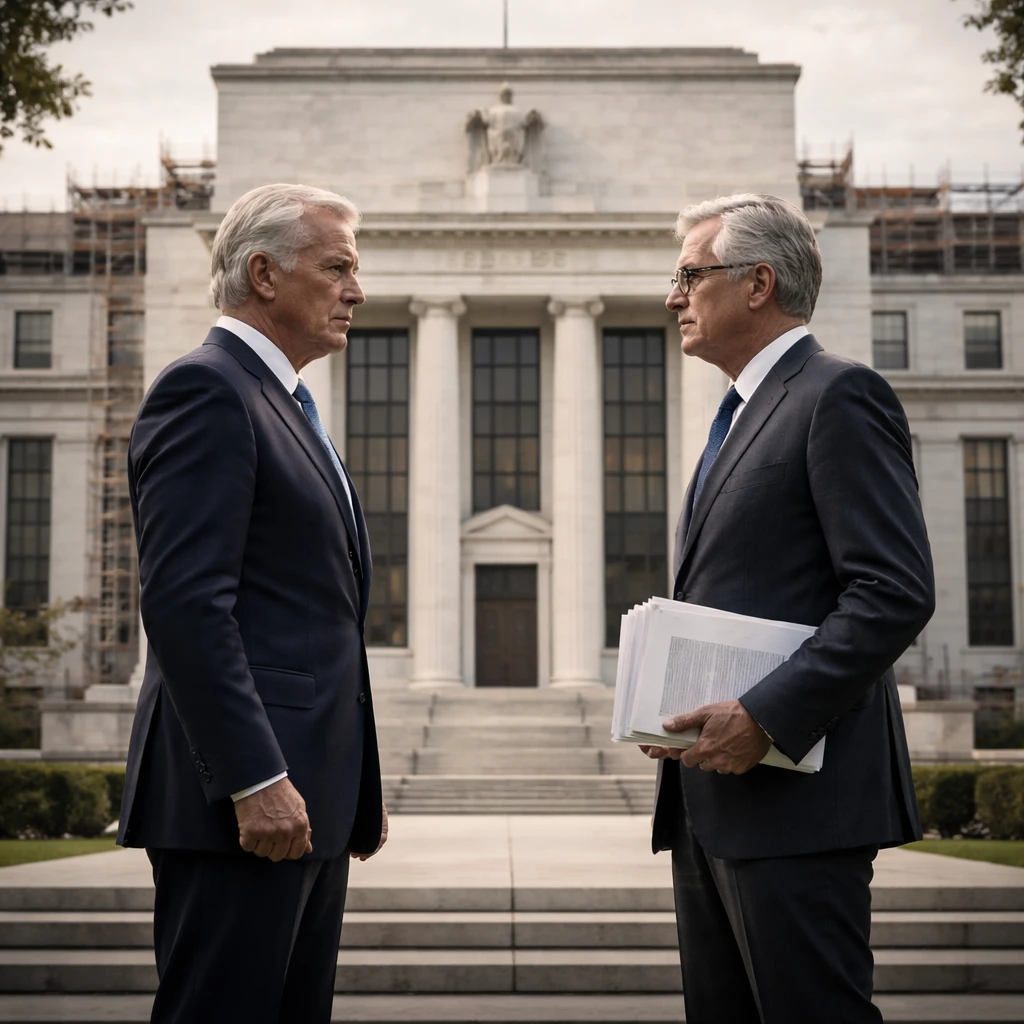

In a recent press event held at his Mar-a-Lago estate, President Donald Trump renewed his outspoken criticism of Federal Reserve Chair Jerome Powell. Speaking alongside Israeli Prime Minister Benjamin Netanyahu, Trump made strong allegations against Powell, accusing him of gross incompetence related to the Federal Reserve's renovation of its headquarters. These remarks came amid ongoing tensions between the president and the central bank leadership, as Trump again raised questions about the Fed's decision-making and management under Powell's tenure.
At the heart of Trump's renewed rebuke lies the substantial increase in the cost of the Federal Reserve's headquarters renovation, a project overseen during Powell's chairmanship. Initially estimated to cost around $1.9 billion before the COVID-19 pandemic, the renovation's budget has since escalated to more than $3.1 billion. According to the Federal Reserve, this surge is attributable primarily to elevated prices of construction materials such as steel and cement resulting from post-pandemic market dynamics.
Despite the Federal Reserve’s explanation, Powell has contested the characterization that the cost overruns are solely due to inflationary pressures. He pointed out discrepancies in the reported figures and indicated that the president had inappropriately conflated expenses from another government building constructed half a decade ago, which does not pertain to the current renovation.
During the press conference, Trump stated, "We're going to probably bring a lawsuit against [Powell]," without providing specific legal grounds, a timetable, or further elaboration on the nature of the potential case. These remarks left observers uncertain about the practical likelihood or form such legal action might take but underscored the president's escalated dissatisfaction with the Fed Chair.
Furthermore, when asked if he intended to remove Powell from his position despite the latter's term extending until May 2026, Trump responded, "Maybe I still might," signaling that dismissal remained a possibility over the ensuing months. This comment aligns with a pattern of critical engagement that Trump has maintained against Powell since the Fed Chair's appointment by Trump during his first presidential term.
Trump's disapproval of Powell has been notably focused on the Federal Reserve's approach to interest rates. The president has advocated more aggressive rate cuts to stimulate economic activity, a stance that Powell and the FOMC have resisted in light of broader inflationary concerns and mandates for financial stability. This divergence has fueled a contentious dynamic, with critics warning that such political pressure risks undermining the Federal Reserve's independence and its credibility on the global stage.
In addition to these developments, Trump announced plans to reveal his preferred candidate for the Federal Reserve Chair position in January, indicating a forthcoming change in leadership philosophy for the central bank. The implications of this change remain to be seen but mark an important development in the governance of U.S. monetary policy.
Requests for comment from both the White House and the Federal Reserve regarding Trump's latest assertions and intentions have yet to be addressed. The ongoing situation highlights continuing uncertainty around the Federal Reserve's leadership and the interplay between political forces and central banking institutions.