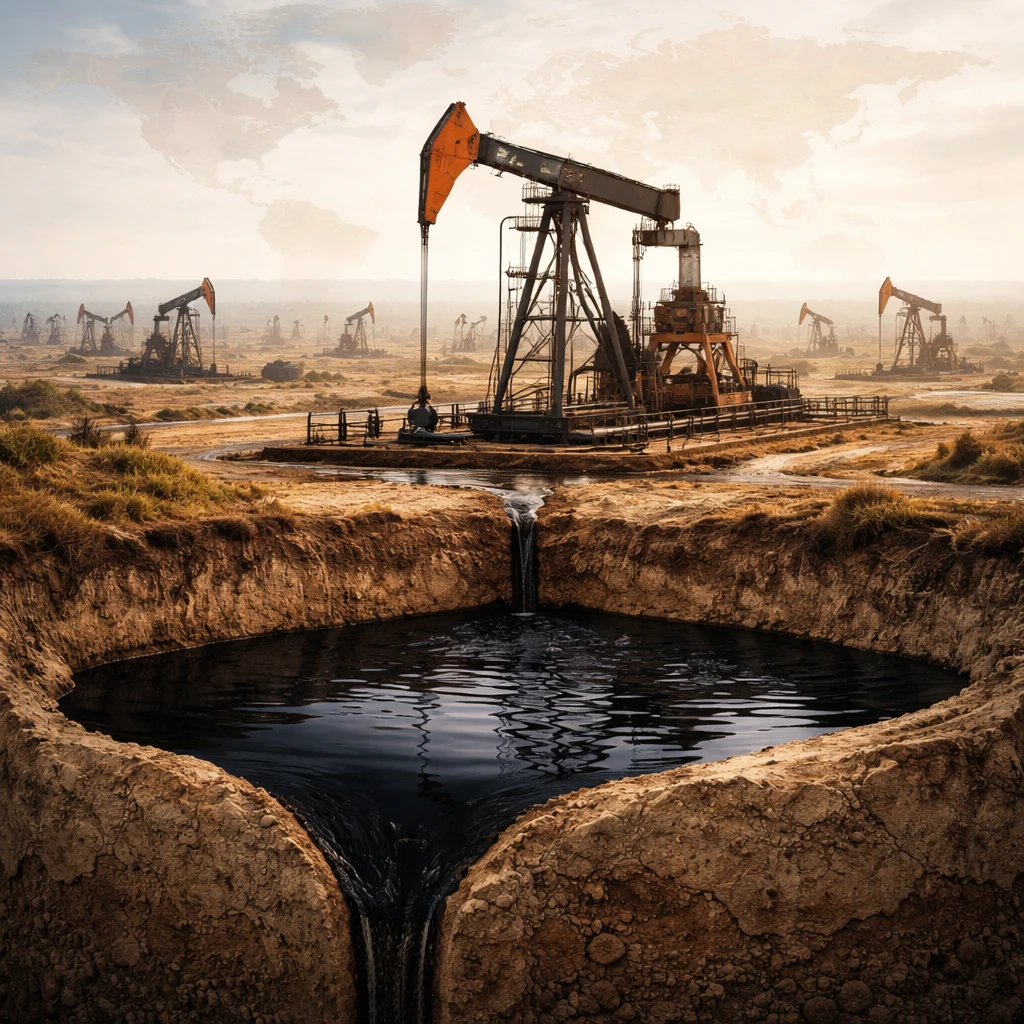

Understanding U.S. Interest in Venezuela’s Vast Oil Reserves
January 4, 2026
Business News

Understanding U.S. Interest in Venezuela’s Vast Oil Reserves

An in-depth look at the strategic significance of Venezuela's oil and its implications for U.S. policy

Summary

Venezuela is home to the largest proven oil reserves globally, yet decades of instability and mismanagement have hindered the country's ability to translate this resource wealth into consistent oil production. The United States maintains significant interest in Venezuelan oil due to its overwhelming reserve size and the geopolitical implications surrounding its exploitation and ownership. This article explores the reasons behind U.S. engagement with Venezuela’s oil sector, the challenges that have prevented full development of these resources, and the broader geopolitical context.

Key Points

Venezuela holds the largest proven oil reserves worldwide, surpassing all other nations.
Despite this, Venezuela’s oil production struggles due to economic mismanagement and political instability.
The United States maintains interest in Venezuela’s oil because of the reserves' size and the strategic geopolitical implications.
Production challenges in Venezuela’s oil sector complicate the global energy market and influence U.S. policy decisions.

Venezuela possesses the largest proven oil reserves in the world, a fact that holds immense strategic importance internationally. Despite this vast natural wealth, Venezuela's oil production has struggled to meet its full potential due to a variety of economic, political, and structural challenges. The United States has demonstrated persistent interest in Venezuela's energy sector, shaped by the country's unparalleled oil reserves and the complex geopolitical dynamics at play.

At the core of this interest lies Venezuela's oil reserves, which surpass those of any other nation. However, this geological bounty has not seamlessly translated into robust production outputs. Years of economic mismanagement, political unrest, and deteriorating infrastructure have collectively contributed to Venezuela's stagnation in oil output. This disconnect highlights why Venezuela, despite its capacity, remains a critical player in the global energy narrative.

The United States' engagement with Venezuela’s oil resources is driven by several key considerations. First, access to Venezuela's oil could significantly impact global supply dynamics given the volume of reserves located there. Control or influence over these reserves would not only affect market prices but also shape energy security calculations. Second, Venezuela’s strategic location and production capacity make it a pivotal actor in hemispheric energy policies, drawing the attention of U.S. policymakers.

Moreover, the challenges Venezuela faces in translating reserves to production underscore the complexities inherent in its oil sector. Infrastructure degradation, insufficient investment, and political instability have all undermined operational capabilities. Efforts to revitalize production have been met with obstacles, making the country's energy output unpredictable despite its natural endowment.

U.S. interest is further underscored by the broader geopolitical implications tied to Venezuela’s oil. Control over such a significant resource may enhance regional influence and geopolitical leverage. Additionally, the United States is attentive to the evolving dynamics around Venezuela’s leadership and how these changes could reshape energy partnerships and alliances.

In summary, Venezuela's position as holder of the world's largest oil reserves commands significant attention from the United States. The country's inability to fully harness its reserves for sustained production adds layers of complexity and opportunity within energy markets and international relations. Understanding these factors is essential for comprehending the underlying motivations behind U.S. policies directed toward Venezuela’s oil sector.

Risks
  • Ongoing political instability in Venezuela continues to hinder oil production capacity and development.
  • Economic mismanagement and infrastructure deterioration pose significant barriers to fully exploiting Venezuela’s oil reserves.
  • Changes in Venezuela’s political landscape could unpredictably affect international energy partnerships.
  • Geopolitical tensions related to control or influence over Venezuelan oil reserves introduce uncertainties into market stability.
Disclosure
Education only / not financial advice
Search Articles
Category
Business News

Business News

Related Articles
NGL Energy Partners - Growth Is Driving the Rally; Leverage Keeps Valuation In Check

NGL has rallied from the low single digits to near $12 on accelerating revenues and strong operating...

Energy Transfer: Ride the Natural-Gas Tailwind Driven by AI Data Centers

Energy Transfer (ET) is a large, diversified midstream operator sitting squarely in the path of two ...

Cryptocurrency Market Holds Steady Amid Anticipation of US-Iran Developments

The cryptocurrency market demonstrates a cautious stance as Bitcoin approaches the $69,000 mark. Oth...

Equinor (EQNR): A Dividended, Buyback-Supported Long with Reserve and Licensing Upside

Equinor combines scale (2.1 mmboe/d production in 2024, 6.1 billion barrels proven reserves) with gr...

Commerce Secretary Lutnick Clarifies Epstein Island Lunch Amid Scrutiny Over Relationship

Commerce Secretary Howard Lutnick acknowledged having a family lunch with convicted sex offender Jef...

Paramount Enhances Hostile Proposition to Thwart Netflix-Warner Bros. Discovery Merger

Paramount Pictures has escalated its aggressive pursuit to acquire Warner Bros. Discovery by introdu...