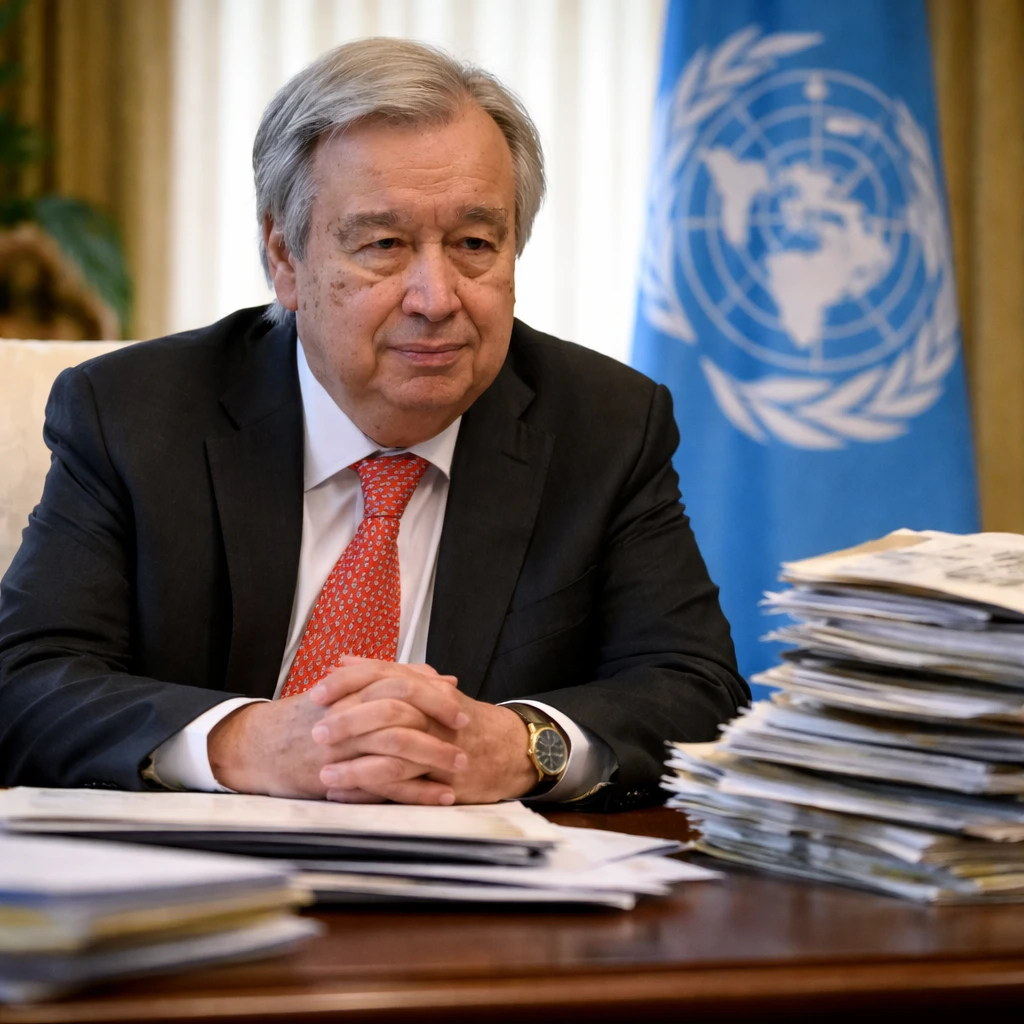

The United Nations is confronting a potentially catastrophic financial shortfall, according to Secretary-General Antonio Guterres, who has issued a stark warning that the organization faces an "imminent financial collapse" without urgent reforms or complete payment of dues by member nations. In a communication addressed to all 193 member states and obtained by the Associated Press, Guterres emphasized the possibility that operating cash reserves for the regular UN budget could be depleted by July, which would severely disrupt the organization’s activities.
Guterres articulated a clear ultimatum: the UN must either ensure that all member countries comply fully and promptly with their financial commitments, or undertake fundamental revisions of the fiscal policies governing the organization to prevent financial ruin. Although he did not explicitly single out any particular nation in his letter, reports suggest that the message was primarily aimed at the United States, the UN’s largest traditional funder, which has fallen behind on payments.
In recent years, the United States under the Trump administration expressed criticisms of the UN's effectiveness, prompting withdrawal from entities such as the World Health Organization and UNESCO, alongside reductions in funds for various other UN-affiliated bodies.
According to officials who requested anonymity due to the sensitive nature of the information, the U.S. has accrued approximately $2.196 billion in arrears to the UN’s regular budget. This figure incorporates $767 million owed for the current year in addition to back payments from previous years. Beyond this, there is an additional outstanding $1.8 billion linked to the separate peacekeeping budget, a figure anticipated to rise further.
Following the United States, Venezuela stands as the member state with the next significant debt, owing $38 million. Owing to economic difficulties and political turmoil that intensified with a recent failed military intervention, Venezuela has been suspended from voting in the General Assembly, having been delinquent for over two years.
Guterres highlighted that as of the close of 2025, the UN was burdened with $1.568 billion in unpaid dues, a sum that is more than twice what was outstanding a year earlier. The failure of the U.S. administration to make any payments during the previous year significantly contributed to this shortfall. The escalating arrears have nearly exhausted the organization’s liquidity reserves, posing a grave risk to the ability to enact the approved $3.45 billion budget for 2026 unanimously sanctioned by the General Assembly.
Compounding the dilemma, UN regulations mandate that any unspent funds from the regular budget must be returned to member countries, despite some payments not yet having been received. Guterres implored member states to amend this provision immediately, stressing the incompatibility of the rule with current fiscal realities. He remarked, “I cannot overstate the urgency of the situation we now face. We cannot execute budgets with uncollected funds, nor return funds we never received.”
The U.S. mission to the United Nations did not provide an immediate response to requests for comment on the outstanding financial obligations.
This article reflects corrected financial figures regarding U.S. arrears, confirming that the $2.196 billion includes $767 million owed for the current year.