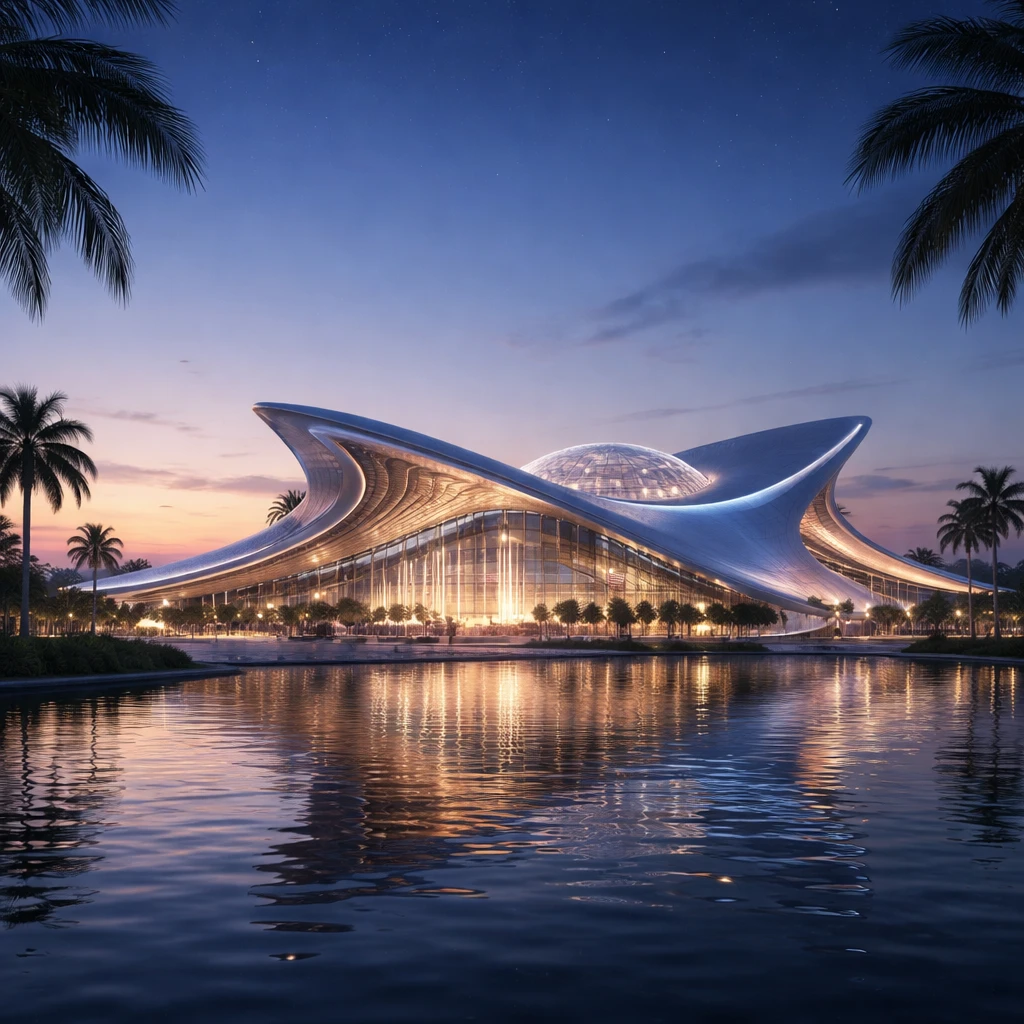

The United States government announced plans to pursue hosting the 2035 World Expo, a major global exhibition designed to foster international cooperation and address universal challenges. This large-scale event, officially known as the International Registered Exhibition, is held every five years and encourages cultural exchange and educational advancement. Miami has been proposed as the host city to bring the Expo back to U.S. soil for the first time since 1962.
In an official statement on Thursday, President Donald Trump declared the nation's intention to submit the bid for the 2035 World Expo, placing significant emphasis on Miami as a fitting host location. The president underscored the prospective economic impact of staging the event, including the creation of thousands of jobs and considerable growth in the national economy.
“We will create thousands of jobs, and add Billions of Dollars in GROWTH, to our Economy,” Trump asserted, highlighting the event as a catalyst for economic stimulus. He further linked the significance of hosting the Expo to what he termed a “new Golden Age of America,” positioning the event as an emblem of national resurgence.
To lead this ambitious bid, President Trump appointed Secretary of State Marco Rubio, a Miami native and the first Latino American to serve as top U.S. diplomat. Rubio also simultaneously holds the roles of acting administrator of the U.S. Agency for International Development and acting archivist at the National Archives and Records Administration. This appointment reflects increasing trust in Rubio's leadership in significant diplomatic and administrative capacities.
Rubio expressed gratitude and enthusiasm for being charged with this responsibility, emphasizing the unique opportunity the World Expo offers to demonstrate American exceptionalism to a global audience. Writing on X, he conveyed, “The event is an incredible stage to showcase our nation's Golden Age and American exceptionalism before the world. There is nothing quite like Miami hospitality and it would be a privilege to bring the World Expo back to the U.S. for the first time since 1962.”
Rubio's role within the administration continues to expand beyond this appointment. Most recently, he was named a founding member of the Board of Peace for Gaza, an emergent governing entity tasked with managing stability in the region following ongoing conflict. His varied responsibilities highlight his deep involvement in U.S. diplomacy and international engagement.
The World Expo serves as a pivotal platform every five years, bringing together nations to spotlight innovation, culture, and solutions to global challenges. The previous Expo, held in Japan in 2025, set the stage for future hosts to build on themes of cooperation and progress.
Miami's selection as the proposed host city reflects its diverse cultural background, hospitality, and strategic international connections, which align with the event’s goals of education, cultural exchange, and economic partnership. Bringing the Expo to Miami could mark a significant development in the city's global profile and economic landscape.
While specific details regarding the bid process timeline or competing bids have not been disclosed, national leaders view this undertaking as a vital opportunity to promote U.S. interests, foster growth, and highlight American innovation on the world stage.
In summary, the U.S. campaign to host the 2035 World Expo, headed by Secretary Rubio, signals a focused effort to leverage this international event as a means to stimulate the economy, celebrate American culture and innovation, and strengthen the nation’s global ties. Miami's proposed role as host city positions it to become a central hub for worldwide collaboration in the mid-2030s.