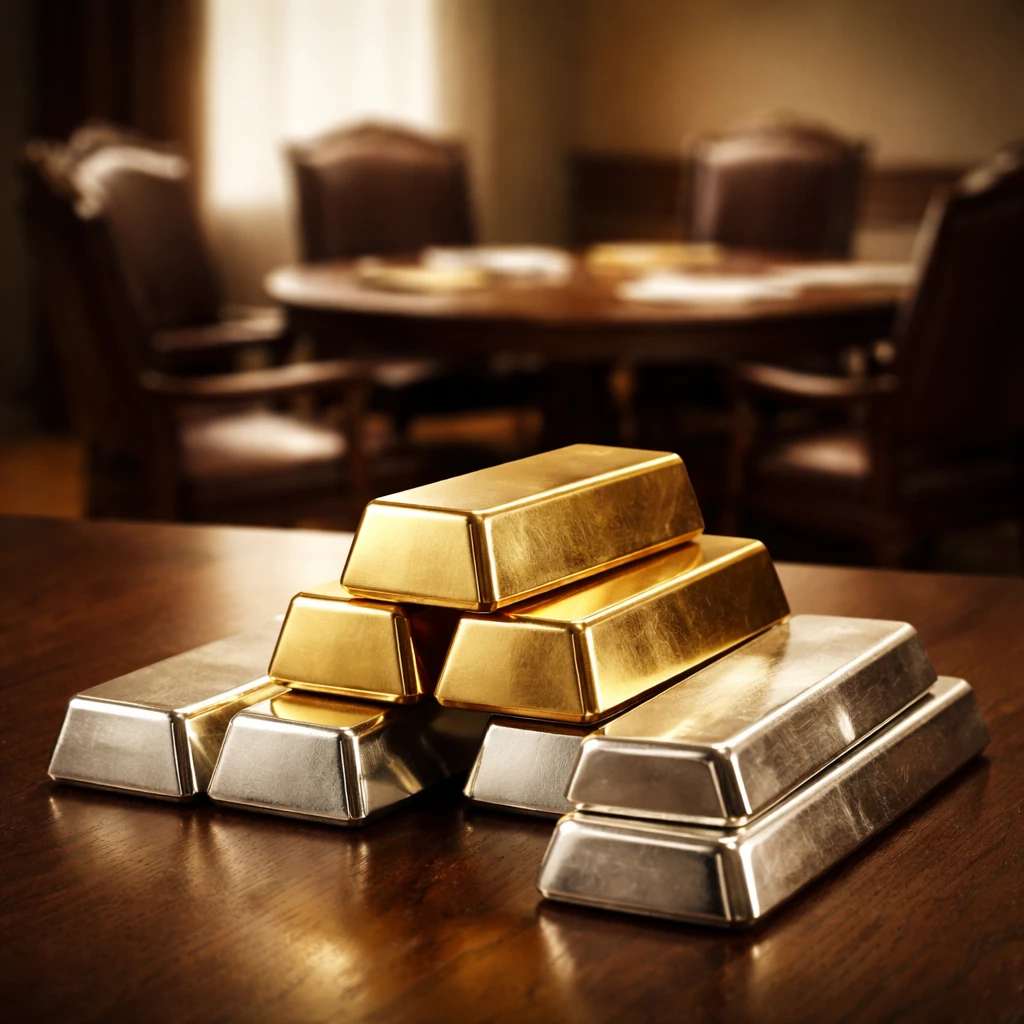

Investors looking to identify 2025's top-performing assets might be surprised to discover that gold and silver, rather than artificial intelligence stocks, have dominated Wall Street's gains this year. Gold has seen a remarkable increase of nearly 74% in 2025, reaching an all-time peak of $4,562 per ounce as of December 26, marking its strongest annual growth since a 126% surge in 1979. Even more striking is silver's performance, which has soared by 175% year-to-date, closing just under $80 per ounce at the same date. This performance also eclipses the S&P 500's returns over the past decade, highlighting precious metals' recent outperformance.
While commonly cited influences have underpinned the sustained growth trajectories of gold and silver, these alone do not fully explain the recent parabolic price movements. Instead, a more nuanced factor appears to be contributing significantly to this dramatic price acceleration.
Foundations of a Multi-Year Precious Metals Rally
Historically, gold and silver have been favored safe-haven assets in uncertain economic climates. The 2020s have certainly delivered their share of turmoil, including navigating a global pandemic, a prolonged Wall Street bear market, and substantial shifts in international trade policies.
A key trade policy change occurred in April 2025, when the U.S. administration implemented a 10% tariff globally and additional "reciprocal tariffs" on nations with unfavorable trade balances. This escalation introduced uncertainty around global commerce and the broader U.S. economy. Market participants generally react cautiously to such economic challenges, often driving demand for the security that precious metals historically provide.
From a monetary standpoint, the expansion in U.S. M2 money supply during the COVID-19 pandemic period has been significant. This supply encompasses cash, checking deposits, and other forms like savings and money market accounts up to $100,000. Traditionally, rapid money supply growth predicates inflationary pressures, which ultimately erode the purchasing power of the U.S. dollar. Such conditions enhance the appeal of finite tangible assets like gold and silver, which retain intrinsic value.
Demand for the physical metals also plays a role. For silver, in particular, growing industrial usage includes its incorporation in solar energy technologies and specialized electric vehicle batteries. Where supply fails to keep pace with rising demand, price increases often follow due to scarcity.
Conversely, despite rumors on online forums about short squeezes impacting silver prices, empirical evidence does not support significant influence from short-seller forced covering in the metals' rallies.
The Less Apparent Catalyst: Federal Reserve Dissent
While the conventional explanations set the stage for a steady uptrend, the sudden and pronounced price acceleration of gold and silver relates closely to internal divisions within the Federal Reserve. The Federal Open Market Committee (FOMC), a 12-member panel responsible for directing U.S. monetary policy, traditionally shapes consistent expectations by aligning its members on policy decisions.
However, in the latter half of 2025, every FOMC meeting has seen dissents from at least one member opposing the committee's majority stance. Notably, the last two meetings have had dissenting votes in opposing directions. While the committee uniformly approved 25 basis point cuts to the federal funds target rate in both sessions, some members resisted any rate reduction, whereas others advocated for a 50 basis point decrease. Such polarized positions within rare occurrence periods—only three meetings with opposing dissents in 35 years, two of which happened since late October 2025—have unsettled markets.
This infighting represents a notable shift from the Federal Reserve's historic role as a stabilizing force in financial markets. The uncertainty is compounded by the impending expiration of Chairman Jerome Powell's term in May 2026, with no clear successor identified at this time.
The combination of mixed signals from the Fed amid modest rises in U.S. inflation and unemployment rates raises concerns about the potential emergence of stagflationary conditions, historically unfavorable for economic growth. In this environment, precious metals have surged dramatically, reflecting investor caution.
Following the recent FOMC meetings revealing these opposing policy views, both gold and silver prices accelerated sharply. Although such parabolic rises are uncommon and unpredictable over long durations, they have previously preceded challenges for the broader U.S. economy and equities market.
Until clarity and consensus return to the Federal Reserve's policymaking process, the elevated status of gold and silver as safe assets may continue, evidenced by their current lustrous performance.