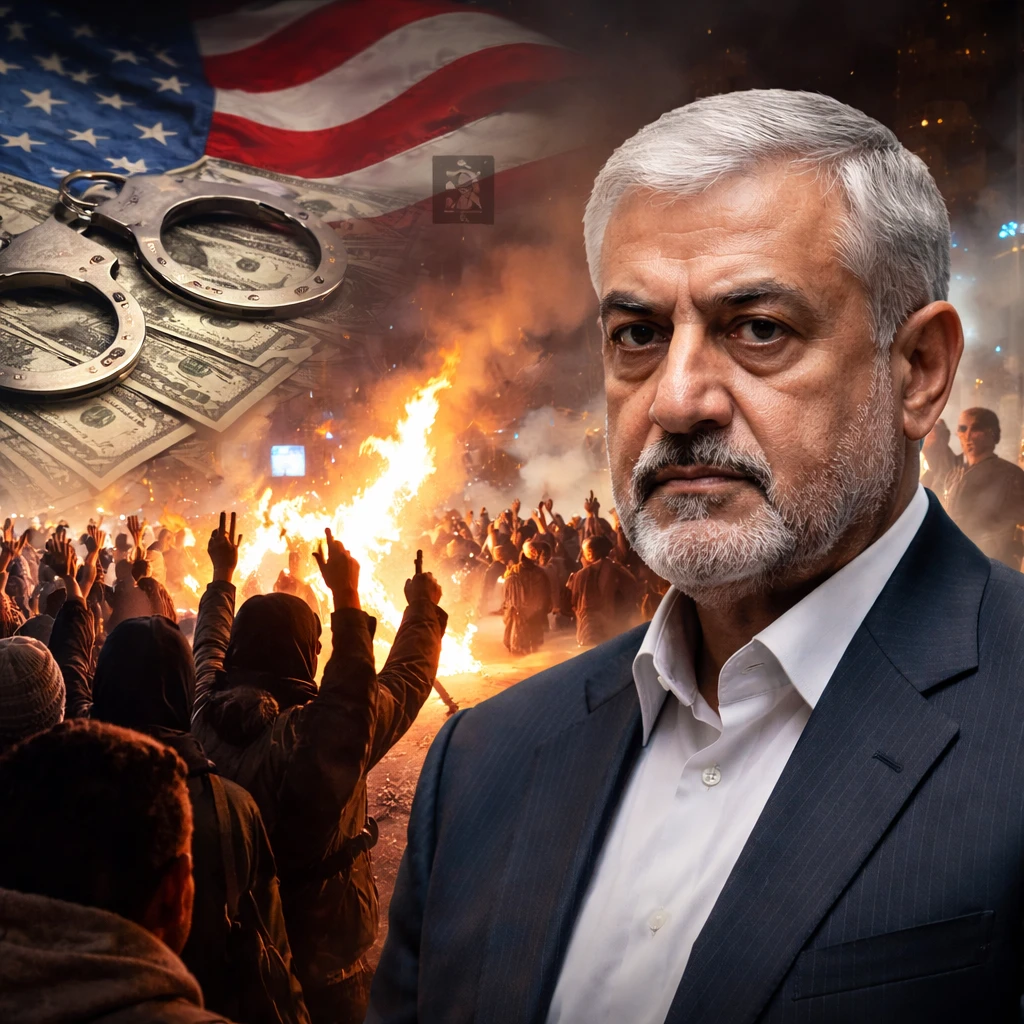

The United States government has broadened its punitive measures against Iran by sanctioning Eskandar Momeni, the nation27s Interior Minister, highlighting his involvement in the suppression of extensive protests challenging the authority of theocratic governance in Tehran. These sanctions, enacted on a recent Friday, follow previous U.S. and European Union initiatives aimed at holding Iranian officials accountable for human rights violations amid civil unrest.
Authorities in Washington allege that under Momeni27s oversight, Iran27s law enforcement agencies contributed to the deaths of thousands during peaceful demonstrations that began in late December. The initial protests, spurred by economic hardship, quickly evolved into broader opposition against the Islamic Republic's ruling structures. Activists report that the government27s response has resulted in over 6,000 fatalities, while Iranian state media have consistently labeled protestors as 22terrorists.22
Following suit, the European Union announced sanctions against Momeni along with figures from Iran27s judicial branch and other top officials, accusing them collectively of orchestrating violent crackdowns and arbitrary detentions of political activists and human rights defenders. The EU characterized these individuals as directly complicit in the violent repression of peaceful demonstrators.
On the same day, the U.S. Treasury Department27s Office of Foreign Assets Control introduced sanctions against Babak Morteza Zanjani, an Iranian investor charged with misappropriating billions of dollars derived from Iranian oil revenues to benefit the government. The penalties extended to two digital asset exchanges connected to Zanjani, which reportedly handled substantial funds linked to these illicit activities.
In a related development, the European Union has officially designated Iran27s paramilitary Revolutionary Guard as a terrorist organization. While largely symbolic, this move intensifies diplomatic pressures on Tehran. In reaction, Iranian authorities are considering reciprocal designations, targeting the military forces of EU member countries under terrorist classifications, according to a public statement from Ali Larijani, secretary of Iran27s Supreme National Security Council. The Iranian parliament is scheduled to vote on this measure imminently.
The EU has yet to issue comments concerning Iran27s proposed counter-sanctions.
Further U.S. sanctions include restrictions on the secretary of the Supreme Council for National Security, accused by the Treasury of instigating violence against protestors. Additional sanctions target a network of 18 individuals and companies implicated in laundering proceeds from sanctioned Iranian oil sales abroad, part of a covert financial system tied to Iranian banking institutions facing restrictions.
Treasury Secretary Scott Bessent emphasized the department27s ongoing commitment to dismantle Iranian financial networks and authorities exploiting state resources at the public27s expense. He characterized the regime27s efforts to move stolen funds globally as frantic and assured that further action would follow to counter such activities.
The sanctions block the affected entities and persons from accessing assets within the United States, restrict their ability to travel to the country, and bar U.S. companies and citizens from engaging in business with them.
Contributions to this report were made by writers based in Dubai and Brussels.