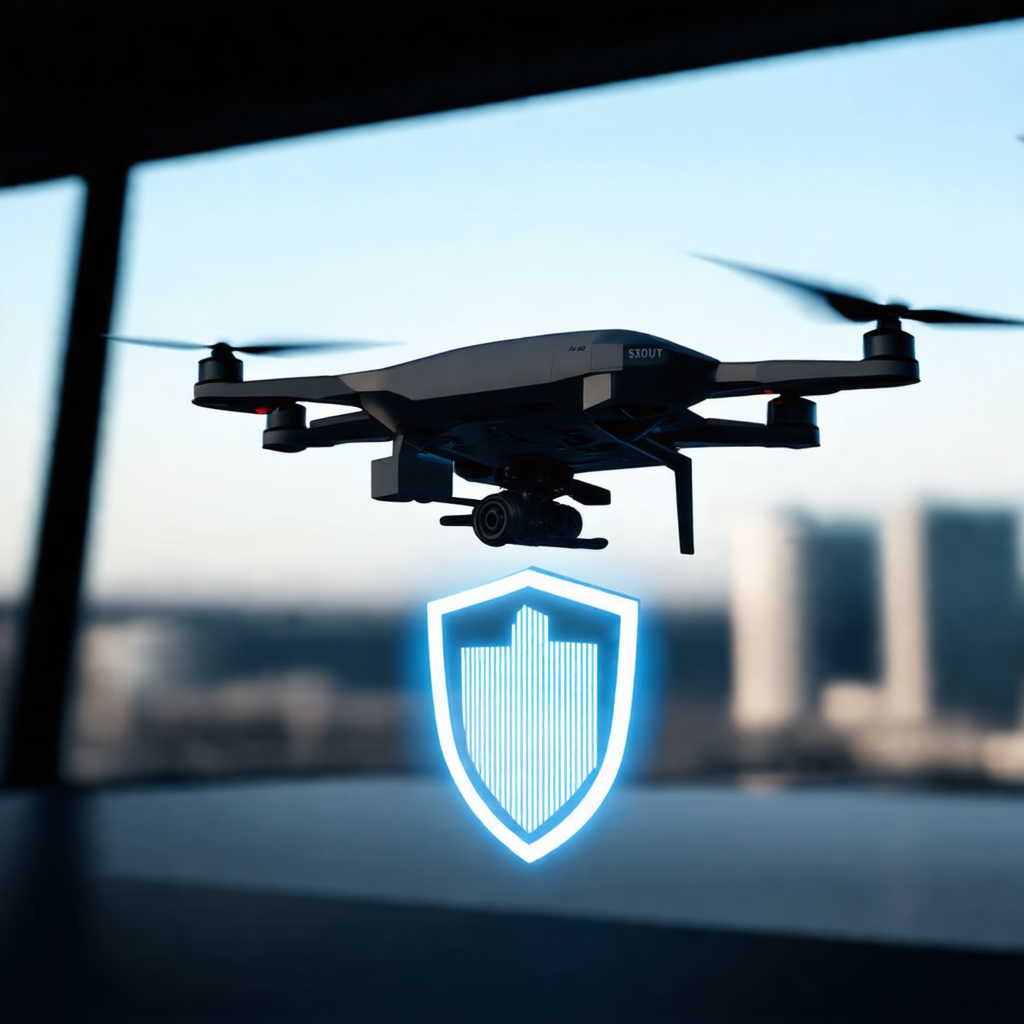

Chinese-made drones have become widely prevalent in the United States over recent years, with extensive adoption by private individuals, police forces, and firefighting units. These unmanned aerial vehicles have been utilized across a variety of sectors, including infrastructure and construction inspection, agricultural crop assessment, and also for professional and recreational videography.
However, a recent regulatory action by the Federal Communications Commission (FCC) on Tuesday marks a significant shift in the availability of foreign-manufactured drones in the US market. The FCC has officially imposed a ban on the importation and sale of all new drone models and essential components produced by non-US manufacturers, prominently including DJI, recognized as the world27s leading drone manufacturer. This action involved adding DJI and several other foreign entities to a so-called "Covered List," which encompasses organizations assessed to pose an "unacceptable risk to the national security of the United States."
The FCC27s decision follows a sustained effort to address security concerns tied to Chinese drone companies, including DJI and Autel Robotics, another significant drone manufacturer. The new rule explicitly exempts drone models that have already been approved for sale prior to this ruling as well as those currently in operation by US consumers, permitting their continued use and sale. Nevertheless, the ban effectively prevents consumers from purchasing the next generation of drones from these covered foreign manufacturers.
DJI currently holds an estimated 70% share of the global drone market, according to industry research from Research and Markets. Its dominance extends into the US, where drones under its brand are common tools in various professional and hobbyist applications. The FCC27s announcement may therefore affect a diverse customer base given DJI27s prevalent market penetration across public and private sectors.
The regulatory move coincides with broader US government initiatives aimed at enhancing domestic drone production and reducing reliance on foreign technology. In June, then-President Donald Trump signed an executive order intended to accelerate drone commercialization within the United States and to strengthen indigenous manufacturing capabilities, particularly to counter foreign influence or exploitation.
FCC Chair Brendan Carr underscored the administration27s commitment to protecting national airspace while promoting American leadership in drone technology. In statements on the social platform X, Carr emphasized that the FCC27s action does not interfere with authorized drones already in use or available for purchase and includes mechanisms for excluding specific drones that do not pose a security risk.
The ban became official following the directive in the 2025 National Defense Authorization Act passed by Congress last year, which required a security assessment of drone equipment manufactured by DJI, Autel Robotics, and other non-US producers by December 23, 2025. Over the preceding year, DJI sought to engage with American regulatory and defense authorities, expressing willingness for transparent reviews of its products. Correspondence from Adam Welsh, DJI27s Head of Global Policy, indicated readiness to cooperate fully, providing necessary data for comprehensive evaluation.
Despite these overtures, the FCC acted upon conclusions from a White House-established interagency body, which cited risks linked to foreign-made drones and components facilitating persistent surveillance, unauthorized data extraction, and potentially destructive activities within US territory. The agency did not release detailed supporting information related to these findings.
A spokesperson for DJI conveyed disappointment regarding the FCC27s announcement, noting that no explicit data underpinning the security determination has been shared by the Executive Branch. The spokesperson reiterated DJI27s commitment to safety and product integrity, supported by assessments from independent reviewers, and argued that security concerns have not been substantiated by evidence but rather reflect protectionist motives inconsistent with open market principles.
Efforts to obtain commentary from Autel Robotics remained unanswered at the time of reporting. Meanwhile, a representative from the Chinese Ministry of Foreign Affairs condemned the FCC27s inclusion of Chinese companies on the Covered List as "discriminatory," urging the US to cease overgeneralized national security claims and to ensure a fair, just, and non-discriminatory environment for Chinese firms operating internationally.
It is notable that other Chinese technology companies, including Huawei and ZTE, have previously been added to the FCC27s Covered List due to similar national security concerns. The drone ban continues a pattern of US regulatory scrutiny directed toward Chinese entities across multiple technology sectors.
Concerns about the security of Chinese-manufactured drones are not new. In 2017, the US Army prohibited the use of DJI drones citing cybersecurity vulnerabilities. Additionally, the Department of Homeland Security circulated an internal memo the same year warning that drones produced in China might transmit sensitive flight data back to manufacturers located abroad.
Further regulatory actions targeting DJI include its inclusion in the 2020 Commerce Department Entity List due to alleged involvement in human rights abuses and surveillance activities directed against Uyghur Muslims in Xinjiang and other minority populations. Subsequently, in 2021, investment restrictions were imposed by the US Treasury Department on DJI for related reasons. The Department of Defense placed DJI on a list of companies purportedly affiliated with China27s People27s Liberation Army in 2022. DJI contested this designation in court but was unsuccessful.
This latest FCC ruling represents the newest phase in ongoing measures aimed at controlling the use and procurement of foreign drone technologies within the United States, balancing technology interests with national security imperatives.