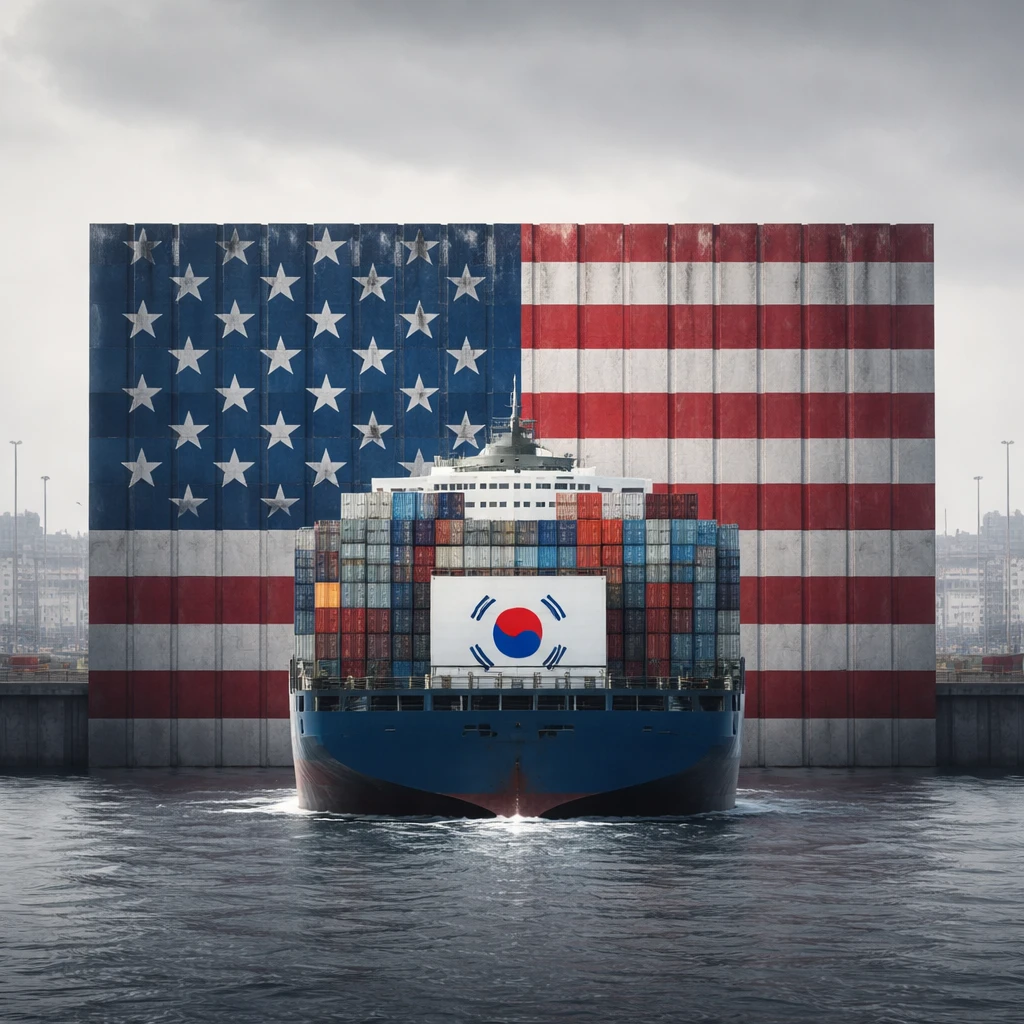

In a notable shift in US trade policy, President Donald Trump declared on Monday that tariffs on South Korean imports will be raised from the existing 15% level up to 25%. This action stems directly from South Korea’s legislative body not implementing a historic trade agreement that had previously been negotiated between the two nations.
Trump announced the tariff escalation through a post on his social media platform, Truth Social, where he stated, "Because the Korean Legislature hasn’t enacted our Historic Trade Agreement, which is their prerogative, I am hereby increasing South Korean TARIFFS on Autos, Lumber, Pharma, and all other Reciprocal TARIFFS, from 15% to 25%." At present, it remains unclear whether this tariff adjustment has already been enacted or is scheduled for imminent implementation. Attempts to obtain clarification from the White House have yet to receive a response.
South Korea ranks among the United States’ most substantial sources for imported goods, with Commerce Department data indicating deliveries approximating $132 billion worth of merchandise in 2024. Notably, South Korean exports to the US market include automobiles, automotive components, semiconductors, and electronic products. The increase to a 25% tariff rate on these items signals a potential rise in costs for US importers and consumers alike.
Earlier in the year, the Trump administration had secured a trade agreement with South Korea that effectively prevented an automatic tariff surge from 10% to 25%. This accord also established preferential tariff rates on specific categories such as imported cars, in addition to other goods. South Korea’s lack of legislative endorsement of this agreement is the stated justification for President Trump’s decision to step up tariff levels.
The president’s capacity to apply broad tariff increases on goods from South Korea or other nations may face limitations due to ongoing legal proceedings. A landmark case before the Supreme Court is set to determine whether President Trump possessed the legal authorization to impose sweeping, country-specific tariffs. Should the Court rule against the administration, any efforts to alter tariff rates unilaterally for all imports originating from targeted countries, including South Korea, could be obstructed or require additional legislative approval.
This tariff announcement is the latest development in a series of recent trade-related pressures initiated by the Trump administration. These include threatened tariffs upwards of 100% on Canadian commodities and an additional 10% levy proposed against countries opposing US strategic interests, such as those objecting to US ambitions concerning Greenland. Some of these threats have since been retracted or adjusted.
As trade dynamics evolve, the precise economic consequences of the increased tariffs on South Korean goods remain to be seen. Stakeholders across industries tied to automotive manufacturing, pharmaceuticals, lumber, and electronics will be monitoring the situation closely. Furthermore, resolution from the Supreme Court on executive tariff authority will be pivotal in determining the future landscape of US trade policy enforcement.
This is a developing story, and updates will be provided as further information becomes available.