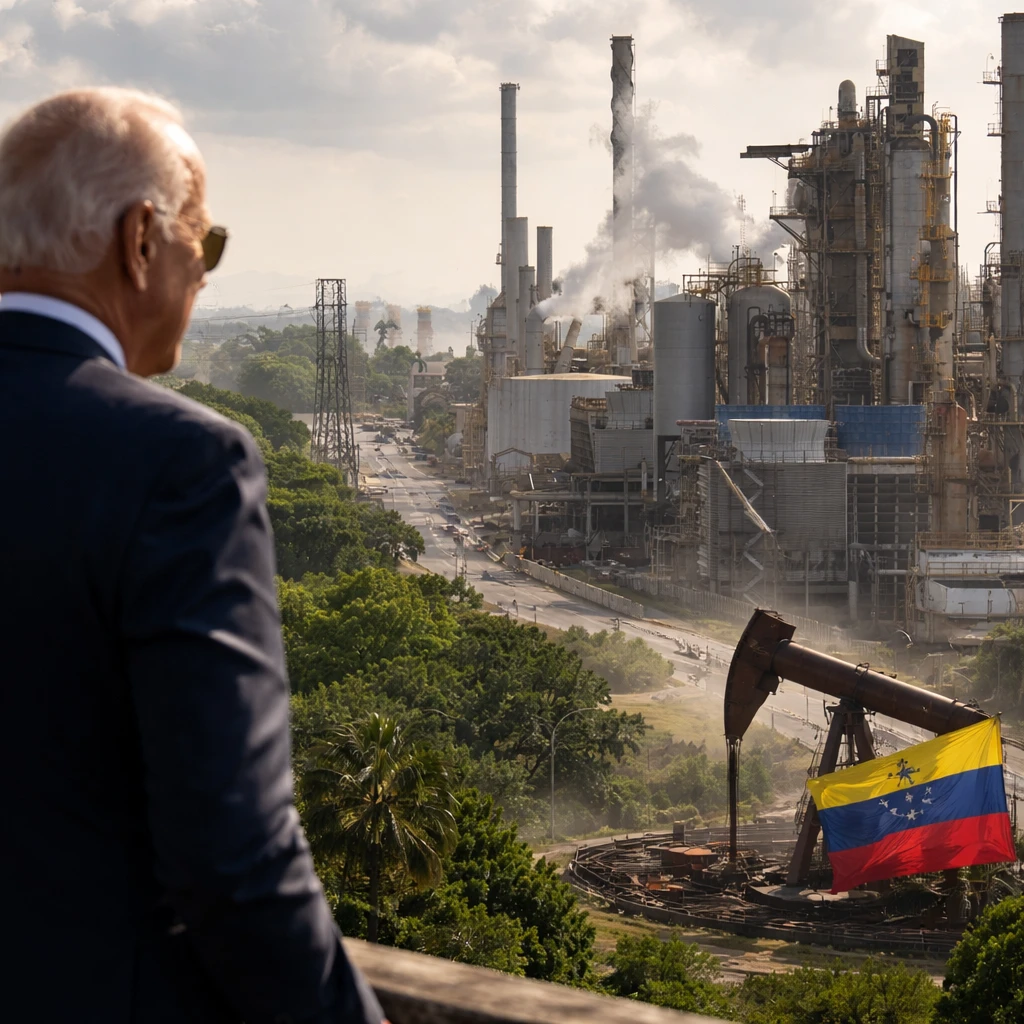

On Monday, shares of leading American energy firms experienced significant gains after the President announced a plan to assume control of Venezuela's oil industry. The President emphasized that American companies would be responsible for revitalizing the sector following the apprehension of Venezuela’s President Nicolás Maduro. Although the current oversupply conditions in the crude oil market make an immediate global price impact unlikely, analysts suggest this initiative could fundamentally alter energy market dynamics and international geopolitical relations.
The US has emerged as the world's foremost crude oil producer, largely due to technological advances in shale oil extraction. Additionally, major recent oil discoveries off Guyana's coast are predominantly controlled by US energy giants ExxonMobil and Chevron. Bringing Venezuela’s energy sector—home to the planet’s largest oil reserves—under US influence could dramatically "reshape the balance of power in international energy markets," according to JP Morgan analysts.
JP Morgan specified that the combined reserves managed by the US could represent approximately 30% of global oil reserves if consolidation occurs, marking a transformative shift in global energy relations. This strategic move has the potential to substantially enhance US leverage in influencing global oil supply and pricing trends, thereby potentially stabilizing prices at historically low levels, boosting US energy security, and altering the international market landscape.
Notwithstanding the strategic advantage, Venezuela’s oil infrastructure has suffered from years of deterioration and international sanctions, hampering production capacity. Nevertheless, some industry experts believe Venezuela can increase its current production of about 1.1 million barrels per day, possibly returning to historical output levels in the near term.
However, energy market experts caution that implementation faces significant hurdles. Neal Dingmann of William Blair highlighted that despite administration claims about massive investment and infrastructure rehabilitation by US oil companies, political risks and current depressed oil prices may delay such developments. Substantial investments will be required over an extended period to renew Venezuelan oil production capacity.
Global crude prices are currently about 20% lower than the previous year, with benchmark US crude failing to rise above $70 per barrel since June and not reaching $80 per barrel since mid-2024. Historical context shows oil prices have peaked much higher, for instance exceeding $130 per barrel leading up to the 2008 housing crisis. These market conditions add complexity to incentivizing investment in Venezuela's oil facilities.
John Freeman of Raymond James emphasized additional variables influencing Venezuela's production rebound, including the pace of political transition and the willingness of multinational oil corporations to re-engage with the country's energy sector.
Following the announcement, energy sector equities saw widespread appreciation, particularly companies specializing in refining heavy crude oil such as Valero, Marathon Petroleum, and Phillips 66, which rose between 5% and 6%. This heavy crude is crucial for producing diesel, asphalt, and fuel for heavy machinery, supplies currently constrained by sanctions on Venezuelan and Russian oil. Oilfield service firms like SLB and Halliburton experienced even larger jumps, between 7% and 8%, while major exploration companies ExxonMobil, Chevron, and ConocoPhillips gained between 2% and 4% at market open.