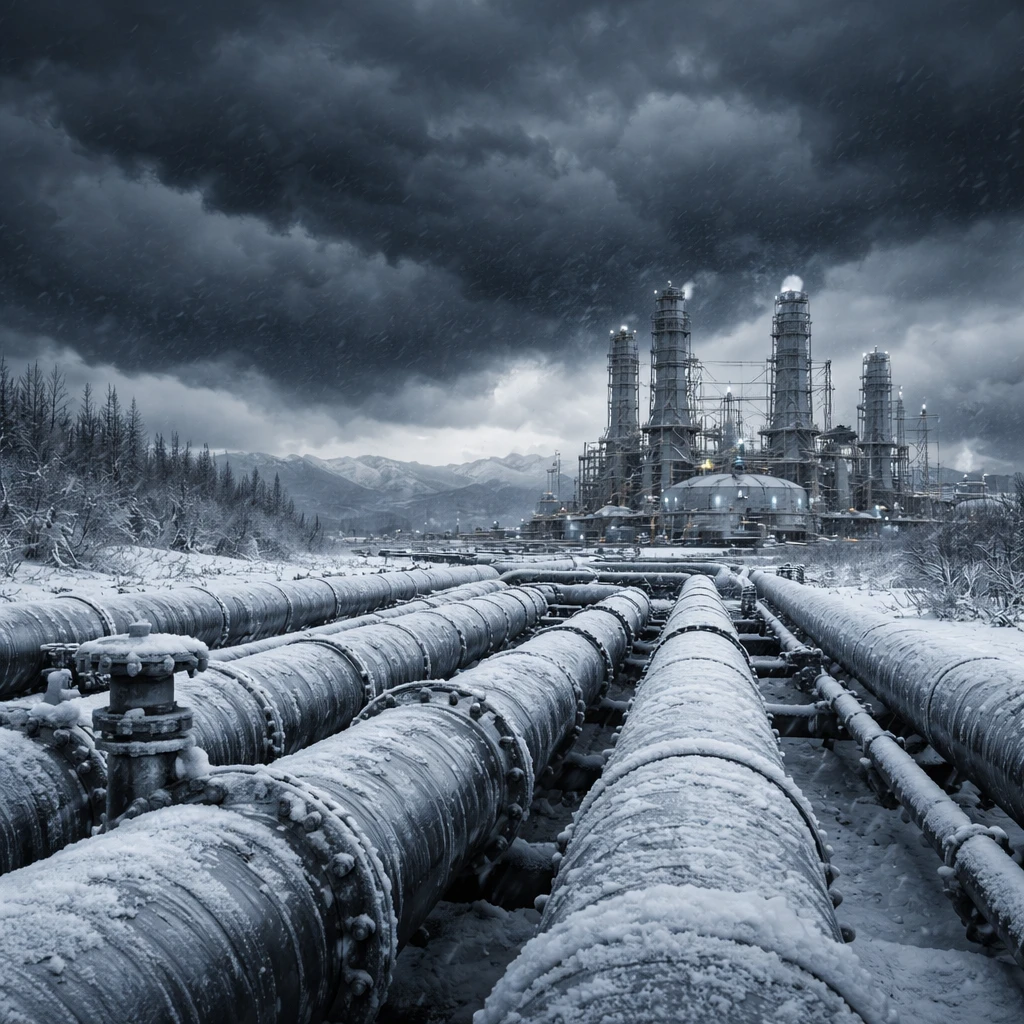

The United States is facing a significant escalation in natural gas prices driven by looming extreme winter weather conditions. Natural gas futures for the near term have jumped by more than 70% over the course of the week, according to data analyzed by FactSet. This remarkable increase sets natural gas on course for its most substantial weekly rise in over three decades, specifically since 1990. Additionally, this price level represents the highest point natural gas has reached since last year, 2022, as reported by Bloomberg.
The catalyst behind this dramatic price movement is meteorological forecasts predicting one of the most severe winter storms in recent years. As temperatures plummet across wide swaths of the country, the increased need for heating is expected to substantially elevate natural gas consumption. Households turning up thermostats could rapidly drain existing reserves of natural gas, placing further pressure on supply.
Darrell Fletcher, a managing director focusing on commodities at Bannockburn Capital Markets, remarked on the rarity of such a market move, stating that in his three decades of trading experience, few spikes in natural gas futures compare to the current situation. He emphasized the challenges ahead, describing the upcoming week as "very challenging" in terms of market dynamics.
The complexity of the current situation stems from several intertwined factors. Firstly, the deep freeze will elevate demand for natural gas considerably, as it remains America's primary fuel source for residential heating. This rise in consumption is compounded by the potential for increased electricity demand, especially in southern states where electric heating is more prevalent. Natural gas also supplies roughly 40% of the nation's electricity generation, exceeding the combined output of coal and nuclear power sources. This dual demand for heating and power generation places substantial upward pressure on gas consumption.
Robert Yawger, a commodity specialist with Mizuho Securities, highlighted the potential for a dramatic decline in natural gas storage, predicting it could fall by the second-largest margin ever recorded due to the anticipated surge in demand. Simultaneously, the severe storm threatens to disrupt supply as extremely low temperatures risk decreasing output at critical natural gas production hubs situated in Texas, Louisiana, and Appalachia.
Patrick Rau, senior vice president for research and analysis at Natural Gas Analysis, underscored the peril of simultaneous supply reductions and elevated consumption. He warned that sustained reductions in production coupled with rising demand would heavily impact storage reserves, intensifying market strains.
Another technical complication facing the natural gas sector is the phenomenon known as "freeze-offs." Ole Hansen, who leads commodity strategy at Saxo, explained that when water inside gas pipelines and infrastructure freezes, it blocks gas flow and curtails production. Such freeze-offs often coincide with peak demand periods, exacerbating price volatility.
High levels of natural gas prices persisting for extended durations could also hamper government efforts to demonstrate progress on energy affordability for the public. Responding to such concerns, a White House spokesperson expressed confidence that current energy policies are delivering sustained relief for American families and businesses. The spokesperson urged media to shift focus from normal market fluctuations driven by weather events to the projected record high in U.S. natural gas production this year.
Representatives from the U.S. Department of Energy emphasized that American natural gas output remains at all-time highs, attributing this to prior leadership while signaling attempts to reverse policies thought to have contributed to increased energy costs.
Volatility is a well-known characteristic of natural gas futures, attributed to the fuel's storage and transportation constraints. Periods of frigid weather often cause dramatic price spikes that can quickly subside as temperatures moderate. Yawger illustrated this by describing the market action as a "wild animal" exhibiting frenzied trading behavior.
Encouragingly, the sharp price escalations are largely concentrated in near-term futures contracts, with longer-dated contracts showing comparatively moderate increases. This pattern suggests that the market may anticipate resolution of supply-demand imbalances as the winter storm passes.
Besides weather-driven factors, the growth of natural gas exports has emerged as a significant influence on domestic prices. Increasing volumes of U.S.-produced natural gas are being exported globally in liquefied natural gas (LNG) form, reflecting both ample domestic resources and robust international demand. Federal data project a 37% increase in LNG exports this year, effectively reducing the quantity of gas reserved for domestic consumption.
Yawger pointed out the tight balance between domestic use and exports, noting there is effectively no surplus gas; every unit produced is directed either to residential heating within the U.S. or to international customers.