
In a recent announcement, President Donald Trump revealed that Venezuela is set to hand over a substantial quantity of oil to the United States, amounting to somewhere between 30 million and 50 million barrels. Speaking on his Truth Social platform, Trump detailed that interim Venezuelan authorities would transfer what he termed "sanctioned oil" for sale at market value. Crucially, he noted that the revenue generated from these sales would be under US control and strategically allocated to serve the interests of both Venezuelan citizens and Americans.
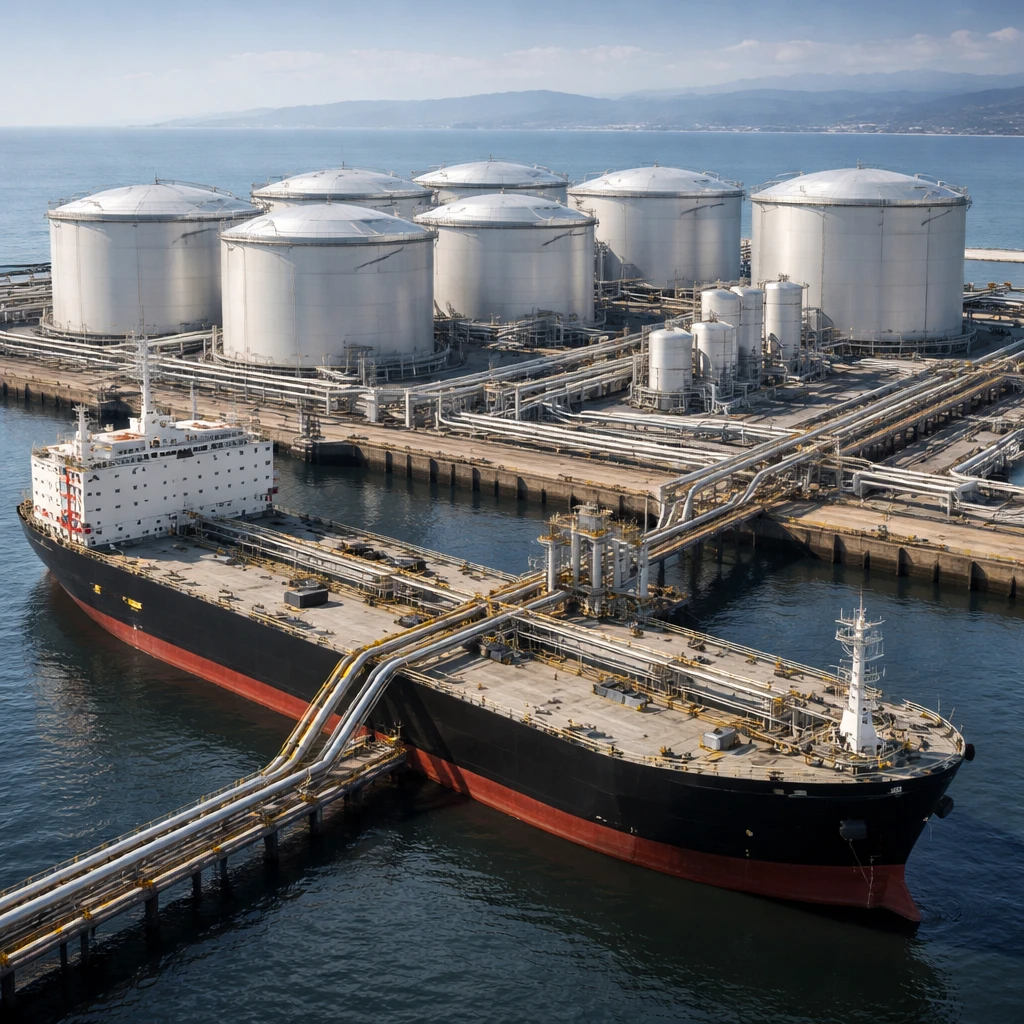
The operational aspect of this plan has been entrusted to the US Energy Secretary, Chris Wright, who has been instructed to implement the arrangement without delay. Trump explained that the oil barrels would be collected from storage vessels and delivered directly to unloading docks within the United States. This implies a logistical framework centered on maritime transport and onshore reception capabilities.
Inquiries made to the White House have yet to yield further elaboration, but a senior administration official, speaking anonymously, clarified to media that the oil in question has already been extracted and contained in barrels. The majority of this crude is reportedly situated on maritime vessels, slated for rerouting to US refineries located in the Gulf region for processing.
Contextualizing these quantities reveals a nuanced picture. While the figure of 30 to 50 million barrels appears considerable in isolation, it is relatively modest compared to the United States’ recent daily oil consumption, which stands at just over 20 million barrels. As such, analysts suggest the influx might exert only a marginal downward pressure on oil prices. Additionally, the impact on gasoline prices for consumers may be limited; historical precedent from 2022 indicates that releasing approximately 180 million barrels from the US Strategic Petroleum Reserve led to a modest price decline of between 13 and 31 cents per gallon over four months.
Immediately following Trump’s statement, US oil prices reacted by dropping roughly $1 per barrel, representing a decrease of just under 2%, settling near $56 per barrel. With Venezuelan crude currently pricing around $55 per barrel, a sale at prevailing market rates could generate proceeds estimated between $1.65 billion and $2.75 billion, assuming the entire volume is sold at market price.
Venezuela's stockpile of crude oil has grown substantially since late last year due to an embargo imposed by the United States. Nonetheless, transferring such a volume to the US might significantly draw down Venezuela’s own oil reserves. This supply is likely sourced from both onshore storage facilities and seized tankers that had been transporting oil. Notably, Venezuela possesses roughly 48 million barrels of storage capacity, which has been reported as nearly full by analysts such as Phil Flynn from Price Futures Group. Except for onshore storage, tankers are estimated to be carrying an additional 15 to 22 million barrels of oil.
The specific timeline over which this transfer will take place remains undefined; however, the senior official suggested the process would be executed swiftly. This urgency is partly attributed to the heavy nature of Venezuelan crude, which entails limitations on storage duration and necessitates prompt refining or sale.
In summary, this strategy represents a notable development in US-Venezuela relations concerning energy assets. While the transactions promise to inject a significant volume of crude into the US market and raise substantial revenue, the overall influence on consumer fuel prices and broader market stability appears constrained by scale and logistical factors.