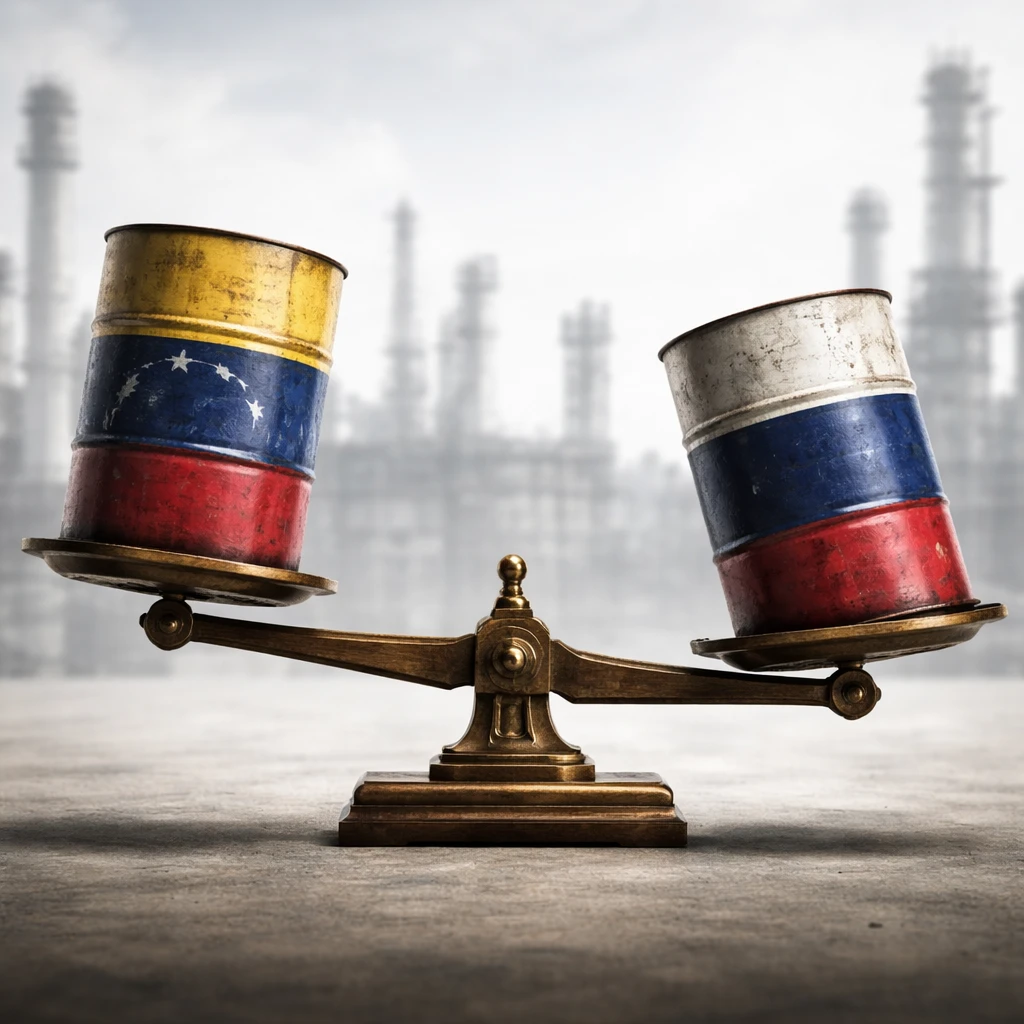

In a recent development highlighting the intricate ties of global energy politics, the United States and India have engaged in an arrangement that could reshape crude oil trade dynamics. Under this framework, the US agrees to substantially reduce tariffs on Indian goods, with the expectation that India will curtail its purchases of Russian oil, turning instead to Venezuelan and American crude. This initiative aims to undermine one of Russia’s critical revenue streams that fuels its ongoing war in Ukraine.
Despite its straightforward premise, the practical implementation encounters significant obstacles. Venezuela’s oil production infrastructure remains far from capable of substituting Russia’s vast exports, and India faces considerable challenges in abruptly abandoning Russian oil. However, this strategy marks an initial step toward leveraging Venezuela's modified oil industry as an economic tool against Russia.
The appeal of Venezuelan crude lies primarily in its similarity to Russian oil. Both countries produce heavy, sour crude that is optimal for generating key derivatives such as fuel oil, diesel, and asphalt—commodities highly demanded by India’s rapidly expanding economy. In contrast, American crude tends to be light and sweet, suited mainly for gasoline production and less compatible with the predominant needs of Indian refineries.
Recent political shifts have facilitated Venezuela’s reentry into the global oil market. Following the removal of sanctions by the US administration on January 3 and legal reforms passed by the Venezuelan government to attract foreign investment, opportunities for revitalizing Venezuela’s depleted oil operations have grown. Leading crude analyst Homayoun Falakshahi acknowledges these reforms as positive steps toward increased investment interest.
However, Venezuela's current oil output paints a less optimistic picture. Production has remained just above one million barrels per day, with approximately two-thirds destined for China. Even dedicating all production to India would fall short in compensating for the roughly 1.5 million barrels daily that India imports from Russia. While Venezuela holds the world’s largest proven oil reserves and was capable of producing over three million barrels daily prior to the Chávez administration, severe deterioration of infrastructure over the past decades has hampered recovery efforts.
Industry experts assert that reaching previous production levels would require massive infusions of capital—estimated in the tens of billions per year over the next decade. Such investments hinge on significant foreign participation, particularly from Western oil companies that remain cautious due to political uncertainties and unsolved financial obligations. Prior demands include the establishment of rule of law, political stability, repeal of nationalist oil regulations, and settlement of outstanding debts. To date, only sanction lifts and regulatory adjustments have materialized, with the Venezuelan government under acting President Delcy Rodríguez showing tentative cooperation.
Furthermore, a clause from the US side indicates that Venezuelan oil companies need not guarantee repayments or financial assurances to investors, a stance that raises questions on the attractiveness of Venezuela for major oil firms, especially amid lower global oil prices. Royalty payments to Venezuelan authorities also weigh on the investment return calculus, highlighting the risk that oil majors might find better prospects elsewhere.
India’s capacity to instantaneously sever links to Russian oil is equally constrained. Transitioning supply chains necessitates substantial infrastructure upgrades, including refining technologies and logistics adjustments. Oil experts, such as Rob Haworth of US Bank Asset Management, highlight the substantial transit time and distribution challenges inherent in shifting imports from Russia to Venezuela.
Additionally, economic considerations restrain India’s ability to disengage from Russian crude. Presently, Russian Urals oil is priced at a significant discount — approximately $16 per barrel lower than OPEC or US benchmarks — providing considerable cost benefits to Indian refiners. While recent reductions in global oil prices have somewhat eased this disparity, the discount remains a strong incentive for continued engagement.
India’s historical circumvention of Western sanctions through opaque shipping methods, including shadow fleets, persists despite new US-India agreements. Experts like Robert Yawger at Mizuho Securities underscore the sophistication and resilience of India’s strategies to maintain Russian oil access.
From a broader perspective, the integration of Venezuelan oil into the market introduces a strategic variable that could incrementally pressure Russia’s economy. The Russian economy has felt the strain of plummeting oil prices and international sanctions, factors that have elevated inflation and debt burdens domestically. Yet, sustaining economic activity through increased manufacturing output, clandestine oil transport, and fiscal measures has prevented a collapse.
While India’s potential abandonment of Russian crude may not instantly dismantle Russia’s financial base, it could complicate and gradually diminish Russia’s oil revenues, potentially limiting the funding available for its military operations in Ukraine. The transition pace will be gradual but, according to analysts like Haworth, incremental reductions in Russian oil revenue are likely to present additional economic hurdles for Moscow.
In conclusion, the US-India deal and Venezuela’s oil sector reforms create a complex landscape where geopolitical ambitions meet infrastructural realities and economic pragmatism. Although the short-term impact may be limited, these developments lay groundwork for a possible reconfiguration of crude oil flows with significant implications for global energy security and geopolitical power balances.