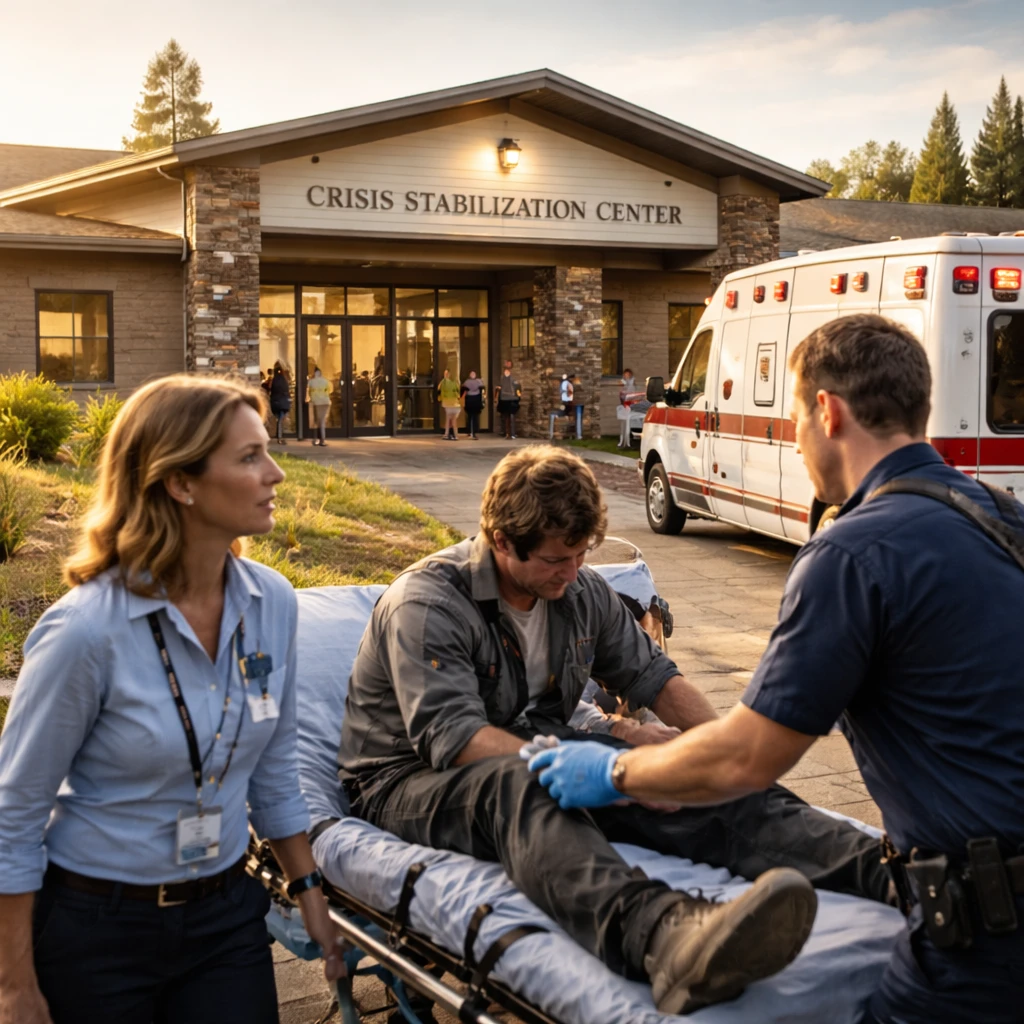

Nebraska’s Department of Health and Human Services (DHHS) has designated $3.4 million in opioid settlement money to the Central Wyoming Counseling Center for the development of a crisis stabilization center in Kimball County, Nebraska. The nonprofit organization from Wyoming is the sole recipient outside of Nebraska in the distribution of funds from the state's Opioid Treatment Infrastructure Cash Fund, established by the Nebraska Legislature in 2024.
The Central Wyoming Counseling Center’s connection to Nebraska DHHS leadership has drawn attention, as the organization’s former acting CEO, Steve Corsi, currently serves as CEO of Nebraska’s DHHS. However, DHHS spokesperson Jeff Powell stressed that Corsi was not involved in the grant review or award process and has had no relationship with the Counseling Center since departing in 2023.
According to Powell, 23 organizations applied for the latest round of opioid funding. Of these, two applications originated outside Nebraska, with the Central Wyoming Counseling Center being the only project proposed for Nebraska’s panhandle region. Powell emphasized the importance of selecting this project, explaining that without it, individuals facing a mental health crisis in western Nebraska would be compelled to seek hospitalization far outside their local areas or require law enforcement to undertake long, arduous transports to locate services.
Efforts to enhance opioid crisis response stem from nationwide legal settlements in 2021 and 2022 amounting to more than $50 billion, targeting manufacturers and distributors of opioids such as Johnson & Johnson, Walmart, and Walgreens. States receive funds through these settlements and have discretion over their allocation, resulting in varied use across the country. Robert Pack, director of East Tennessee State University’s Addiction Science Center, noted the difficulty in standardizing and monitoring these expenditures due to differing state approaches.
Nebraska is set to receive over $150 million in opioid settlement funds between now and approximately 2038, with the initial large influx occurring between 2021 and 2028. The funds funnel into the state’s Opioid Recovery Fund, managed by the DHHS Division of Behavioral Health, which held a balance of $32.6 million as of a September advisory meeting.
This year marks the first award cycle through the Opioid Treatment Infrastructure Cash Fund, with a total outlay around $10.5 million. Besides the Central Wyoming Counseling Center award, grants included $4.4 million for Heartland Counseling Services’ crisis stabilization center near South Sioux City, $2 million for Centerpointe’s short-term residential treatment expansion in Lincoln and Omaha, $350,000 for Bryan Medical Center in Lincoln, and $276,000 for ARCH in Omaha.
Thomas Janousek, director of DHHS’s Behavioral Health division, highlighted the pressing need for crisis stabilization and withdrawal services in western and northern Nebraska, specifically praising the planned Kansas Panhandle projects. He articulated that law enforcement and hospitals require local facilities to manage individuals in crisis, thereby reducing costly and time-consuming transport to distant centers.
The new crisis stabilization facility in Kimball aims to quickly stabilize individuals and transition them to community-based services. There exists a pronounced deficit in short-term crisis centers, residential treatment options, and methadone providers in Nebraska’s western counties, intensifying the urgency of the project.
Jeremy Kourvelas, substance use program coordinator at the University of Tennessee’s Institute for Public Service, underscored the necessity of integrated long-term care to achieve sustained reductions in opioid-related overdoses, emergency room visits, and crime. He noted that while short-term crisis centers serve acute needs, comprehensive, ongoing care is essential given that brain recovery from substance use disorders can span up to 18 months.
Kourvelas described the population requiring crisis stabilization as a relatively small, most severely affected group, with a broader population capable of recovery through varied interventions. He affirmed that overall, increased funding and diverse approaches remain critical to meeting significant demand.
Details regarding whether Wyoming residents can access services at the Kimball center, as well as connections to the Central Wyoming Counseling Center’s Casper location, were not specified by DHHS. Financial filings from 2024 indicate that the Central Wyoming Counseling Center holds assets exceeding $18 million and generates nearly $13.8 million annually, primarily through contracts with Wyoming’s Department of Health Behavioral Health Division. The Nebraska opioid infrastructure funds awarded are explicitly intended for construction of the Kimball facility.
DHHS affirmed that application scoring for infrastructure grants followed objective criteria without reviewer conflicts of interest, and that no grant reviewers were employed by or financially tied to applying agencies.
While Steve Corsi’s previous leadership at the Central Wyoming Counseling Center was not disclosed in presentations to Nebraska’s Opioid Settlement Remediation Advisory Committee, observers such as Robert Pack consider immediate public disclosure of this relationship essential to maintaining transparency and public trust.
Regarding conflict of interest concerns, DHHS stated adherence to legal disclosure and accountability requirements, noting that Corsi also addressed scrutiny during his February 2024 confirmation hearing related to a previous consulting role with a Utah-based firm holding a no-bid Nebraska contract.
Kourvelas highlighted the inevitability of stakeholders with direct interests participating in opioid funding decisions due to the nature of treatment organizations and law enforcement involvement. Establishing clear bylaws to manage potential conflicts and ensure transparency is necessary to uphold integrity.
Experts unanimously agree that transparency in opioid settlement spending is vital given the significant human toll of the opioid epidemic and the origin of these settlement funds. Ensuring resources are effectively and visibly applied to save lives remains a core imperative.