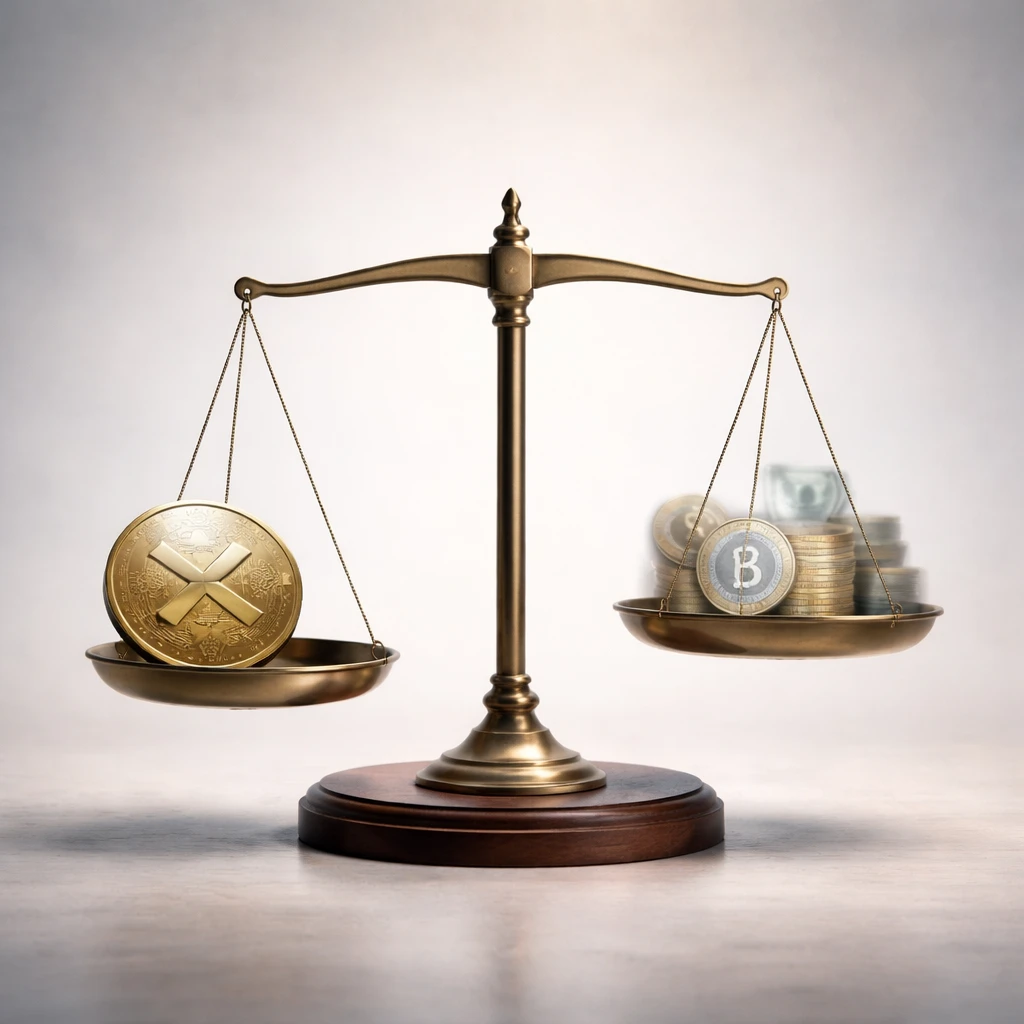

At the start of 2026, XRP, a cryptocurrency associated with Ripple, faces an uncertain investment landscape after experiencing its most robust rally in several years during the prior period. While early 2025 saw a notable price increase, reaching highs not seen since 2018, the latter half of that year brought a reversal that has cast doubt on the token’s immediate prospects.
The rally in XRP’s price during the first half of 2025 was significant; the digital token surged approximately 70%, reaching the $3 mark. However, this elevated level proved short-lived, as XRP’s price retreated during the second half of the year, ultimately closing 2025 at a level roughly 10% below its starting point for the year. This volatility has raised questions about the token's stability and future value proposition.
It is important to understand that XRP’s considerable rise earlier in the year was primarily fueled by a speculative narrative rather than changes to its intrinsic characteristics or operational fundamentals. The driving force behind this enthusiasm was a pivotal regulatory development: the Securities and Exchange Commission (SEC) dropped its lawsuit against Ripple, the payments company responsible for issuing XRP. This legal resolution was viewed as a victory that reduced regulatory uncertainties surrounding the token and positioned XRP as a potential mainstay in institutional cryptocurrency portfolios.
Nevertheless, there are structural challenges that XRP faces, contributing to its recent price volatility. The broader cryptocurrency market saw significant selling pressure late in 2025 as investors rotated capital toward more traditional safe havens, such as precious metals, and sectors perceived to offer enduring growth potential like artificial intelligence technologies. This capital movement exerted downward pressure on many digital tokens, including XRP.
Unlike many alternative cryptocurrencies with limited functional use, XRP does offer a tangible utility: Ripple’s technology enables faster and cost-efficient cross-border payments. Financial institutions that leverage Ripple's network can choose to denominate transactions in XRP, which can help circumvent foreign exchange fees. Despite this functional advantage, the majority of businesses continue to rely predominantly on fiat currency for such operations, limiting the widespread adoption of XRP in practical financial activities.
Another competing factor affecting XRP's adoption is the growing interest in stablecoins by banking institutions. Stablecoins, often pegged to fiat currencies, offer reduced volatility compared to cryptocurrencies such as XRP, making them attractive options for cross-border transactions. Additionally, traditional financial infrastructures like the Society for Worldwide Interbank Financial Telecommunication (SWIFT) are exploring their own digital payment systems, which could further challenge Ripple’s prominence in this space.
Given these circumstances, investors may be reevaluating the potential growth trajectory of XRP. The current market capitalization of approximately $116 billion appears to embed a substantial level of optimism that may not be fully supported by the pace of adoption or the competitive environment.
Looking ahead to the remainder of 2026, the possibility of a meaningful contraction in XRP’s valuation seems plausible. While XRP is unlikely to lose all value given its underlying utility, the discrepancy between its market cap and practical adoption rates points toward a normalization of the price. It is conceivable that XRP could descend toward a valuation near $1 per token by the end of the year, which would represent a significant reduction from recent highs and could signal a more balanced pricing aligned with the token’s real-world application and market dynamics.
Investors monitoring XRP should consider the interplay of regulatory developments, market rotations, competitive pressures from other digital assets like stablecoins, and the pace at which Ripple’s payment network is integrated into mainstream banking operations to understand the risks and potential movements in the token’s valuation.