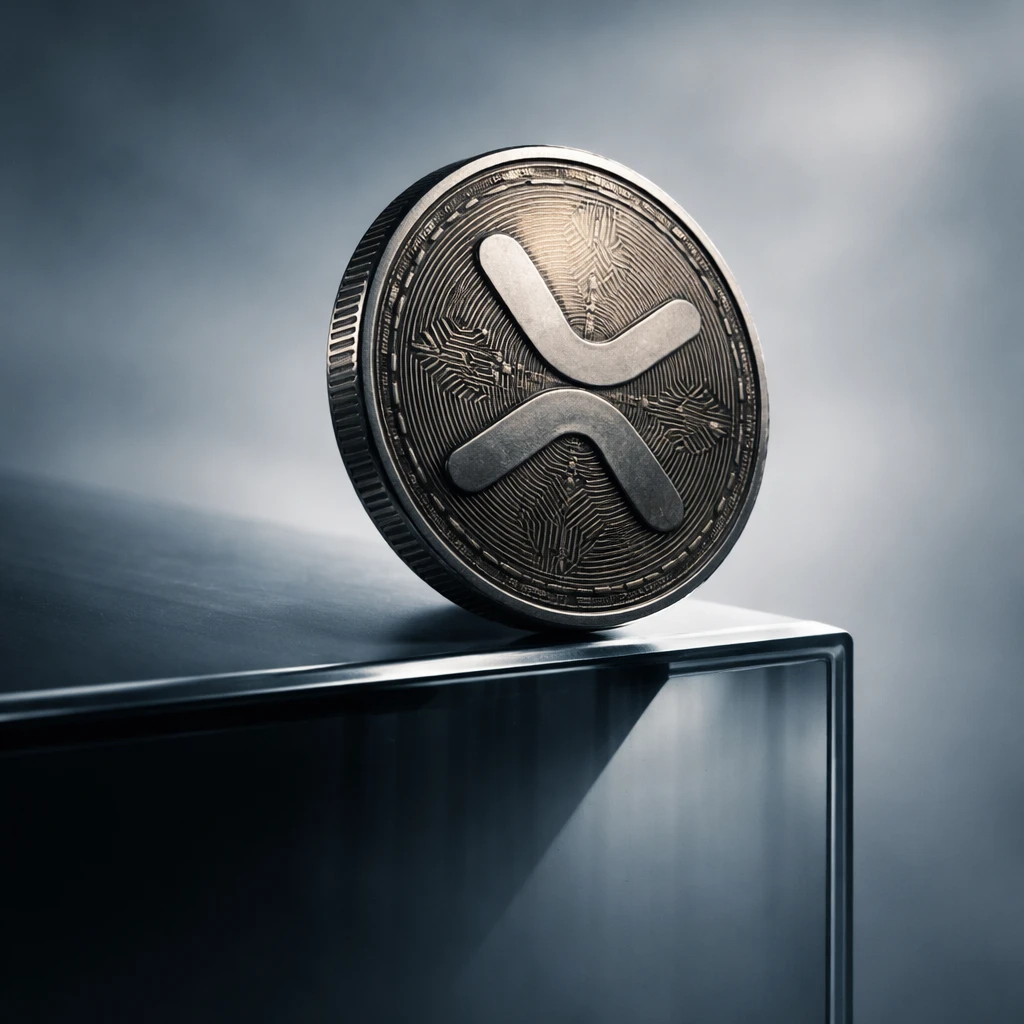

Investors monitoring XRP, currently the world’s fifth-largest cryptocurrency, are encountering a pronounced period of volatility and downward price pressure. After starting the year with a 22% decline and falling approximately 60% from its 52-week peak of $3.65, XRP's value has recently settled at about $1.47. This trajectory presents concerns about further depreciation, especially in the context of broader market weaknesses exemplified by significant declines in Bitcoin, the leading cryptocurrency.
The immediate future offers little indication that XRP will mount a sustained rally. Instead, the likelihood of testing—and potentially breaking through—the critical psychological price threshold of $1 has increased.
Historical Context of XRP’s Pricing
An examination of XRP’s pricing over its existence reveals that it has predominantly been valued below the $1 mark. While there have been intermittent spikes above this figure, substantial periods saw the token trading under $1. Early in XRP’s lifecycle, this was largely attributable to the absence of widespread institutional adoption. Major financial entities and banking institutions had not integrated XRP’s blockchain ledger into their operations, resulting in limited demand and suppressed prices.
Subsequently, regulatory complications further constrained XRP’s growth. Notably, in 2020, the Securities and Exchange Commission (SEC) classified XRP as a security rather than a cryptocurrency. This designation imposed significant restrictions on Ripple’s capacity to expand within the United States, impeding the token's development over a span exceeding four years.
Given these factors, the current pricing above $1 represents a relative anomaly for XRP. Since its inception in 2013, XRP has never surpassed the $3.84 mark. Furthermore, as recently as November 2024, the token was trading near only $0.50.
The Influence of XRP’s Coin Supply on Price
A pivotal variable exerting downward pressure on XRP is its considerable coin supply. Currently, the circulating volume of XRP reaches 60 billion tokens, with a capped maximum supply of 100 billion tokens. This supply scale undermines scarcity, a factor that typically supports price appreciation in other cryptocurrencies.
By contrast, Bitcoin restricts its total coin issuance to 21 million, underscoring a stark difference in supply constraints between the two digital assets. This disparity contributes to divergent dynamics in value retention and potential growth trajectories.
If XRP’s price were to decline to $1 in 2026, the resulting market capitalization would still approximate $60 billion. This valuation would maintain XRP’s position as the sixth-largest cryptocurrency globally and place it above prominent assets such as Solana, Cardano, Tron, and Dogecoin within the market hierarchy.
Implications and Outlook
Considering the present market factors and XRP’s historical trajectory, a further decline in the token’s valuation in 2026 appears plausible, including the prospect of dipping below the $1 threshold. This outlook takes into account both external market pressures and internal tokenomics intrinsic to XRP’s structure and regulatory experiences.