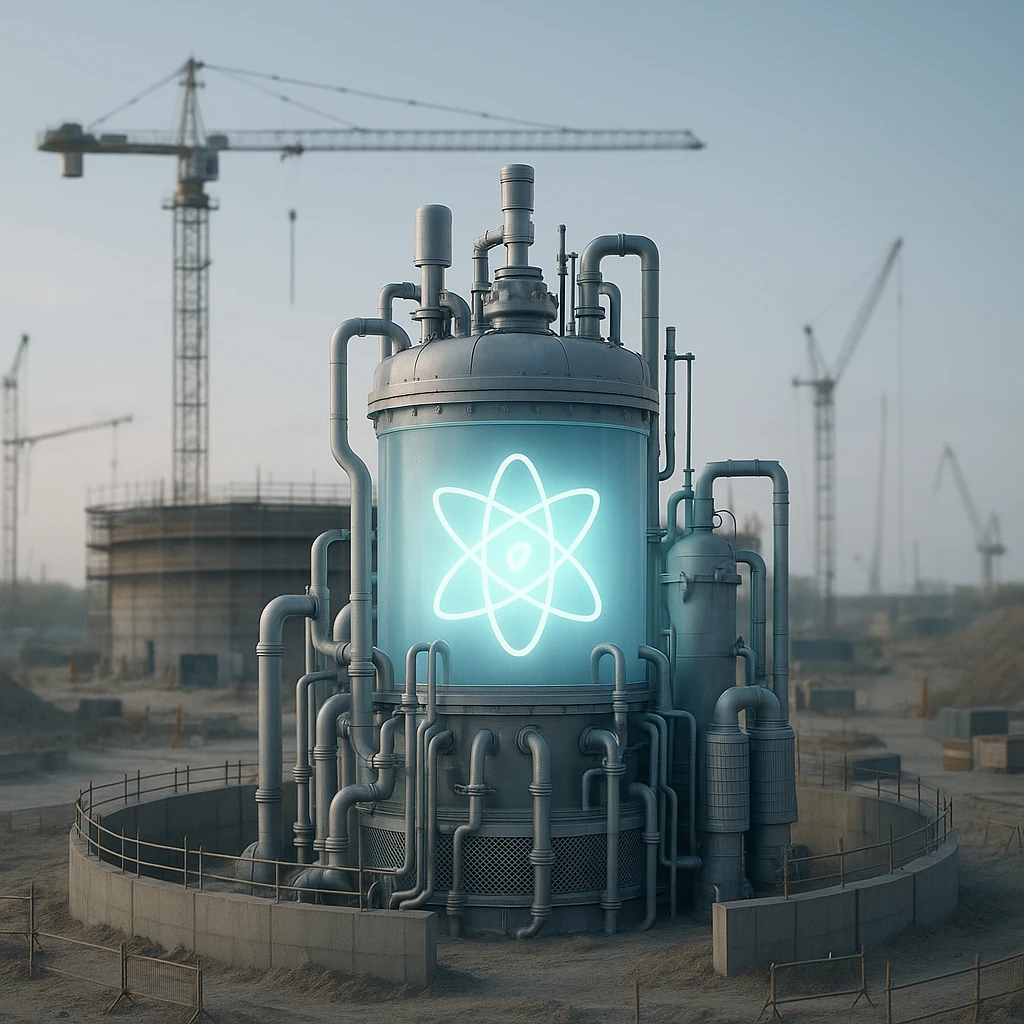

In May of 2025, President Trump convened with executives from the nuclear power sector in the Oval Office, emphasizing the promise of the nuclear industry. At the heart of the discussion was a burgeoning wave of investment—billions of dollars funneled into companies developing advanced nuclear technologies, especially small modular reactors intended for scalable mass production. Proponents argue these innovative designs could provide safe, economically viable electricity generation at a scale previously unattainable.
Yet prominent industry voices, including Joseph Dominguez of Constellation Energy, underscored a pressing hurdle: regulatory delays. He warned the president that protracted permitting processes threaten project viability by postponing operational revenue streams. Dominguez's comments underline a central tension between the desire for speed and the imperative for safety in nuclear power development.
In response, the Trump administration initiated the Reactor Pilot Program under the Department of Energy's Office of Nuclear Energy. This program diverges from the historical model of regulatory oversight, traditionally the domain of the Nuclear Regulatory Commission (NRC) for over 50 years. Instead, the DOE is steering the expedited process, with the explicit aim of having at least three new experimental reactors achieving criticality by the country's 250th anniversary on July 4, 2026.
This realignment represents a significant shift in regulatory responsibility. The NRC, established in 1975 to safeguard nuclear safety independently, now serves in an advisory capacity to the DOE's pilot program. This departure has provoked debate within the nuclear community regarding the sufficiency of safety oversight under DOE's comparatively limited commercial regulatory experience.
To address resource constraints anticipated with accelerated reviews, the DOE solicited assistance from academic experts, seeking volunteers to augment its review capacity. Approximately 30 specialists are now engaged in evaluating reactor designs within this pilot framework. The department maintains it upholds rigorous safety standards throughout this process, noting that preliminary design reviews for several projects have already been conducted, with approvals expected imminently.
Industry stakeholders like Isaiah Taylor, CEO of nuclear startup Valar Atomics, hail the initiative as a critical catalyst for revitalizing the nuclear sector. Their designs focus on smaller reactors that inherently reduce the scale of potential accidents compared to traditional plants. Independent consultants like Nick Touran highlight the reduced worst-case scenarios inherent to these smaller, advanced designs.
Nevertheless, some experts caution against the rapid timetable, political pressures, and a lack of transparent public engagement. Allison Macfarlane, former NRC chair and current professor, warns that rushing unproven technologies without comprehensive oversight could increase the likelihood of accidents. Even limited releases of radioactive materials from these smaller reactors could inflict harm on surrounding populations and ecosystems.
One key factor driving this nuclear renaissance is the exponential growth in electricity demand from artificial intelligence and data center operations. The International Energy Agency projects a 130% increase in energy consumption by large U.S. data centers by 2030. Major technology firms such as Amazon and Google are investing heavily in nuclear power to secure reliable, carbon-neutral electricity for their expanding infrastructures.
Nuclear energy enjoys bipartisan political support, partly influenced by Silicon Valley investors like Peter Thiel and Marc Andreessen who back startups seeking to disrupt the nuclear industry with innovative reactor designs. These startups have attracted over $6 billion in investments spanning private equity, venture capital, and public funds. Their approach emphasizes modular, mass-producible reactors potentially colocated with large energy consumers.
Despite its enthusiasm, the Reactor Pilot Program's streamlined approach contrasts sharply with the NRC's traditional, meticulous safety culture. Seth Cohen of the DOE's legal team responsible for executing executive directives stresses that the government's role is to remove obstacles, aiming to achieve reactor criticality by the 2026 deadline without undue delay.
Historically, the NRC has served as an independent watchdog, a role designed to avoid conflicts of interest inherent in combining promotional and regulatory functions. However, advanced reactor developers have expressed frustration with the NRC's lengthy and stringent licensing processes. A notable case is the NRC's 2022 rejection of Oklo's license application for its Aurora small modular reactor, citing incomplete safety analyses.
Following this rejection, Oklo shifted to the DOE's pilot program, benefiting from staff with expertise stemming from government-operated reactors akin to their design. The CEO of Oklo appeared alongside President Trump during the executive order signing to celebrate the new regulatory path. Oklo's reactor design remains under DOE review and plans to pursue NRC licensing once built.
The DOE's program selected 11 advanced reactor projects, including multiple from Oklo, for pilot development. Other startups like Valar Atomics and Antares view this pathway as critical for prototyping novel reactors that cannot be adequately assessed through conventional NRC channels. Their designs involve alternative fuels and high-temperature gases, with the goal of accelerating safety validation through real-world operation.
Yet apprehension persists regarding the sufficiency of safety evaluations within this compressed timeline. Experts highlight that reactor safety assessments often require exhaustive scrutiny and public input, practices less accessible in the DOE's confidential pilot program. The absence of public documents and commentary may undermine trust and thorough risk analysis.
Furthermore, while small reactors pose lower hazard profiles, they are not risk-free. Even minor releases of radioactivity could endanger nearby communities, especially if emergency planning is inadequate. Critics argue that hastening deployment without fully addressing these risks could have serious consequences.
Of additional concern is the potential precedent set by DOE's approvals. A recent memorandum between the DOE and NRC calls for expedited NRC licensing based on DOE's certifications. This framework could fast-track commercial deployments of numerous reactors modeled on pilot designs assessed through this accelerated process, amplifying the implications of any oversight lapses.
While the DOE and NRC assert that safety remains paramount and that NRC's commercial licensing will build upon DOE's findings rather than duplicate them, former regulators caution that independent, comprehensive risk evaluations are essential to ensuring public safety. Sole reliance on expedited or preliminary assessments may inadequately address complex reactor safety challenges.
As the July 2026 deadline approaches, balancing ambition with thorough safety assurance remains a critical challenge for the U.S. nuclear sector. The success and safety of this accelerated development model hinge on the ability to maintain rigorous oversight even amid significant time and political pressures.