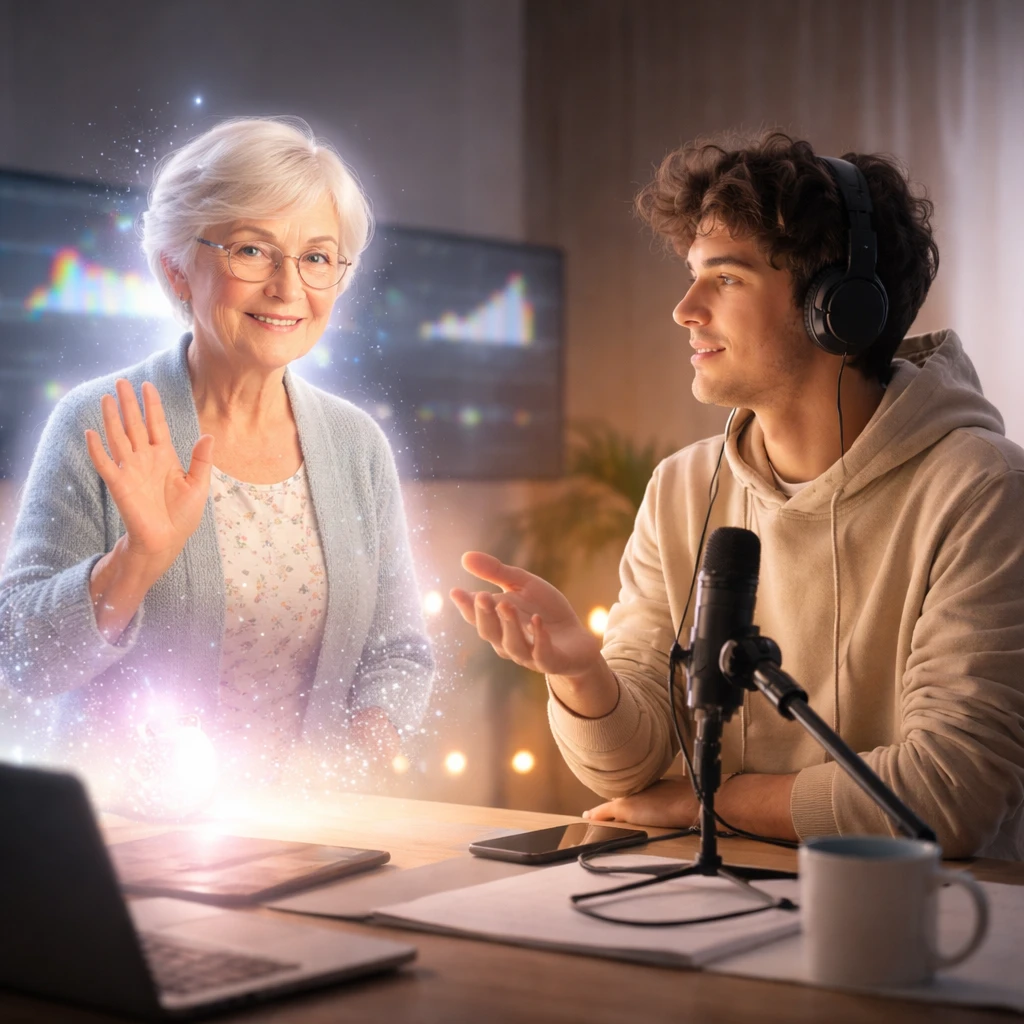
Over the past four months, the social media landscape has witnessed a surge in popularity for Granny Spills, a vibrant digital character clad entirely in bright pink designer outfits. Garnering millions of views and nearly a million likes for some clips, she offers a blend of brazen life advice and humor. One notable video features her declaring, "Flowers die, honey. My Chanel bags are forever," capturing the attention and amusement of a broad audience across TikTok and Instagram.
Despite her human-like appearance and relatable personality, Granny Spills is entirely artificial—a product of artificial intelligence. Conceived by two content creators in their twenties, this persona reflects an emerging approach in digital marketing where AI-generated influencers seek to engage audiences and secure brand sponsorships. Recent advances in AI video generation software, including platforms such as Veo 3, Sora 2, and Seedance, now enable the creation of synthetic individuals who closely mimic real people’s appearance and behavior in video formats.
These advancements open new opportunities for content creators. Unlike traditional influencers, AI-driven personas like Granny Spills operate without the costs associated with salaries or wardrobe expenses. The virtual nature of these influencers means they can be "filmed" in virtually any location worldwide without logistical or financial constraints. Furthermore, AI personalities can generate numerous takes on various concepts swiftly and interact extensively with followers without fatigue or time restrictions.
Initial virality for AI influencers has often stemmed from their novelty factor. However, integrating them meaningfully into the influencer marketing framework has proven challenging. A recent Business Insider analysis indicates that brand partnerships with AI-operated social accounts have declined by approximately 30% compared to 2024 figures. Audience reactions to AI models in advertising have sometimes been negative, with viewers citing discomfort about the uncanny nature of these characters, questions around authenticity, and worries about potential job displacement in the human influencer sector.
Despite these hurdles, the prevalence of AI influencers is increasing. Marketers invested in these technologies anticipate a future where social media content comprises both human and synthetic participants in equal measure.
Eric Suerez, one of the originators of Granny Spills, notes the creative advantages offered by AI personas: "AI content creators aren’t limited by social inhibitions. Granny Spills expresses bold, occasionally ruthless opinions that engage viewers with a surprising wow factor." This freedom from typical human constraints provides a unique entertainment edge.
AI influencers are not entirely new—established virtual celebrities like Lil Miquela have existed since 2016, boasting around two million Instagram followers. Similarly, Aitana Lopez commands over 380,000 followers. Nevertheless, until recently, the cost and complexity of producing realistic AI-driven characters placed such ventures out of reach for small and medium-sized creators.
Innovations in AI video generation, particularly Google’s Veo 3 and OpenAI’s Sora, have rapidly improved. Upon the arrival of Veo 3 earlier this year, Suerez—a TikTok content creator specializing in street interviews—recognized the technology as a possible threat to his traditional content production. He observed that brands might eventually generate refined videos by simply inputting brief text prompts, bypassing the labor-intensive process he currently performs.
Instead of resisting the change, Suerez and his partner Adam Vaserstein from Blur Studios embraced the new tools. They developed a portfolio of AI-generated characters, including a Bigfoot figure, a street interviewer, a fitness coach, and most notably, Granny Spills. This character amassed around 400,000 followers on TikTok and one million on Instagram within weeks of debut.
Their workflow heavily integrates AI: they utilize Anthropic’s Claude to analyze prior videos and generate fresh scripts and ideas. These outputs are refined and formatted using detailed prompt templates compatible with Veo and other AI platforms. Vaserstein highlights the efficiency gain, stating that producing one AI video requires only 5 to 10 minutes, a fraction of the time needed for conventional video shoots and editing.
While Granny Spills' content has enjoyed significant viral success driven by her candid and audacious persona, converting this attention into reliable revenue remains complex. Suerez reports that TikTok has flagged many of their videos as "unoriginal," leading to exclusion from the Creator Rewards Program. A TikTok spokesperson, responding to inquiries, referenced community guidelines indicating that videos violating policies might be removed for reasons such as "unoriginal or low-quality content" or "deceptive behavior."
In response, Suerez is exploring alternative monetization channels including Facebook, YouTube, and Cameo, along with potential branded partnerships involving products like luxury apparel and travel services. He aims to integrate brand promotions subtly within entertaining formats such as street interviews or challenge videos, mitigating the perception of overt advertising.
Granny Spills represents a broader trend of synthetic influencers emerging rapidly. Marketing strategist Polina Zueva has developed similar AI personas for brands, noting their immediate profitability due to the absence of traditional production costs. AI influencers facilitate extensive A/B testing, allowing brands to experiment with character styles and messaging efficiently without producing numerous physical video shoots. Additionally, AI language translation enables simultaneous campaigns across diverse markets, including Malaysia, Singapore, and Nigeria.
That said, penetration into the U.S. market remains limited. According to Zueva, American consumers exhibit greater skepticism toward AI influencers and hesitate to make purchasing decisions based on their recommendations.
In October, OpenArt, an AI image generation company, held an event in New York recognizing AI influencers such as Granny Spills and the AI singer Xania Monet. Chloe Fang, OpenArt’s head of partnerships, anticipates that fans will engage with AI personas more deeply in the future. She envisions personalized, customized interactions occurring more frequently and instantly than they typically do with human influencers.
Existing human influencers are also starting to collaborate with AI counterparts. High-profile figures like Jake Paul have authorized users to create videos replicating their likenesses using Sora, a capability similarly granted by OpenAI CEO Sam Altman.
Nonetheless, the influencer marketing sector at large remains cautious. A study by Linqia surveying over 200 enterprise marketers revealed that 89% do not intend to work with AI influencers or digital clones in 2026. Keith Bendes, Linqia’s chief strategy officer, remarks that these non-human endorsers face challenges related to perceived authenticity, since they have not personally experienced the products or services they promote.
Public backlash toward AI in advertising is also notable. Campaigns such as Guess’s AI model featured in Vogue and the debut of AI actress Tilly Norwood have attracted significant criticism. Some users express fatigue with the volume of AI-generated content on social media platforms, sometimes opting to disengage entirely.
Despite the controversy, creators behind characters like Granny Spills remain optimistic regarding AI’s potential in digital media. According to Vaserstein, AI tools enable imaginative possibilities difficult to achieve through traditional means, effectively liberating creative expression within influencer marketing.