
Amazon demonstrated resilient sales momentum in the final quarter of the year, with revenue climbing 14% compared to the same period last year. This increase was supported by solid holiday shopping performance and the cloud computing segment, Amazon Web Services (AWS), delivering better-than-anticipated growth. However, the company’s stock experienced an 11% decline in after-hours trading on Thursday, a reaction largely attributed to Amazon’s announcement of a substantial rise in capital spending. The planned increase to $200 billion from $128 billion last year represents a nearly 60% surge, surpassing Wall Street expectations, which had forecasted about $147 billion this year according to FactSet data.
Amazon Chief Executive Andy Jassy addressed investors following the earnings disclosure, emphasizing the company’s optimism regarding returns on these investments over the long term. He stated that the rapid deployment of artificial intelligence infrastructure is rapidly being monetized, presenting a unique opportunity in the industry. Jassy expressed his conviction that AI is poised to fundamentally transform customer experiences across different sectors.
This financial update coincides with Amazon’s announcement of significant workforce reductions. Approximately 16,000 corporate positions are being eliminated in the latest wave of layoffs within a few months. The company clarified through an emailed statement that AI adoption was not primarily responsible for these cuts, which were instead intended to simplify organizational structure and enhance operational agility.
In addition to corporate downsizing, Amazon revealed plans to reduce about 5,000 retail staff following decisions to close nearly all Amazon Go and Amazon Fresh locations. These closures and layoffs contribute to total workforce reductions exceeding 30,000 since Jassy initiated strategic changes linked to AI integration earlier in the year.
Market watchers are closely analyzing Amazon’s performance as part of a broader assessment of retail sector trends and consumer spending during the holiday season, providing insights for 2026 economic forecasts. The firm remains under scrutiny to validate the competitive strength of AWS against rivals such as Microsoft’s Azure and Google Cloud. AWS saw a 24% revenue growth in the fourth quarter—the fastest increase in over three years—building on growth rates of 20% and 17.5% in the preceding quarters. In comparison, Alphabet, Google’s parent company, reported a 48% cloud business revenue increase.
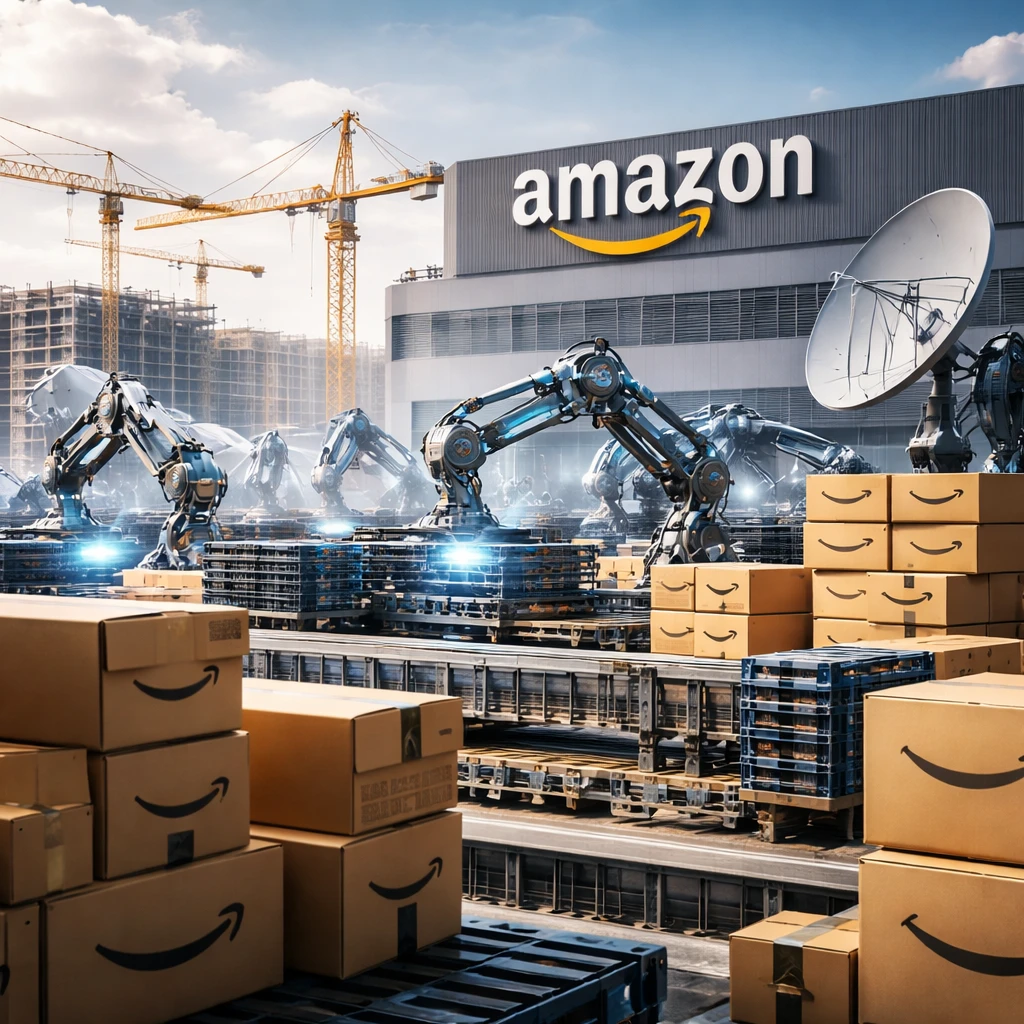
Other technology giants, including Meta and Apple, are anticipated to escalate their capital investments in AI this year. Alphabet disclosed $91 billion in AI-focused capital expenditures recently and plans to nearly double that amount in the current fiscal period. Amazon’s investment strategy also encompasses advancements in its fulfillment network by integrating robotics, AI technology, and enhanced warehousing solutions. Its new offering, Amazon Now, provides ultra-fast delivery services with thousands of items delivered within 30 minutes or less. This service is already operational in select areas of India, Mexico, and the United Arab Emirates, with pilot programs underway in parts of the United States and the United Kingdom.
Beyond these innovations, Amazon is broadening same-day grocery delivery availability to more than 2,300 cities and towns nationwide, responding to robust demand for groceries and everyday essentials. However, as part of streamlining efforts, Amazon is phasing out most of its Amazon Go and Amazon Fresh stores, reallocating some of these locations to Whole Foods Market, further consolidating its grocery footprint.
Financially, Amazon posted net income of $21.2 billion or $1.95 per share for the quarter ending December 31, up from $20 billion or $1.86 per share in the prior year period. Total revenue reached $213.4 billion, an increase from $187.8 billion year over year. These figures slightly underperformed analysts’ expectations, who projected earnings of $1.97 per share on revenue of $211.4 billion. AWS revenue was $35.6 billion, exceeding expectations of $34.9 billion. Holiday season product sales grew by 9.4%.
Looking ahead, Amazon anticipates quarterly sales to fall between $173.5 billion and $178.5 billion, close to analysts’ projections of $175.6 billion. Investors and market participants will be monitoring how Amazon balances its aggressive capital expenditure plans with sustaining growth and profitability amid broader economic uncertainties.