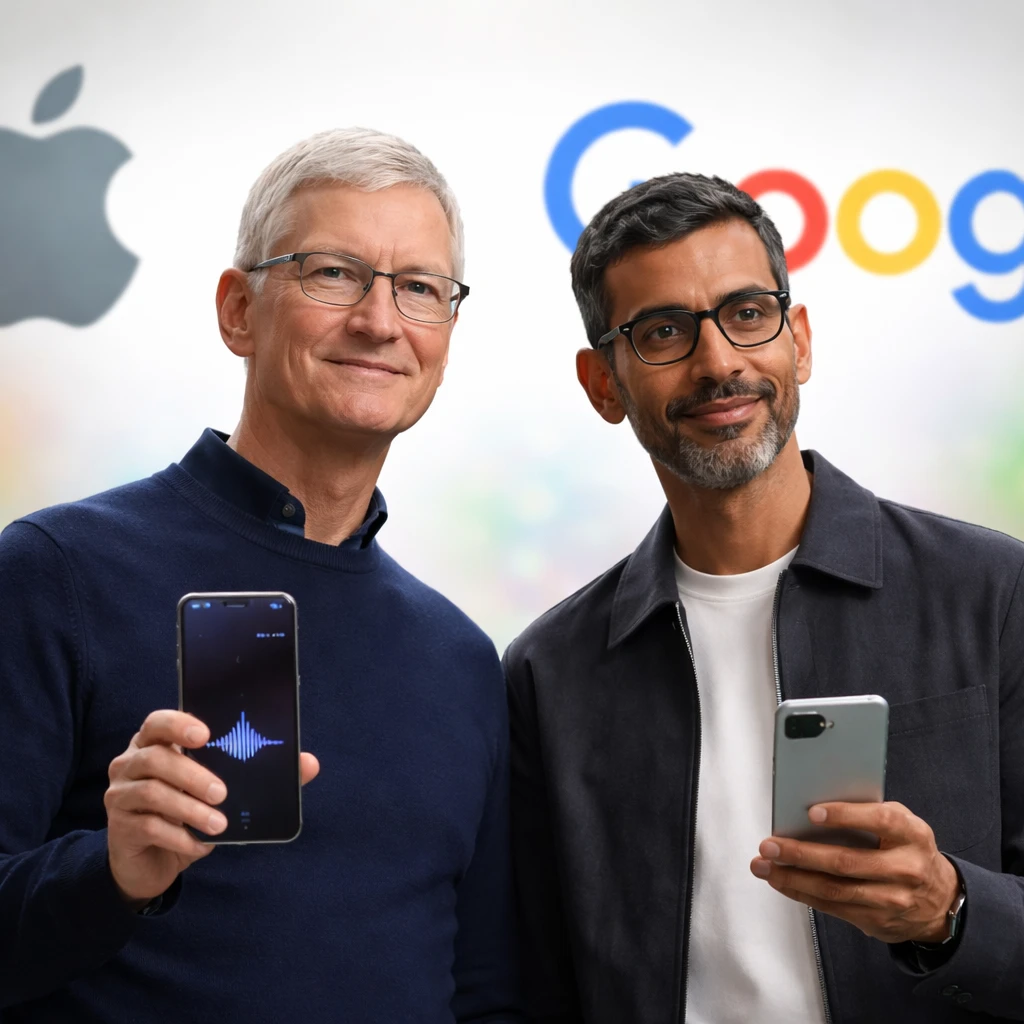

Apple Inc. has announced a strategic collaboration with Google to accelerate the development of artificial intelligence features for its iPhone products, including an overhaul of its digital assistant, Siri. The arrangement was revealed on Monday through a joint statement from the two Silicon Valley giants.
Under the agreement, Apple will integrate aspects of Google's Gemini AI technology to tailor a series of AI-driven functionalities, collectively branded as "Apple Intelligence," intended for deployment on the iPhone and other Apple devices. This move comes as Apple seeks to bolster its position within the competitive AI space, where firms like Google and Samsung have already introduced robust AI features on their devices.
Earlier expectations set by Apple projected the release of significant AI updates for 2024, aiming to enhance Siri's conversational abilities and multitasking performance. However, progress on these features has lagged, with many still under development. This delay contrasts with the more immediate release of AI enhancements by Google and other competitors.
Notably, the absence of a revamped Siri capable of advanced conversational interactions and versatile task management has been a conspicuous gap in the iPhone's AI offerings. Google's marketing campaigns for its Pixel phone have even alluded to this shortfall, highlighting Google's own advancements at Apple's expense.
Apple publicly acknowledged these development challenges last year, indicating that the anticipated Siri upgrade will likely be postponed until 2026. The partnership with Google thus represents a significant step for Apple as it seeks to catch up with peers in integrating AI technologies.
From Google's perspective, securing Apple's adoption of its AI technology signifies a notable endorsement of Google's advancements in the field. Google has been actively incorporating its Gemini technology across multiple platforms, including its search engine and Gmail service, intensifying its competition with entities such as OpenAI, whose ChatGPT chatbot also maintains a presence on Apple devices through a separate arrangement.
Market analysts have highlighted the collaboration as a substantial validation of Google's AI initiatives. For example, Dan Ives of Wedbush Securities described the deal as a "major validation moment for Google" in research commentary issued on Monday.
The positive reception of Google's AI progress has also had a notable impact on its parent company Alphabet Inc., which recently reached a landmark valuation exceeding $4 trillion during trading, temporarily surpassing Apple. Although this valuation retreated below the threshold within the same session, Alphabet's market capitalization remains approximately $150 billion higher than Apple's.
Previously, Apple held the distinction as the world's most valuable company for several years before the surge in AI-focused investments altered the landscape. Alongside Alphabet, companies such as Nvidia, Microsoft, and Apple have crossed the $4 trillion valuation mark at various points in the preceding year, with Nvidia momentarily eclipsing $5 trillion in late 2023 before adjusting downward amid concerns over potential AI investment bubbles.
Alphabet's stock price has experienced significant appreciation since early September, following judicial decisions that prevented the dissolution of Google's internet business. The rulings imposed some adjustments but allowed a continuation of important partnerships, including Google’s arrangement with Apple, under which Google pays over $20 billion annually to serve as the default search engine on Apple devices. This alliance remains intact, albeit with modifications dictated by the legal judgment.
The continued collaboration between Apple and Google within the realms of AI and search reflects an ongoing interdependence amidst the highly competitive technology sector. As Apple leverages Google’s advanced AI technology to enhance its products, it simultaneously acknowledges the evolving dynamics that AI innovations impose on market valuations and competitive positioning.