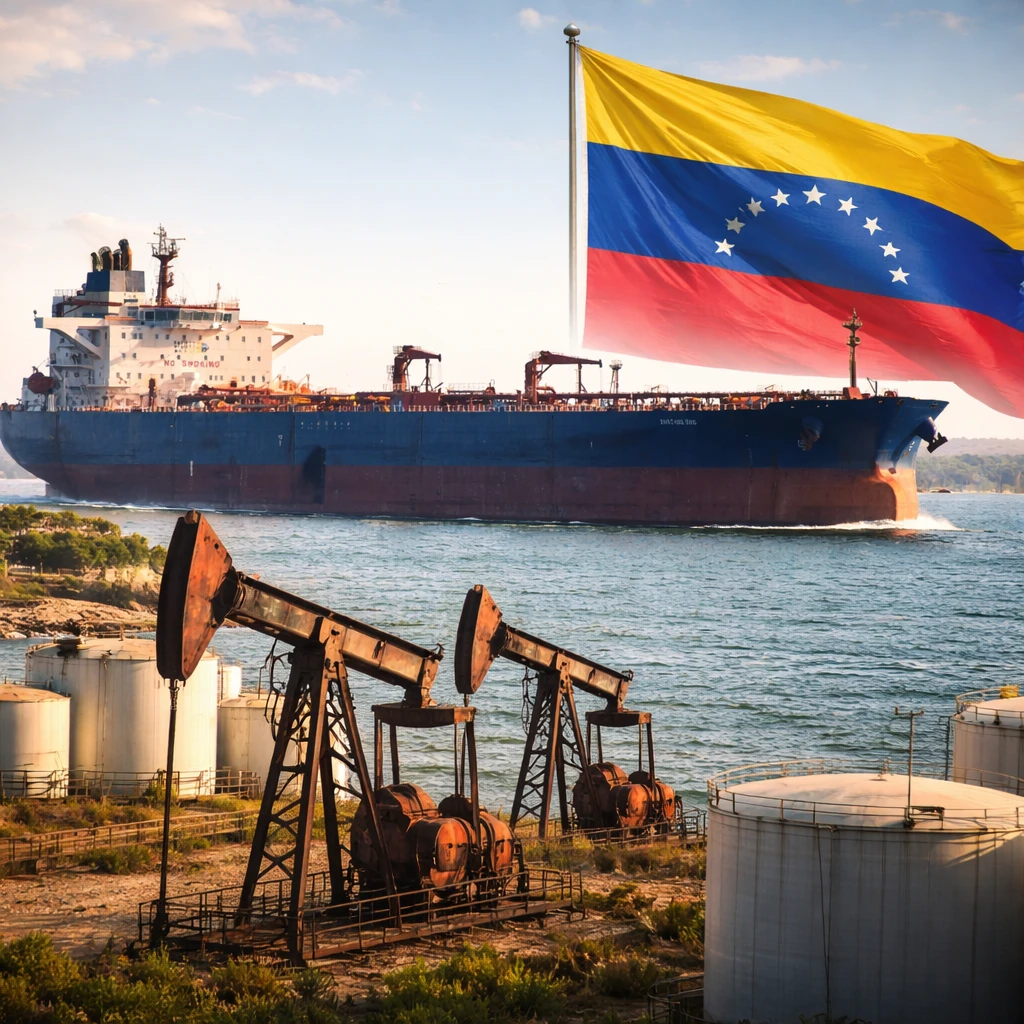

In recent developments involving Venezuela's oil industry, the spotlight has intensified following U.S. President Donald Trump's announcement of military intervention against Venezuelan President Nicolas Maduro. In the aftermath, President Trump declared intentions for the United States to manage Venezuelan resources, particularly focusing on exploiting the nation's oil reserves. These moves reference the historical context of nationalization implemented decades prior by then-President Hugo Chavez, which impacted numerous foreign oil assets, including those owned by American firms.
Further articulating this strategy, Trump proposed the re-entry and restoration of foreign oil companies into Venezuela to rejuvenate its struggling oil production sector. Subsequently, Trump announced plans for Venezuela to supply between 30 and 50 million barrels of oil to the U.S. market. Concurrently, the Venezuelan state-controlled oil enterprise, PDVSA, confirmed ongoing negotiations with the U.S. government aimed at crude oil sales. In addition, the U.S. administration selectively eased sanctions to facilitate the shipment and global sale of Venezuelan oil. According to the Department of Energy, revenues from these sales are intended to be deposited into U.S.-regulated accounts and allocated to benefit populations in both the United States and Venezuela.
These recent policy decisions may be components of a broader, long-term initiative by the United States to establish a foothold in Venezuela, a nation that holds some of the world's most extensive oil reserves. Venezuela's estimated crude oil reserves stand at approximately 303 billion barrels, representing roughly 17% of global reserves per data from the U.S. Energy Information Administration. Unlike regions where oil prospecting involves exploration and discovery, Venezuelan oil reserves are largely documented and mapped, offering certain geographical clarity on resource distribution.
Nonetheless, Venezuela's oil output constitutes only about 1% of the global total, a figure reflective of the nation's degraded infrastructure and industry difficulties. Claudio Galimberti, Rystad Energy's global market analysis director and chief economist, emphasized the significance of Venezuela's reserves, noting that many oil companies worldwide express uncertainty about sources of new oil supplies for the 2030s and 2040s. He underscored an impending challenge: a shortage of accessible oil discoveries in the near future.
In the immediate term, the global oil supply currently exceeds demand, suggesting that an increase in Venezuelan production is not urgently required. However, forecasts from the International Energy Agency indicate that continuing present policies will require the development of new oil supply projects amounting to approximately 25 million barrels per day by 2035 to maintain market equilibrium.