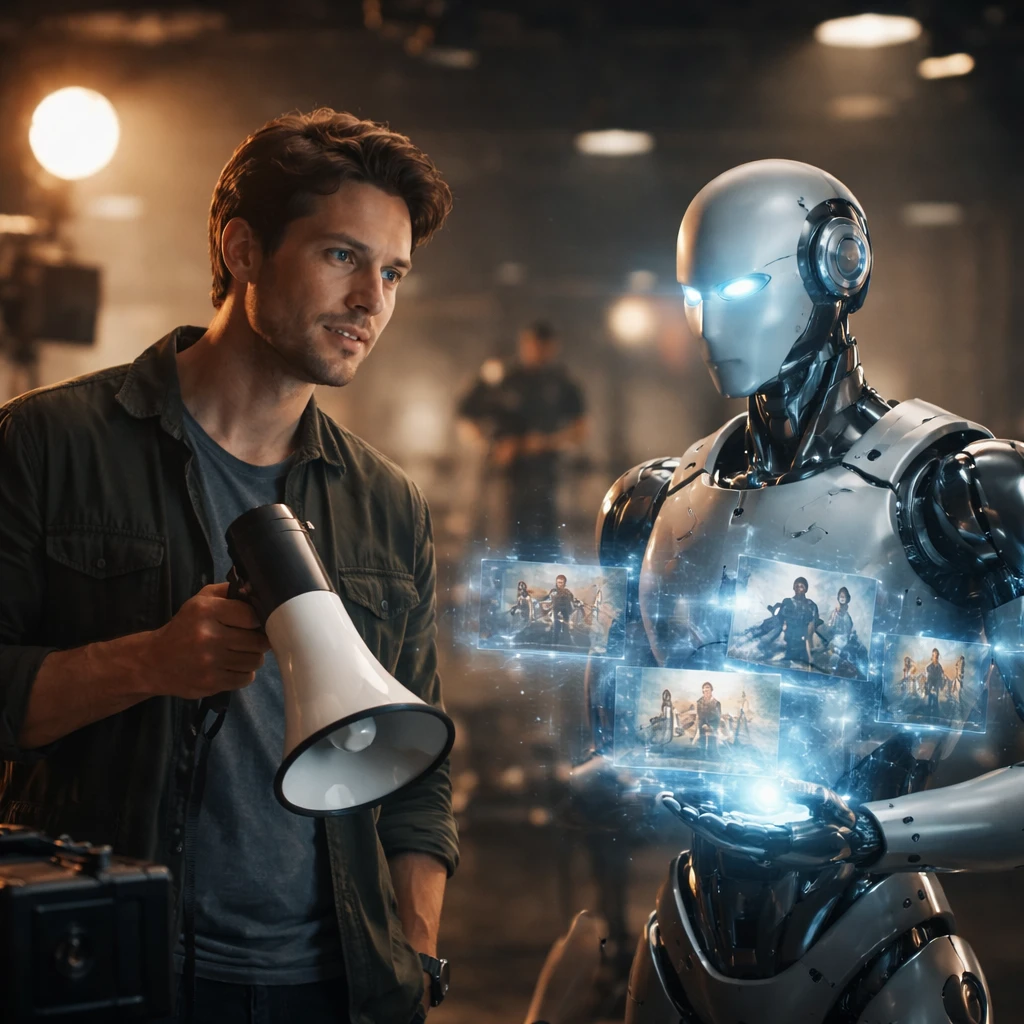

In a candid conversation on "The Joe Rogan Experience" podcast, actor and director Ben Affleck weighed in on the growing discourse about artificial intelligence’s place within the film industry. As AI technologies increasingly permeate various creative fields, concerns have heightened over their potential to replace human roles in movie-making. Affleck challenged these apprehensions, describing the fears as a form of "existential dread" and casting doubt on AI’s capacity to independently generate quality, fully-fledged films.
Affleck articulated skepticism about claims that AI can autonomously craft meaningful cinematic works. He emphasized that despite AI's impressive advancements, the technology has not yet—and may never be—capable of creating movies that resonate on a deep, artistic level without essential human input. "I actually don't think it's very likely that it can write anything meaningful or make movies from whole cloth," he said, responding to common examples cited as evidence that AI has made significant creative leaps.
The acclaimed filmmaker underscored that AI lacks the subtlety, creativity, and critical judgment vital to storytelling that deeply connects with audiences. Human filmmakers bring complex emotional intelligence, intuition, and a nuanced perspective to their craft—qualities that AI, in its current form, does not possess. According to Affleck, the technological role favors enhancing production efficiency rather than supplanting the creative core of filmmaking.
Supporting this more measured perspective, a recent industry analysis by McKinsey & Company outlined prospective applications of AI within film and television production. Rather than portraying AI as a replacement for creative talent, the report suggested the technology could augment workflows, providing assistance in development stages and streamlining certain production elements. This aligns with a broader view that AI's strength lies in operational support instead of creative autonomy.
Further reflecting the industry’s interest in responsible AI integration, Google.org has allocated $2 million to educational programs aimed at helping filmmakers understand and apply AI tools ethically and effectively. This initiative involves partnerships with institutions such as the Sundance Institute, The Gotham Film and Media Institute, and Film Independent, focusing on raising awareness about leveraging AI in ways that benefit production without compromising artistic integrity.
The conversation around AI’s impact extends beyond Hollywood’s sound stages. The video game sector, for example, is grappling with similar issues, with some studios reconsidering or discontinuing projects incorporating generative AI art and dialogue. Critics argue that such automation threatens to diminish the distinctive creativity and craftsmanship central to gaming experiences, highlighting a wider cultural apprehension about replacing human artistry with algorithms.
On the legal front, Affleck noted existing protections that limit the unauthorized use of an individual’s likeness, suggesting that current laws are pertinent in the debate over AI misuse. He remarked, "I can't sell your f—–g picture for money. I can't. You can sue me. Period," underscoring the legal boundaries that regulate image rights and mitigate some concerns about AI exploitation.
Ultimately, Affleck’s remarks provide a grounded counterpoint to sensationalized narratives portraying AI as an imminent threat to human creativity in filmmaking. His view carefully balances recognition of AI’s evolving capabilities with acknowledgement of irreplaceable human elements in storytelling and production.
As the entertainment industry continues to navigate this transformative moment, stakeholders are evidently seeking ways to integrate AI responsibly, maintaining the artistic depth and originality that define compelling cinema. The discourse affirms that while AI can serve as a powerful adjunct in the creative process, it does not yet—and may not in the foreseeable future—render human filmmakers obsolete.