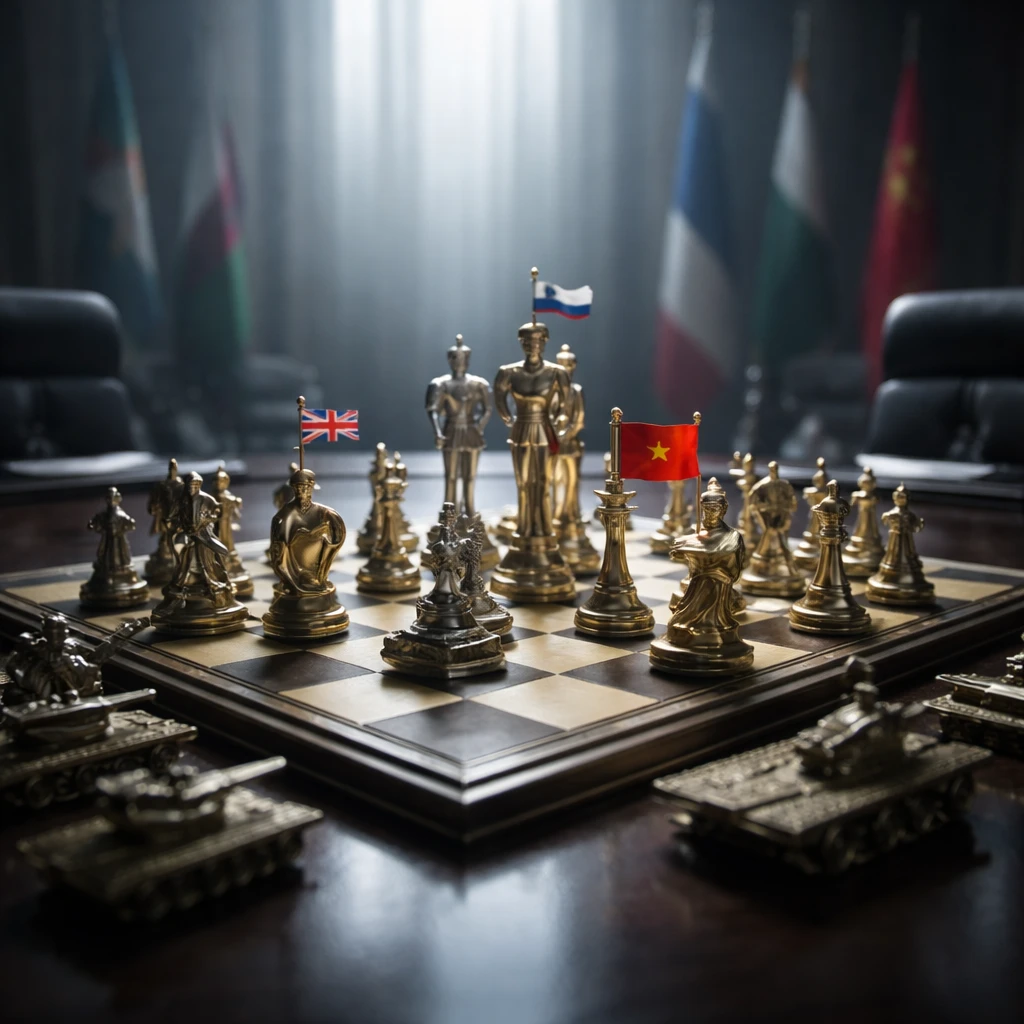

Bill Ackman, the venture capitalist and founder of Pershing Square Capital Management, expressed sharp criticism of a recent propaganda video released by Iran, suggesting that the Islamic Republic's tactic of threatening the United States through such displays constitutes "not a good negotiating strategy" when dealing with President Donald Trump. His remarks were made public on social media platform X, where he also stated skepticism about the possibility of productive negotiations with the current Iranian regime.
The video in question was identified by open-source intelligence analysts and featured an AI-generated simulation showing an Iranian offensive that results in sinking the USS Abraham Lincoln, a US Navy aircraft carrier. This clip has been circulated by media outlets affiliated with Iran's Islamic Revolutionary Guard Corps. The timing of the video's release is notable as the aircraft carrier strike group led by USS Abraham Lincoln is operating in proximity to Iran, amidst Tehran's intensified psychological warfare efforts directed at Washington.
Ackman has a history of vocal engagement concerning Iran, marking him as one of the most prominent US financiers addressing the issue publicly. At the end of the preceding month, he urged key government figures, including President Trump, Secretary of State Marco Rubio, and Defense Secretary Pete Hegseth, to view a documentary entitled "Iran's 2026 Massacre: Inside the Kahrizak Morgue" aired by Iran International. He described the film as compelling evidence of one of the most serious crimes against humanity committed in recent decades.
In addition to condemning specific acts, Ackman has characterized the Iranian government as "an extremely serious persistent and long-term existential threat." He has previously advocated that President Trump should take decisive action to confront and effectively dismantle the regime, signaling a preference for a robust approach over engagement or appeasement.
Despite these hardline views from Ackman, recent days have seen tentative diplomatic overtures between Washington and Tehran. According to reporting by Axios, President Trump stated on a Friday that talks held in Oman between the United States and Iranian representatives had been "very good." Trump indicated that Iran's stance on reaching a new nuclear agreement appears more amenable than it was prior to the brief conflict that erupted in June, which lasted twelve days.
Nevertheless, the President emphasized caution, noting he was "in no rush" to order any military action against Iran and expressed a clear preference for negotiations to resolve tensions. Concurrently, he maintained pressure on Iranian leadership, asserting in a Wednesday interview that Iran's Supreme Leader, Ayatollah Ali Khamenei, should be "very worried" as US military forces continue their increased presence in the surrounding region.
This blend of diplomatic engagement and strategic pressure reflects the complex and sensitive nature of US-Iran relations at the current juncture, as both sides navigate a volatile geopolitical landscape influenced by long-standing hostilities and the evolving global security environment.