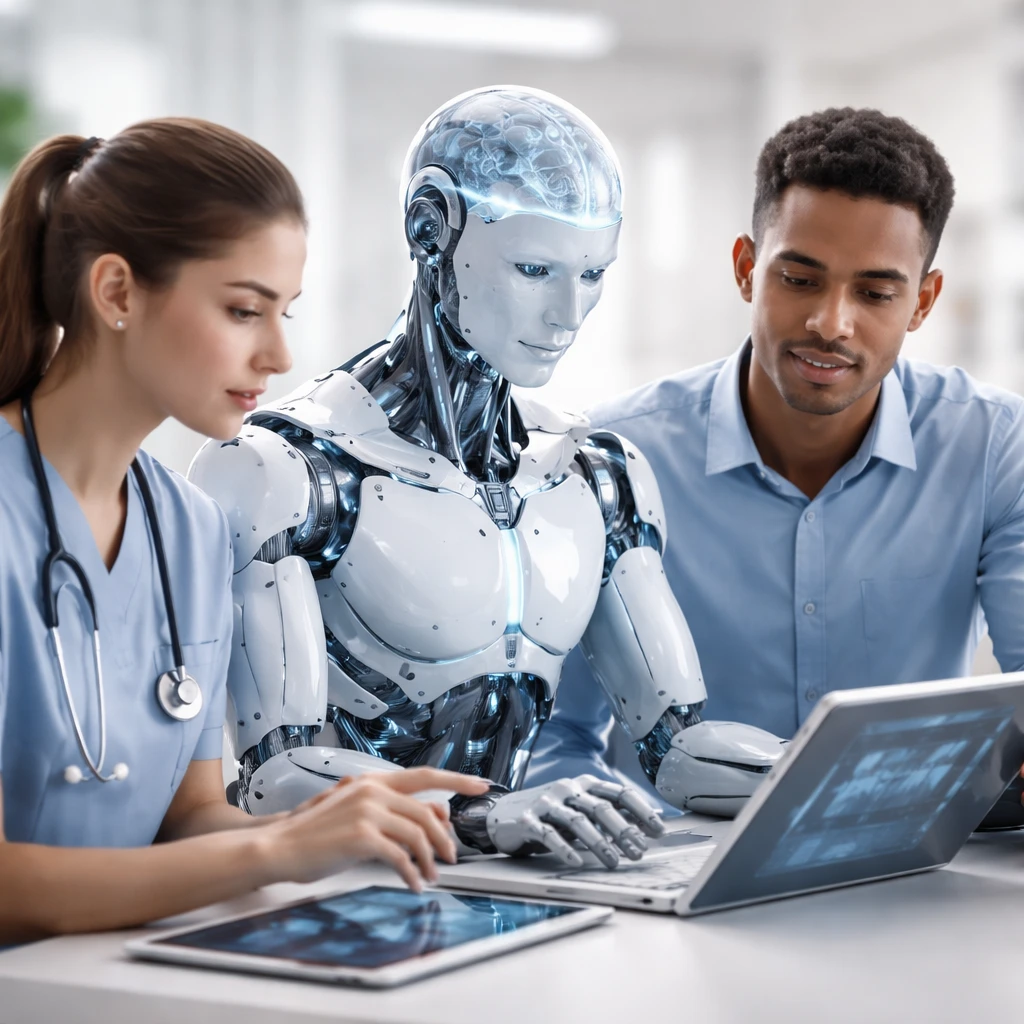
Bill Gates, the co-founder of Microsoft, presented a forward-looking perspective on the role artificial intelligence (AI) is poised to play in society, particularly in professions long considered impervious to automation, such as healthcare and education. In discussions held during last year, including a conversation at Harvard's Sanders Theatre and an appearance on "The Tonight Show with Jimmy Fallon," Gates elaborated on a future in which AI-based systems not only assist but potentially replace human experts in many knowledge-intensive roles.
During his conversation with Harvard professor Arthur Brooks, Gates highlighted how AI could mitigate critical shortages among doctors and teachers by assuming responsibilities traditionally managed by humans. Specifically, he proposed that autonomous systems could eventually carry out primary-care diagnostics, especially in underserved regions where medical professionals are scarce.
Gates stressed that this technological evolution would not merely supplement human effort but could outperform it. He explained that machines could become superior to humans because the range and depth of information necessary for certain decisions exceed the cognitive capacity of any single person. This advancement suggests that AI tools will transition from being adjuncts to becoming principal providers of expertise, delivering more reliable, affordable, and consistent outcomes than human professionals.
Beyond medicine, Gates envisions AI as part of an extended digital revolution that has shifted computing power from large enterprises to individuals, transforming intelligence itself into a widely available resource. Describing this phenomenon as "free intelligence," he asserted that knowledge once exclusive to highly educated professionals would soon be accessible as ubiquitously as wireless internet.
In the educational realm, Gates predicted that AI could revolutionize classrooms by tailoring instruction to individual students and dynamically adapting to their motivation needs, thereby personalizing learning experiences at scale. AI's enhancement of education and healthcare could relieve overloaded professionals and extend essential services to populations historically deprived of such support.
However, Gates also issued a note of caution regarding the proliferation of AI. He pointed out that while increasing access to information and expertise through AI offers significant benefits, it does not inherently ensure positive outcomes. The systems that educate or heal could, if implemented without adequate safeguards, propagate misinformation or bias. This observation underscores the importance of careful stewardship and governance as AI becomes more deeply integrated into critical societal functions.
In his television interview with Jimmy Fallon, Gates reflected on the broader implications of AI's rapid progress. He compared this phase to earlier stages of the digital era when computing resources were expensive and limited to select groups. With AI, intelligence itself is transitioning from being rare to becoming commonplace and free, providing high-quality medical advice and tutoring to wide audiences.
When questioned about the enduring role of humans, Gates acknowledged that while some niches such as certain sports or entertainment might continue to require human presence, most functions currently performed by skilled workers will be more efficiently executed by machines. This viewpoint emphasizes the transformative impact AI is expected to have on the labor market and the nature of work itself.
The investment community is responding to these developments by exploring opportunities beyond major technology corporations, focusing on emerging startups centered on AI-driven diagnostic instruments, educational platforms, and productivity improvement tools. Retail investors can engage with these early-stage companies through accessible platforms, signaling a democratization of participation in AI innovation.
In summary, Gates envisions a future where AI alleviates workforce constraints, improves access to expert-level knowledge, and reshapes entire industries, particularly healthcare and education. Nevertheless, he emphasizes that making the most of this free and abundant intelligence will depend on responsible management and purposeful application.