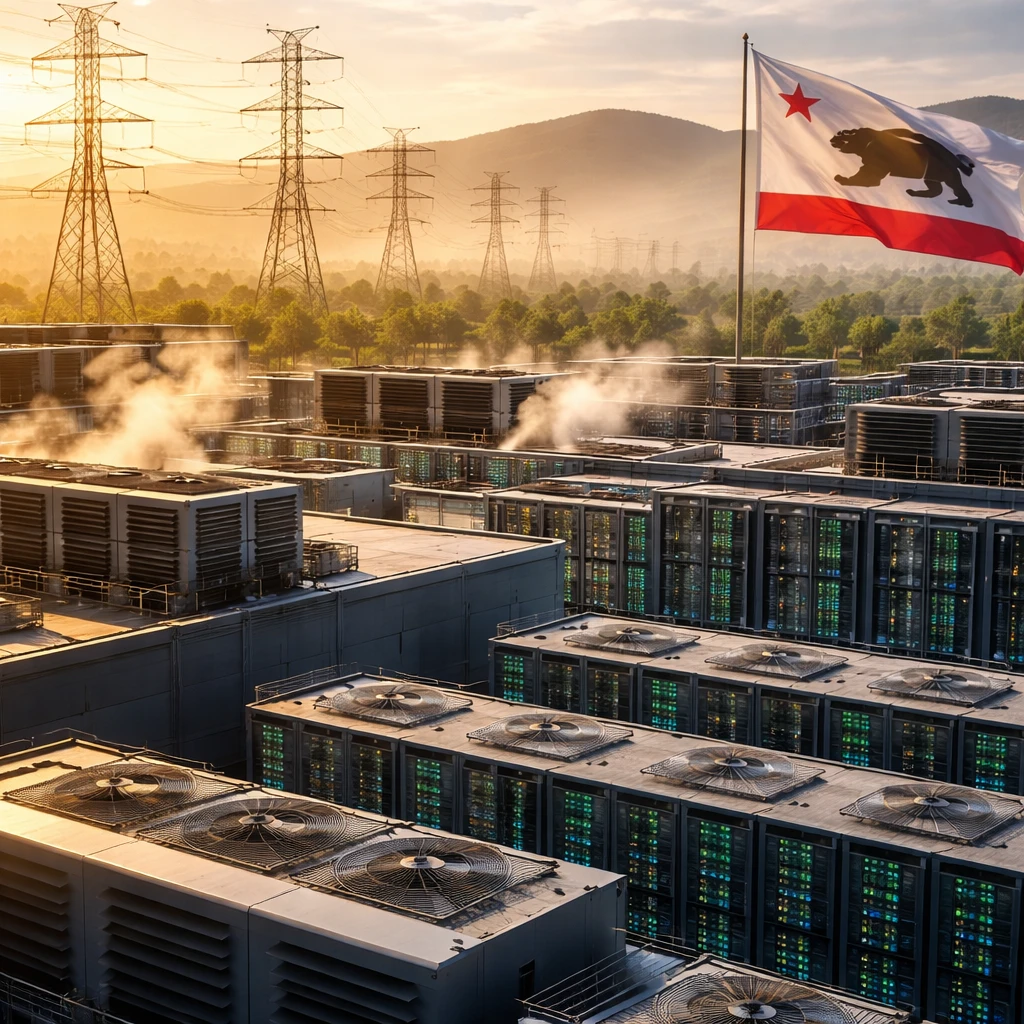

Data centers, essential hubs for artificial intelligence technology, consume vast amounts of electricity, raising concerns about how these costs are distributed among California residents. In 2025, efforts to prevent regular consumers from bearing the financial burden of data center energy use culminated in legislation that merely mandates a regulatory report on the issue by 2027, rather than immediate protective measures.
This outcome reflects significant pushback from major technology companies, industry groups, and state leadership. This influence is unsurprising given California's dependence on a handful of large technology firms for substantial tax revenues; collectively, these entities contribute over $5 billion annually through income tax withholdings.
Originally, the legislation aimed to create a unique electricity rate for data centers to prevent the transfer of higher energy costs to households and small businesses. However, as the legislative process unfolded, these provisions were scaled back, leaving only the requirement for a report examining the issue. The timing of this report suggests its findings may not be available to inform policymaking in 2026.
Matthew Freedman, a staff attorney at The Utility Reform Network, terms the measure as 'toothless,' noting that the directive to the utility regulator concerns an area they already have jurisdiction over, thus providing limited new authority or protections.
The conversation around energy consumption by these data centers has become a central point in California's energy policy debates. Data centers’ rapidly growing electrical demand raises questions regarding necessary, and potentially costly, upgrades to the state’s power grid. Additionally, speculative expansion projects and variable artificial intelligence workloads introduce uncertainty in long-term energy planning. The California Energy Commission reports data center requests for 18.7 gigawatts of service capacity, a figure surpassing the current energy requirements of every household within the state.
Despite the limited immediate impact of the new law, the forthcoming report may influence future regulatory decisions. It is expected to provide lawmakers with detailed insights into the scale of the problem and possible mitigation strategies. Such information may also support the California Public Utilities Commission in reviewing electricity prices charged to data centers amid rising scrutiny.
State Senator Steve Padilla, a Democrat from Chula Vista, acknowledges that the final legislation fell short of original ambitions but views the mandate as an important step affirming the CPUC's authority to examine cost implications from data center energy usage. He emphasizes that data centers consume significant energy and resources, a trend unlikely to change in the near term.
Earlier versions of Padilla’s proposal included requirements for data centers to install large battery systems to aid grid stability during peak demand and mandates for utilities to provide 100% carbon-free electricity to data centers by 2030—well ahead of the state’s general target. These environmentally progressive provisions were removed during legislative negotiations.
Attempts to impose stricter controls on the data center industry have faced strong opposition, including a veto from Governor Gavin Newsom on a bill requiring data centers to report their water consumption. Industry concerns center on the potential for these regulations to drive data center development out of California, resulting in job losses and diminished tax revenues. A Stanford University report highlights risks including the loss of property-tax income, union construction employment, and AI expertise if developers relocate projects to other states.
Industry stakeholders maintain that regulatory pressures threaten California’s competitiveness. For example, the Silicon Valley Leadership Group has pointed to large-scale data center investments in Texas as evidence that tougher local regulations could lead to missed opportunities. California’s economic scale, ranking between the world’s fourth and fifth largest economic entities, continues despite these regulatory debates.
Critics of industry arguments question the validity of relocation fears, noting California’s AI development has not depended on the large hyperscale data centers typically built in regions offering lower land and energy costs. Academic experts observe a disconnect between the geographic locations of AI research talent and large data center facilities.
Advocates for increased regulation suggest that higher electricity prices in California indicate that developers prioritize rapid project approval and grid reliability over the lowest possible power costs. This dynamic may allow lawmakers to negotiate terms in which developers accept responsibility for certain grid expenses in exchange for quicker permitting processes. Given the significant revenues in this sector, energy costs, while large, are comparatively minor, suggesting that modest increases to address cost shifts could be acceptable to data center operators.
Despite setbacks, legislators including Senator Padilla and Assemblymember Rebecca Bauer-Kahan indicate plans to renew efforts addressing data center power costs and energy usage transparency in coming sessions, signaling the ongoing relevance of this issue to California’s energy and economic landscape.